Throughout the evolution of robotics, the competitions between humans and machines have provided a source of entertainment, largely because of the stark disparity in abilities. Humans excel in running, jumping, balancing, and improvising, leaving robots appearing clumsy and mechanical in comparison—much to our satisfaction. However, this gap in capability is rapidly diminishing.
Recent competitions featuring humanoid robots in China offer a striking illustration of this trend. These robots are now capable of running, engaging in combat, participating in sports, recovering from falls, and performing complex physical tasks in environments tailored for humans. Remarkably, one humanoid robot has even surpassed Usain Bolt’s Olympic record in the 100-meter sprint. While robotic demonstrations still vary in performance, these humanoid robots have made significant strides toward matching human physical capabilities, and the pace of their improvement is steep.
The second edition of the World Humanoid Games is underway in China. The competition, which kicked off on Saturday, will last for five days and has already featured a robot running faster than Usain Bolt’s 100m sprint world record. Full story: https://t.co/d6Y9mMggWx pic.twitter.com/TUaZoFQsjH
— BBC News (World) (@BBCWorld) August 23, 2026
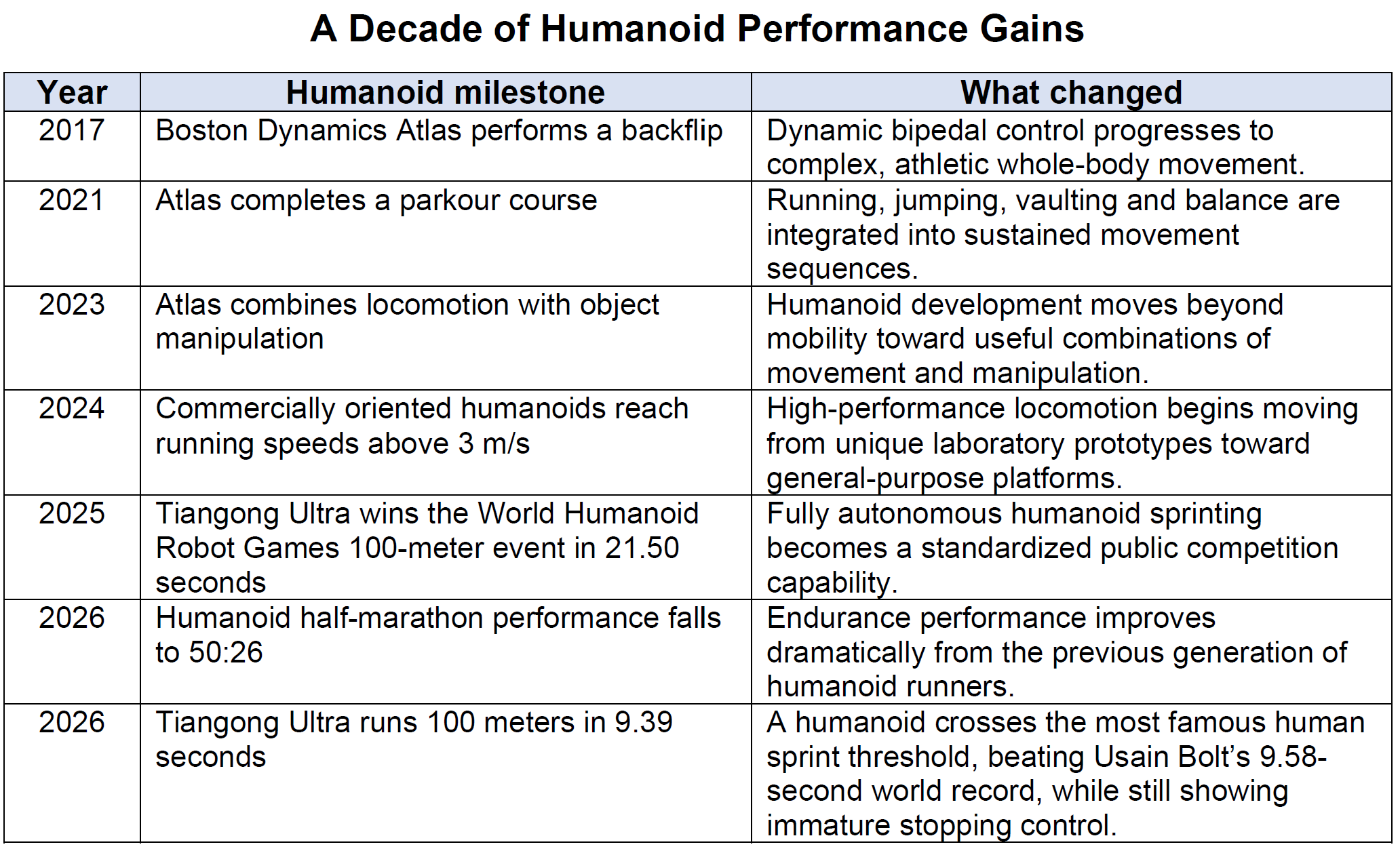
Witnessing a humanoid robot exceed a renowned human athletic benchmark is striking. However, the true competition lies not against Usain Bolt but against the infantry soldier. The criteria differ significantly: soldiers must move quickly while carrying equipment, identify and engage targets, navigate obstacles, operate under stress, communicate with their team, function in darkness and adverse weather, endure injuries, and persist in the chaos of battle. Humans exhibit extraordinary adaptability in these scenarios, cultivated over millennia. Every challenge listed above also poses a unique engineering problem for humanoid robots.
Humanity retains a substantial advantage: the human body is a mature construct. While it can be trained and conditioned, its fundamental capabilities change slowly over time. In contrast, machines are constantly evolving; actuators can be enhanced, batteries reduced in weight, processors accelerated, sensors sharpened, and software refined. A subpar part can be redesigned or replaced, and beneficial capabilities can potentially be replicated across an entire force.
Thus, the pressing question is not whether contemporary humanoid robots can outshine today’s soldiers—they currently cannot—but rather what will transpire when their trajectories intersect. Upon reaching that juncture, the ramifications extend well beyond military procurement. For centuries, societies have revered the soldier who advances into peril; battlefield courage has often been commemorated with ceremonies, medals, and high status because armies require individuals to confront the instinctive urge for self-preservation. A robotic soldier, however, introduces a different dynamic altogether.
By rendering human infantrymen obsolete, humanoids could potentially diminish the military value of battlefield courage. This impending shift is not solely between human soldiers and robots but also between human valor and machine efficiency. This article explores the practical and cultural impacts of this pivotal transition in infantry warfare.
Why the Human Infantryman Will Be Obsolete
The argument for humanoid infantry does not hinge on these machines replicating human traits perfectly. They simply need to excel at performing the tasks required by infantry roles. Once they reach that threshold, the distinctions that separate robots from humans can transform into strengths rather than weaknesses.
A fully developed humanoid soldier could surpass humans in strength and speed, carry heavier loads, react faster, aim with enhanced precision, and utilize sensors that extend beyond human capabilities. Unlike humans, it wouldn’t require sleep, food, or water, wouldn’t suffer fatigue, and could endure harsh conditions that can incapacitate humans. Damaged components could be swapped out, and machines that don’t need to protect delicate human tissue could withstand levels of force, heat, noise, and impact beyond what a human soldier could endure.
These advantages hold significance even if machines never mimic the full scope of human judgment. Infantry combat involves not only open-ended decisions but also a multitude of repeated tasks, including movement, observation, tracking, navigation, communication, weapon handling, and tactical execution. Machines need not emulate human intelligence precisely to become extraordinarily effective at such operations.
Humanoids do not need to replace specialized drones, tracked vehicles, or other robotic forms; their primary advantage lies in functioning within environments already designed for human interaction. They can utilize human tools and equipment, operate existing weapons, and navigate urban landscapes without necessitating a redesign of the physical space.
From Better Soldiers to Better Units
The more significant advantage may arise not at the individual soldier level but at the unit level. Human militaries expend considerable effort to synchronize the perceptions and actions of many independent minds. Information must be reported, understood, relayed, and translated into commands, all while soldiers may be terrified, fatigued, distracted, or lacking complete information. Radios and digital networks enhance this process but can’t eliminate the fundamental challenge: an army comprises numerous autonomous individuals attempting to coordinate under extreme stress.
However, networked humanoids would operate quite differently. If one machine detects a target, it could share that information in real-time with all relevant units. Position data, ammunition statuses, sensor inputs, routes, and threats could all be communicated consistently without the need for verbal briefings. As circumstances evolve, tactical assignments could be reassigned fluidly. A unit could function less like a group of independent soldiers and more like a cohesive combat system, unified in its operational understanding. While dependency on networks may create vulnerabilities to communication disruptions, networked humanoids could likely exhibit a cohesiveness far beyond contemporary infantry units.
This shift would redefine the essence of tactical experience. Human armies must train each soldier and nurture every unit, while hard-won experience can vanish with the loss of veterans due to casualties, transfers, or retirement. A robotic force could capture valuable tactical insights in software and disseminate them rapidly across all units. A lesson learned by one formation could become a prevalent capability throughout the entire robot fleet. Human military proficiency accrues gradually; machine proficiency can be effortlessly replicated.
An Army That Does Not Rout
The most profound distinctions may lie in the psychological realm. Humans do not inherently behave as expendable military assets. They experience fear, pain, exhaustion, sorrow, and the instinct for survival. Under intense pressure, even disciplined formations can falter. Military organizations implement various strategies—training, leadership, unit solidarity, discipline, rituals, honor, and punishment—to ensure soldiers remain functional when their survival instinct urges them to withdraw.
A machine army would not contend with fear, as its soldiers would not experience it. Humanoids might strategically retreat when necessary; however, they would not flee if other machines beside them were destroyed. They could hold a position until destruction if the situation called for it, advance through fire that would paralyze human troops, or sustain casualty rates that would render a human unit combat-ineffective long before suffering physical destruction.
This shift could drastically impact the economics of battlefield attrition. Human casualties impose costs that extend beyond mere military capabilities lost. Soldiers represent years of training, selection, and community development; their deaths devastate families, impact morale, and can shift public support for warfare. In contrast, a destroyed humanoid may represent a significant financial loss, but it wouldn’t entail personal mourning. Its replacement would derive from a production line rather than a recruitment office.
Thus, even before machine forces surpass human soldiers across all skills, their tremendous advantages could render them highly formidable. A humanoid may not need the improvisational genius of a seasoned infantryman if it compensates with superior sensing abilities, precision, coordination, physical performance, replicable training, and immunity to fear. The essential crossover does not necessitate the perfection of a robotic soldier; it simply requires the creation of a machine force that outperforms the human equivalent. Once achieved, continuing to place humans in harm’s way would become increasingly indefensible.
Civilian Robots Join the Military Ranks
The shift toward humanoid armies might unfold differently than previous military technological revolutions due to one crucial aspect: the military may not need to develop the foundational technology itself. Nuclear weapons, ballistic missiles, stealth aircraft, and aircraft carriers demanded significant government-led initiatives since there was minimal civilian incentive for their creation. Humanoid robots, however, are likely to be different. If they establish economic usefulness, civilian markets will fund much of the technological infrastructure required for the humanoid soldier.
The potential civilian market is vast. Industries such as manufacturing, warehousing, construction, mining, agriculture, transportation, disaster response, hazardous material handling, elder care, and various service sectors provide strong incentives to create machines capable of moving and manipulating objects designed for human environments. A civilian humanoid must walk without stumbling, navigate stairs and obstacles, recognize objects, use tools, and operate autonomously long enough to be economically viable. Solving these problems for civilian applications would address many of the engineering challenges for the battlefield.
That said, the military still has considerable unique requirements. Civilian machines would need to be ruggedized, enhanced with military-grade communications and sensors, equipped with tactical software, and offer relevant payloads. Operating autonomously in battle presents challenges far beyond what’s needed in a factory setting: factors like electronic warfare, camouflage, deception, damage, communication disruptions, and intelligent opponents transform combat dynamics. Despite these challenges, militaries would be adapting existing technologies rather than developing entirely novel platforms from scratch.
The Battery Problem
Battery life is frequently acknowledged as a significant barrier for humanoid functionality. Although this challenge exists, the relevant technological threshold may already have been crossed. For instance, Boston Dynamics’ production Atlas humanoid has a typical operational timeframe of four hours, along with battery replacement in under three minutes. A military robot does not require enough stored energy for continuous operation any more than a vehicle needs to function for days without refueling. A humanoid soldier simply needs enough endurance to operate effectively between battery changes, alongside a logistical foundation that can replenish energy more rapidly than it is consumed.
Battery swapping could provide this solution. Depleted batteries can move back for recharging while fresh packs advance, with vehicles and portable generators supplying the necessary charging infrastructure. Thus, field endurance does not have to directly correspond to battery duration. Present civilian humanoids already operate for two to five hours per charge, and commercially available silicon-anode lithium-ion batteries boast specific energy ratings of up to 450 Wh/kg. A military humanoid with such a cutting-edge battery could achieve several hours of strenuous operation—potentially four to eight hours under less intense conditions—before needing to swap batteries. Improved energy density could also enhance endurance while allowing for weight savings for armor, sensors, or other payloads.
Moreover, battery replacement enables advancements in power storage to progress independently of improvements to the humanoid itself. A standardized battery interface allows an existing machine to remain compatible with evolving battery technology without necessitating redesign. Higher-capacity replacement batteries can extend runtime at the same weight, while lighter batteries can maintain endurance while affording extra payload space. Hence, advancements in battery technology may readily disseminate through an existing humanoid fleet simply by replacing old battery packs.
Despite this, ensuring a reliable energy supply on the battlefield remains a significant logistical challenge. Batteries need protection, maintenance, charging, and replacement, and the associated electrical infrastructure presents vulnerabilities. Nevertheless, human infantry also requires ongoing supplies of food and water, sleep, shelter, medical support, and casualty evacuation. Humanoid forces won’t eliminate logistics; instead, they would swap a biological logistical system for an electrical and mechanical one.
The critical question thus emerges: can batteries supply sufficient operation periods and be exchanged promptly enough to sustain a combat force? Existing technologies suggest they can meet these needs, meaning battery swapping could largely resolve individual endurance challenges. While humanoid soldiers will benefit from enhanced battery advancements, they are not reliant on a complete transformation of battery technology. The daunting task of supplying electrical energy to a large fleet of machines will necessitate new logistical approaches, but these costs will likely be offset by the reduced burden on human logistics.
An Army That Learns Once
Training represents one of the greatest expenses for human military organizations. Soldiers must be individually recruited, trained, exercised, and grouped into units, all while advanced skills develop gradually through experience. Machine learning alters the economics of this process. If research or battlefield experience unearths a better way to recognize ambushes, traverse obstacles, coordinate movements under fire, or react to tactical situations, that knowledge can rapidly be disseminated across the robotic force. Once validated, improvements can be spread throughout the machine army, replacing the need for individual training.
While human armies must train every soldier, a machine army might need to learn once. However, this uniformity poses a double-edged sword: a shared software flaw or tactical vulnerability could propagate across the entire fleet. Yet, human armies have also been shaped by flawed doctrines that can be even harder to amend than technological errors.
This importance becomes especially pronounced during attrition. When a seasoned soldier perishes, so too does a significant portion of their hard-earned experience. In contrast, the destruction of a humanoid does not necessarily erase what it has learned. Data from multiple machines engaged in combat can be compiled, tactical software refined, and the resulting advances shared with surviving units and newly built machines. Consequently, significant casualties could yield a notable asymmetry; while a human army becomes less experienced after heavy losses, a machine army can sustain hardware losses while simultaneously accumulating valuable combat data that enhances its replacement units.
The Competitive Extinction of Human Infantry
The transition to humanoid infantry won’t hinge solely on individual government decisions regarding their desirability. Rather, military rivalries may dictate the shift. Imagine a major military power developing humanoid formations that vastly outperform human infantry in speed, accuracy, coordination, and survivability under extreme conditions. In this scenario, destroyed machines are swiftly replaced from assembly lines, and tactical enhancements are readily propagated across the military through software updates. A rival nation leveraging human infantry would then face a twofold disadvantage: its troops would be less capable, and their mortality would impose costs the opposing machine force could simply absorb.
This scenario creates an unstable position. History demonstrates that many states adopt technologies not out of enthusiasm but out of necessity when facing adversaries armed with advanced capabilities. Once humanoid infantry proves advantageous on the battlefield, the inquiry shifts from “Why should we invest in this technology?” to “Can we afford not to?”
The process will likely unfold gradually. Machines may first undertake particularly hazardous tasks such as reconnaissance, breaching, tunnel clearance, urban incursions, ammunition resupply, casualty recovery, and securing vulnerable positions, while humans supervise these actions to exercise judgment and fulfill roles that machines cannot. However, each successful delegation of risky duties to machines will make the necessity of human involvement increasingly difficult to validate, akin to deploying cavalry against tanks.
Elite Armies for Sale
Humanoid military forces could also revive one of warfare’s oldest traditions—mercenary armies—in an entirely new form. Historically, rulers could substitute wealth for military personnel by hiring soldiers, but this approach proved imperfect. Mercenaries still involved recruitment and training, varied in quality, and might falter in morale based on self-interest.
A commercial humanoid army would differ significantly. Suppliers could potentially offer integrated military capabilities encompassing machines, tactical software, communication systems, logistical support, maintenance, upgrades, and technical assistance. In this scenario, military efficacy would increasingly stem from engineered systems rather than accumulated human expertise or institutional traditions of the purchasing state.
This evolution might dilute the historic bond between population and military strength. A small, affluent nation could acquire tens of thousands of high-caliber combatants without conscripting a significant segment of its population or spending years cultivating skilled soldiers and leaders. Conversely, a populous but economically challenged state may find that one of its traditional military assets loses value. The decisive resources could transition toward capital investments, manufacturing, computing, energy, components, and access to technology providers.
More profoundly, humanoid warfare could industrialize how military quality is produced. While states can currently purchase high-quality weaponry, acquiring an elite human army off an assembly line is infeasible. Soldiers require judgment, skills must be developed, and units must train together, accumulating institutional knowledge over time. However, if much of combat proficiency resides in reproducible hardware and software, creating additional combatants need not dilute their average expertise. Efficiency in production would allow not just the manufacture of weapons but also competent fighters.
No Way Back
At present, humanoids remain far from dependable substitutes for soldiers in combat situations. Challenging terrains, electronic warfare, mechanical failures, autonomous decision-making, target discrimination, communication failures, and the chaotic nature of combat still pose formidable hurdles. However, uncertainty regarding timing should not be mistaken for uncertainty in competitive logic.
If machines manage to combine adequate individual capability with superior coordination, reproducible competencies, fearlessness, expendability, and ongoing technological advancements, no clear mechanism exists for regaining an edge for human infantry. Humans cannot increase their muscle strength as robotic actuators advance, shorten neurological response times as processors speed up, eliminate fear when machines do not experience it, or rapidly replicate decades of experience as software can be duplicated.
While human infantry may persist for specialized missions, political reasons, or sheer institutional resistance—as cavalry traditions survived long after mounted warfare faded—future generations might witness reenactors showcasing body armor and assault rifles once wielded by human soldiers on the battlefield. The equipment would be authentic, and the valor required to don it would still be respected. But no reasonable military would deploy humans to engage in combat. At that point, an institution older than any weapon would begin to fade: the concept of the valiant warrior.
What Was Military Courage For?
The decline of human infantry would mean more than just the loss of military employment opportunities; it would negate the functional need for one of humanity’s oldest and most esteemed virtues: battlefield courage. Although courage is often discussed as a moral quality, it has historically served a practical purpose in military contexts. Humans possess a strong instinct for self-preservation; warfare often necessitates that they act against this instinct, taking risks to move forward when death looms, remaining steadfast when fleeing offers better odds, exposing themselves to safeguard comrades, and operating competently amidst chaos.
Military institutions have cultivated cultural practices aimed at overcoming this biological constraint. Training makes dangerous actions habitual. Discipline replaces personal choice with institutional obligation. Leadership empowers individuals to follow even when fear clouds their judgment. Comradeship equates abandonment with leaving friends behind. Patriotism links personal risk to a broader community while honor and shame generate social outcomes based on bravery and cowardice. Military identity fosters the notion that bravery distinguishes a soldier from a civilian.
Commanders have historically manipulated this mechanism, often sharing perilous situations with their troops. Alexander the Great, for instance, boldly placed himself in danger during assaults, firmly establishing that failure to follow him was not simply an act of fear but also an abandonment of duty and a source of disgrace. The persuasive influence of such leadership hinges on shared vulnerability, a quality a humanoid cannot replicate when leading human troops into peril.
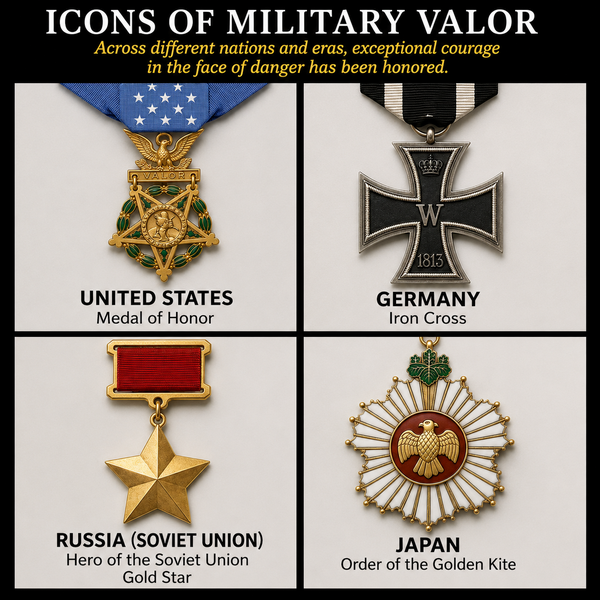
These concepts are so deeply intertwined with military culture that their practical functions often blend with moral implications. We honor courage due to its admirable nature, but armies also value it because of its necessity. Medals, heroism, traditions, and public ceremonies transform extraordinary actions into behaviors that can be repeatedly demanded from military organizations. The culture of valor is integral to the machinery of human warfare.
Ultimately, courage obtains its heroic significance because confronting danger allows for consequential acts to occur. Don Quixote’s bravery in charging a windmill reveals no lack of physical courage; he confronts what he mistakenly believes is peril. Yet, his actions are more comical than heroic, as his bravery is dissociated from reality and meaningful outcomes.
Technology can yield a similar reversal. If a dangerous military operation can be executed more reliably by machinery, sending a human becomes less a testament to bravery and more an instance of unnecessary exposure to risk. This principle is already accepted with explosive ordnance disposal robots and uncrewed aircraft. If a machine can safely clear a minefield, navigate a contaminated area, or traverse a battlefield exposed to enemy fire, it requires justification to put a vulnerable human in its place. As machine advantages increase, perceived avoidable risks can transition from a demonstration of valor to a manifestation of poor judgment.
Once humanoid soldiers can advance under fire, clear buildings, secure positions, recover casualties, and conduct assaults more effectively than humans, courage will no longer furnish the operational benefits that historically made it essential.
This phenomenon culminates a paradox that has characterized the historical narrative of war. Military civilization has devoted significant cultural energy to instilling willingness in individuals to face lethal danger, while advancements in military technology have aimed at minimizing that danger. Armor shields bodies; fortifications safeguard positions; artillery allows for long-range kills; aerial tactics increase distance; precision weapons and drones separate decision-making from lethal consequences. Humanoid infantry would logically take this trajectory to its ultimate conclusion by entirely removing vulnerable human bodies from direct combat.
While courage may not vanish entirely from human existence—even in military settings—what could fade is the explicit requirement for a soldier to exhibit virtue by overcoming trepidation while willingly facing death. For thousands of years, armies have crafted solutions to the challenge posed by fearful individuals; humanoid armies would address the same issue by eliminating the need for human involvement entirely.
The Machine Warrior: Combat without Heroism
Consider the commendable actions for which soldiers have historically received the highest valor awards. A soldier charged through enemy fire to attack a position. Another stepped out of cover to rescue a wounded comrade. A small unit held its ground against overwhelming odds to allow others to withdraw. A mortally wounded soldier fought on rather than abandon their post. Tactically distinct, these acts all share a critical element: they reflect human beings willingly accepting extraordinary personal danger to achieve consequential objectives.
A sufficiently advanced humanoid could replicate nearly all observable components of such behavior. It could march under fire, retrieve a disabled machine or human, shield others with its form, continue to function after severe damage, hold a position against insurmountable odds, or undertake missions leading to its own destruction. In some cases, machines might ultimately execute such tasks more reliably than even the most courageous human soldiers, as there would be no tension between fulfilling tactical requirements and instinctive self-preservation. Should a mission call for advancement, the machine would comply.
However, labeling this conduct as courageous strips courage of its conventional meaning. Courage necessitates an obstacle to surmount. The valiant soldier understands the danger of death or grievous injury, feels the impulse to evade that outcome, yet chooses to act nonetheless. Conversely, the machine performs these actions devoid of such an internal conflict. There’s no fear to conquer or finite human future willingly surrendered; the behavior might resemble that of a human while the underlying virtue is absent.
This distinction is especially evident in the context of a traditional last stand. A thousand humanoids could fight relentlessly until the last one is disabled, potentially achieving strategic delays more effectively than any human unit could. The military result may hold weight, but no legendary heroic tales would arise, as no individual experienced this act as a sacrifice.
This differentiation between efficient function and heroism impacts the identity of the warrior. Even elite combat units would be confronted with this reality. Marines, Rangers, SEALs, and similar formations hold high status in military culture due to their rare willingness to embrace peril and their unique skillsets. Mature humanoids would counter both forms of scarcity: machines would not demand exceptional bravery when facing risk, and capabilities embedded in their design would be easily reproducible rather than require years of selection and training. While elite military performance could persist, the concept of the elite warrior need not endure alongside it.
Valor decorations illustrate how deeply entrenched military systems have become concerning the relationship between danger and distinction. Medals transform acts of extraordinary bravery into public recognition; their worth is contingent on rarity—the recipient achieved what most should be incapable of doing. Humanoid forces could potentially dissolve this scarcity. If every machine equipped with identical hardware and software performs dangerous actions similarly, the uniqueness of individual combatants fades entirely. Heroism is individualistic; machine performance is standardized.
Military distinction might not vanish outright. Exceptional commanders, engineers, programmers, intelligence experts, and system designers may acquire immense prestige, as their choices significantly influence battlefield outcomes. However, the traditional linkage between military acclaim and an individual’s willingness to confront imminent risk may dissolve. Machines could undertake the actions for which soldiers once received accolades—perhaps even more consistently and effectively—without necessitating courage in the process. Once this becomes normal, the question shifts from whether machines can show heroism to what occurs in a military culture that no longer requires heroes.
The Drone Operator Medal Test Case
The imminent clash between military efficiency and the concept of traditional valor has already seen preliminary conflicts. In 2013, the Department of Defense proposed the Distinguished Warfare Medal to honor remarkable achievements by personnel who could significantly influence combat outcomes, despite not being physically present on the battlefield. Drone operators and cyberwarfare specialists were obvious candidates for such recognition.
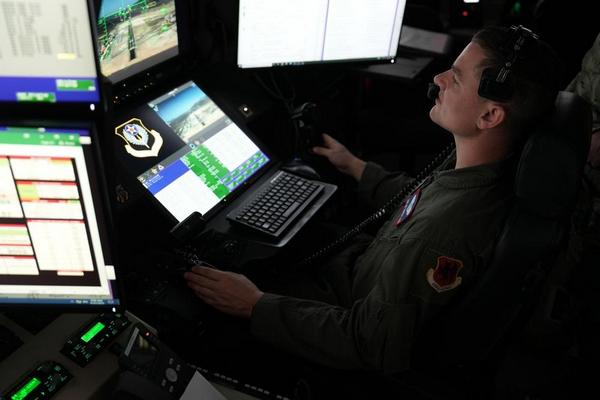
Drone operator in command center—achievement without battlefield exposure
Immediate controversy arose, as the proposed award conflicted with a deeply embedded status hierarchy in military culture. A drone operator might identify and neutralize a target, protect troops under siege, or impact the battle’s outcome significantly—even more so than an infantry soldier present in combat. Nevertheless, veterans and military entities objected to positioning a remote achievement above accolades associated with physical confrontation. The debate centered on the distinction between effective military performance and battlefield valor.
Ultimately, the Pentagon scrapped the new medal, opting for an alternative solution. Achievements in remote combat could be acknowledged with an “R” device attached to existing decorations, while a “V” device specified acts of valor. This differentiation reveals a critical insight: the military was able to honor significant remote contributions while maintaining a separate category for traditional bravery.
This system functions as long as humans remain on the battlefield. However, humanoid infantry could destabilize this dynamic by removing humans from the most hazardous roles. Machines entering buildings, crossing dangerous terrain, recovering casualties, or holding critical positions may execute actions of vital military significance while the humans orchestrating these events—commanders, operators, engineers, intelligence analysts, and maintainers—remain safely behind the front lines.
The controversy surrounding the Distinguished Warfare Medal thus foreshadows a much more extensive issue. Drone warfare has separated the warrior’s physical presence from certain battlefield functions; humanoid warfare could eliminate it from the battlefield entirely. The traditional military culture, built around the interplay of danger, valor, achievement, and recognition, could face challenges when these elements no longer necessarily align within the same individual.
Beyond Battlefield Valor: Three Futures
The absence of human soldiers from warfare does not equate to the end of conflict. This transformation could propel international relations in unpredictable directions. Taking soldiers out of danger could undermine one of the foundational cultural pillars of warfare: the status associated with martial courage. Simultaneously, it may weaken a critical political restraint on military action: the prospect of citizen casualties. The technological pathway toward machine-driven combat is relatively clear, yet the geopolitical implications that follow remain ambiguous. Three distinct futures appear feasible.
Robot Armies and Chronic Skirmishing
The first scenario is a world where warfare becomes easier because it incurs less personal cost. Governments contemplating military action would need to evaluate not just the likelihood of success but also the political repercussions of returning wounded or deceased personnel. Even authoritarian regimes bear demographic, institutional, and political consequences when military casualties occur. Humanoid forces could significantly reduce such costs, enabling governments to test boundaries, occupy contentious regions, disrupt civil conflicts, or shield client states while exposing very few of their citizens to risk.
This may create a paradox where societies become less militaristic but their governments grow more inclined to engage in combat. Public admiration for warriors, sacrifice, and heroic battles may wane, even as limited military operations become more tolerable, given their resemblance to contests between machines rather than national exchanges of blood and treasure. Additionally, commercial humanoid forces could amplify this dynamic by enabling wealthy states to gain intervention capabilities without maintaining extensive standing armies. Warfare may occur more frequently while remaining below thresholds likely to provoke direct attacks on civilian populations.
Arms Control and Strategic Stability
Conversely, the second outcome could see states viewing rapidly scalable machine armies as dangerously destabilizing and taking steps to prevent rampant proliferation. Arms control in this context would present challenges far more complex than merely counting missiles, tanks, or warheads. With humanoid forces that can be manufactured or purchased en masse, significant combat capabilities may lie within factories, warehouses, software repositories, computing infrastructures, and stored fleets of robots.
Verification mechanisms would be challenging to establish. Potential agreements may involve restrictions on autonomous targeting systems, military software, weapon connections, conversion kits, or units maintained in combat-ready states. Considerations surrounding human oversight could form another limitation, given current international debates over autonomous weapons centered around ensuring human judgment remains intact and potentially advocating for legal prohibitions and regulations.
The erosion of warrior status could further bolster this equilibrium. Societies that no longer confer military prestige upon courage exercised in life-threatening situations may become less culturally receptive to warfare. Military roles could evolve toward technical administration rather than a privileged domain for demonstrating honor, sacrifice, patriotism, or personal distinction. While this wouldn’t guarantee lasting peace, it may diminish the age-old cultural mechanisms that grant warfare its esteem.
Escalation to Mass Destruction
The most bleak trajectory follows from one of the primary advantages of machine armies: their ability not to rout. Human forces can sometimes be defeated without complete annihilation, as factors like fear, fatigue, casualties, and loss of unit cohesion can demoralize soldiers and lead to surrender. In contrast, a functioning machine force may require material defeat. If humanoids can be swiftly replaced by factories and civilian reserves, the destruction of machines on the battlefield might yield nothing more than expending replaceable components.
The implications could extend backward through the production system, wherein campaigns to disrupt the machines would focus on their ammunition and energy supplies. To halt replacements, efforts could shift toward transportation and logistics, while preventive measures may target factories, electrical grids, communication networks, computing centers, and suppliers of components. A conflict initially appearing appealing by insulating citizens from military casualties could rapidly evolve into strikes against the broader industrial systems that sustain the machines. The human element vanishes from the frontlines, only for them to reappear as workers and inhabitants supporting the infrastructure required to maintain the machine army’s vitality.
The presence of autonomy could heighten risks further by accelerating the pace and scale of force applications. Systems operating at machine speed might compress the time window available for human decision-makers to recognize unintended consequences stemming from local skirmishes. Thus, the risk doesn’t solely lie in an autonomous weapon miscalculating an action; it derives from automated forces escalating conflicts faster than human decision-makers can restrain them.
These potential futures are not mutually exclusive. Moments of limited machine conflicts might exist alongside arms-control agreements between major powers, while severe escalations might still shift focus onto industrial infrastructure supporting robotic forces. The presence of commercial robotic weapon manufacturers adds layers of complexity to all three potential outcomes, making military power more transferrable, scalable, and challenging to quantify.
A persistent paradox remains unresolved: machine-driven warfare could weaken the cultural impetus for conflict by diminishing the warrior’s traditional status while simultaneously eroding the political restraints by minimizing the immediate human costs involved. Removing soldiers from danger will undoubtedly reshape the battlefield. However, this transformation doesn’t imply the elimination of conflict itself.
Conclusion: The Last Brave Soldier
Throughout military history, technological advancements have altered the weapons wielded by soldiers without eliminating the necessity of having soldiers to operate them. The transition from spears to rifles, from cavalry to armored vehicles, and from observation balloons to satellites all affirm that human presence remains essential on the battlefield. The infantry soldier has endured through various technological revolutions due to the remarkable versatility of the human body, providing a general-purpose combatant.
Yet, humanoid robotics may ultimately disrupt that advantage. Current machines do not serve as infantry soldiers, and substantial challenges involving autonomy, reliability, adverse terrains, electronic warfare, and tactical understanding persist. Nevertheless, the long-term competition remains asymmetric. Humans will not evolve to be twice as strong, require only half the amount of sleep, react ten times faster, or accumulate twenty years of combat experience by simply downloading updates. Conversely, machines can progressively advance across all these avenues, and civilian industries may subsidize a significant portion of the underlying technology, ultimately leading to mass production of capabilities that human forces must painstakingly cultivate within individuals. Although we cannot ascertain when such a crossover will take place, it is evident which curve possesses greater potential for rapid improvement.
As that benchmark is reached, military competition will make the consequences unavoidable. States continuing to deploy human soldiers against more capable, reproducible, and expendable machines will face tactical disadvantages alongside a human cost their rivals can evade. The infantryman will thus join the cavalry in obsolescence, not due to a devaluation of courage, skill, or tradition, but because they no longer represent the most proficient means to fulfill military objectives.
This shift won’t necessarily engender a more peaceful world. Diminishing the need for soldiers in peril may embolden governments to engage in limited conflicts, even as societal values around martial attributes weaken. Machine armies could lead to a state of chronic skirmishing, catalyze fresh avenues for arms control, or direct serious wars towards destructive interferences with the industrial fabric that supports their combat capabilities. The warrior’s disappearance will neither extinguish political ambitions nor eliminate conflict; rather, it will alter the pathways through which these ambitions manifest. While humans may no longer be present in direct combat roles, they remain the ultimate targets in the theater of war, as the ultimate objective of adversarial actions lies in compelling human societies, rather than merely targeting machines.
Ultimately, the obsolescence of human infantry will erase something deeply ingrained from our military history. From Achilles and Leonidas to the foot soldiers of today, societies have held exceptional warriors willing to face mortal danger in high regard. Their bravery has long been celebrated, not only for its rarity but also because no effective army can function without it. Once machines can carry out the same functions more effectively without demanding courage, the longstanding correlation between warfare and valor begins to unravel.
There may come a day when the last human infantryman who earns a valor medal performs an act no less courageous than those honored for centuries before. Nothing about the machine age can belittle that moment. However, what will change is the understanding that such a deed need not be repeated. Valor will continue to be esteemed in other realms, but it will no longer be tied to the act of defying death on the battlefield.

