Today’s exploration centers around a novel framework for understanding current events. The hypothesis is as follows: pending substantial evidence to the contrary, any apparent infighting among NATO and Zionist factions that delays their initiatives against Russia, Iran, and China should be regarded as a multifaceted psychological operation.
The United States and its allies, historically unreliable, have a track record of broken agreements. The Minsk Agreements, for instance, were ultimately revealed as strategies to gain time for arming Ukraine against Russia. Additionally, we have the longstanding unwritten commitment against NATO expansion and the floundering of the JCPOA nuclear deal, which was disregarded by Washington when it lost interest.
In recent years, particularly since the resurgence of Trump, the deceptions perpetrated have become increasingly audacious, occurring in swift succession, often involving a feigned rivalry among Western-Zionist players.
This situation is not unexpected, given that intelligence officials increasingly dominate diplomacy and foreign policy decisions. This shift has been characterized as a “new model for a new era.” As noted by Alastair Crooke, a former intelligence officer, there is a growing coordination among Western intelligence agencies as they perceive a civilizational conflict looming.
A recent illustration of this dynamic could be the escalating tensions between Israel and Türkiye, which have prompted analysts to once again contemplate the likelihood of armed conflict between the two nations. Before delving into that, let’s take a brief retrospective of instances over the past few years where public perceptions proved to be misleading.
Headfakes ‘R’ Us
Recall the fervor when it was believed the US was distancing itself from Europe to strike a monumental deal with Russia. Reports circulated for months suggesting that Trump would withdraw from NATO, abandon European allies to the Russian bear, terminate all aid to Ukraine, and forge some form of agreement with Moscow.
In reality, however, we witnessed Europe growing increasingly dependent on American military supplies, energy, and technology. Dialogue with Moscow bore no fruit, while Ukraine escalated its operations against Russia. In hindsight, what was achieved? Europe became more reliant on the US, while Russia tempered its advance in Ukraine, influenced by agreements with Anchorage that (surprise!) the US never honored.
Currently, figures like Steve Witkoff and Jared Kushner are reportedly being reactivated, although Russia seems hesitant to rejoin the charade—at least for now.
The latest maneuvering around Moscow exemplifies the US’s habit of attempting to position itself as a mediator in conflicts in which it is deeply involved. This trend, particularly evident in the Middle East, is rife with state-sponsored misinformation and efforts to control narratives. For example:
The US conducts talks with Lebanon while its proxy Israel bombs and inflicts destruction upon it, even targeting Hezbollah leadership using American-made bombs in populated areas.
The US engages with Hamas while Israel assiduously targets negotiators and continues its campaign of extermination.
The US negotiates with Iran while Mossad orchestrates an uprising aimed at dismantling the Iranian government and strategizes surprise attacks.
🇺🇸🇮🇷 Iran fell for the same trick as Hezbollah’s Nasrallah.
1) The US made an offer that required the Iranian side to discuss details.
2) Iran held a meeting to discuss the offer and formulate a negotiation strategy.
3) The US attacked the meeting, killing several officials,… https://t.co/3bMeaClr57 pic.twitter.com/45qbA3Zctd
— Lord Bebo (@MyLordBebo) March 1, 2026
Moreover, we’ve encountered a relentless stream of narratives suggesting the White House is exceptionally displeased with Netanyahu and Israel. Reports indicate President Biden was so outraged he even labeled Netanyahu an “asshole” (what a scandal!). Such reports have simply cycled through the Trump administration, with Donald supposedly telling Bibi, “everybody hates you.”
Yet, US policy towards Israel only appears to become more accommodating.
This situation encapsulates a never-ending tale of deception. Consider these two headlines from the same day:
US officials quietly supported Israel’s military offensive against Hezbollah
The actual story is rarely aligned with the official narrative, which is why one should approach all discussions of a potential Israel-Türkiye conflict with skepticism.
The Official Line
On August 18, Israel bombed a Syrian airbase near the Turkish border, alleging that Syria was preparing to allow Turkish forces to deploy there. Ankara has denied this claim, responding with a theatrical maneuver:
Türkiye seeks Interpol Red Notices for Netanyahu over Gaza flotilla
📌 The Turkish government’s Interpol action arises amidst escalating tensions between Türkiye and Israel regarding Syria. https://t.co/jOkfmHkN6N via @RinaBassist & @ezgi_akin— Türkiye Pulse (@TürkiyePulse) August 22, 2026
US envoy Tom Barrack publicly criticized Israel, aligning more with Türkiye. Sound familiar?
Currently, analysts are predicting a potential conflict.
Danny suggests that Israel aims to weaken Damascus, a Turkish ally. This is incorrect. Israel intends to weaken Ankara instead, as they recognize that Damascus poses no immediate threat.
I concur with Danny’s assessment that the likelihood of an Israeli-Turkish war is significant. The…
— Policy Tensor (@policytensor) August 20, 2026
Let’s scrutinize this situation more closely and consider some counterarguments.
Overlooked Background and Myths in the Official Narrative
The Financial Times has claimed, “Israel perceives Sharaa’s administration, which is largely dominated by Islamists, as a threat.”
This designation is fundamentally unfounded. This narrative, propagated by major Western media and Israel, signals that something significant is happening—and it likely doesn’t involve Türkiye.
Sharaa has actively sought to stabilize relations with Israel. He represents CIA interests in the region, receiving backing from Türkiye while also benefiting from collaboration between the CIA, Mossad, and Turkey’s MIT.
Syrian President Ahmed al-Sharaa has declared his support for Lebanese President Joseph Aoun in his efforts against Iran-backed Hezbollah.
“We stand alongside President Joseph Aoun in disarming Hezbollah,” al-Sharaa stated during a video… pic.twitter.com/DYsQiqDQab
— Al Arabiya English (@AlArabiya_Eng) March 9, 2026
Reflecting on CIA-Mossad-MIT collaboration, it’s essential to consider:
Gershon Baskin highlights how Türkiye’s spy chief @ibrahimKALIN was pivotal in facilitating Hamas’s progress. https://t.co/6inAFPZl3y pic.twitter.com/2ZesqQvDxl
— Amberin Zaman (@amberinzaman) October 10, 2025
Kalin, who studied in the US, has ties to Witkoff, showcasing the interconnected nature of these players. Hakan Fidan, former Turkish intelligence head and current foreign affairs minister, was also involved in discussions about potential false flag operations in Syria back in 2014.
What Could Be the Objective of Conflict with Türkiye?
Would the intent be to annex portions of Türkiye into a Greater Israel? What military force could Israel possibly use to occupy a nation of 88 million? To “weaken” Ankara? To establish a more amenable administration in Ankara?
Harsher than the current government that supplies Israel with oil (even collaborating with Greece for this)?
Friendlier than the regime that accommodates US radar systems safeguarding Israel? As noted by Erkan Saka:
Function: Kürecik (Malatya) hosts a US AN/TPY‑2 X‑band radar, established for NATO in 2012 as a forward‑based early‑warning sensor against ballistic missiles, specifically from Iran.[7][6][1]
Role in Iran–Israel dynamics: Turkish analyses suggest that Kürecik is essential for tracking Iranian missile launches towards Israel and providing trajectory data to US/NATO systems.
From Tehran’s perspective, Kürecik undermines its missile deterrent, while Incirlik hosts aircraft, UAVs, and strategic assets for potential US/NATO operations; together, they signify US and NATO’s involvement in the Iran–Israel conflict.
Would Israel secure a government more sympathetic than Erdogan’s, which has resisted calls from its constituents to take greater action against the Gaza campaign over the past three years?
Would this alternative administration be kinder than one steeped in cooperation with Western industries aiding Israel’s military objectives, or one supplying significant resources like construction materials? While Türkiye has imposed barriers to trade with Israel, those are readily circumvented.
Further, one must reflect on the intelligence-sharing between CIA and MIT regarding Turkish Cyprus to monitor Middle Eastern dynamics that favor Israel.
Israel would likely struggle to find a government more amicable than Erdogan’s, which has endured immense pressure from Turkish citizens to address Gaza’s humanitarian crisis.
Is It Merely a Skirmish Over Syria?
This assertion holds some water, yet remains unconvincing. The Financial Times reiterates the official Israeli narrative:
Israel has raised objections to Türkiye, which maintains substantial military deployments in northern Syria following its interventions during the civil war—fearing that it could limit Israel’s operational flexibility.
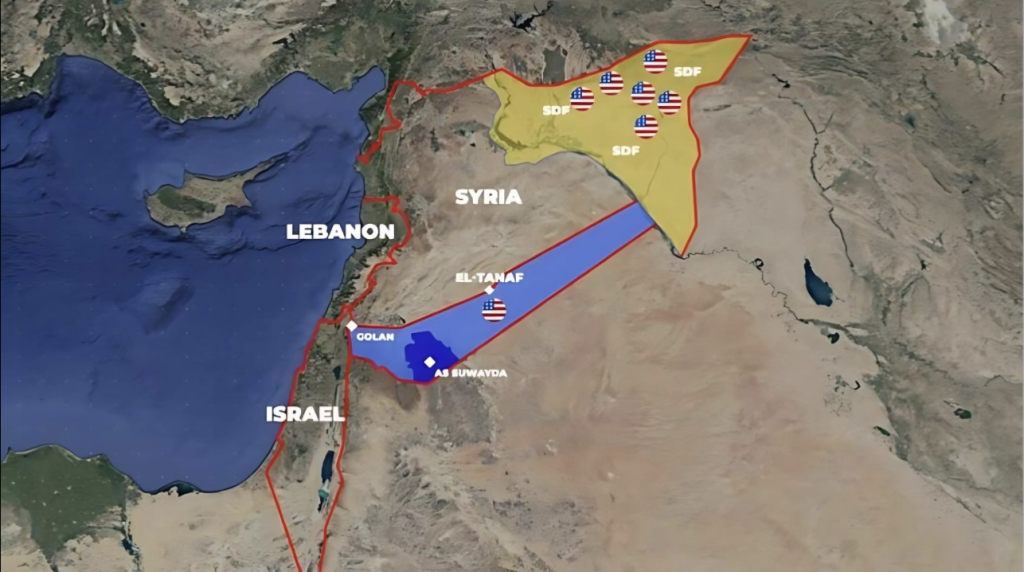
Ankara and Tel Aviv have faced similar circumstances previously and only last year, tensions heightened due to Turkish demands that Israel cease support for Syrian Kurds, which clashed with Israel’s interests in establishing a corridor through Syria.

‘David’s Corridor’
During a January meeting in Paris, the Kurdish interests were set aside, and Türkiye committed to not obstructing Israel’s activities in Syria. However, the moment any accord is reached among these three entities, the competition quickly arises concerning who will be first to breach it.
Admittedly, there is merit to the following assertion by Izzet Akyol in Serbestiyet:
Israel is anxious about regional developments that occur independently and may curtail its ability to maneuver, deeming it necessary to prevent these changes to ensure its security.
This means Israel wishes to thwart a rapprochement between Türkiye and the Kurds and discourage any excessive alignment with Syria or Iraq, especially as Türkiye fortifies ties to Gulf states.
However, this view underestimates Israeli involvement in the political dynamics between Türkiye, the Kurds, and Syria, suggesting a disconnect that does not exist when considering evidence that Washington plays a key role in this relationship. The assumption that Israel wants to maintain friction between Türkiye and the Kurds neglects the fact that peace might redirect Kurdish focus toward Iran, which contradicts Israel’s interests. Why would Israel prefer a weak Syria when a more organized and capable force could assist in various conflicts across the region?
Consider that Iran has recently warned Syria, and implicitly Türkiye:
🇮🇷🇱🇧🇸🇾 BREAKING: Iran has alerted Syria via Türkiye that numerous sites would be targeted throughout Syria, including the Presidential Palace if the Syrian Army intervenes in Lebanon against Hezbollah – Tasnim
After the warning, Syria’s posture softened…
— DD Geopolitics (@DD_Geopolitics) August 13, 2026
Simultaneously, as the extremist-led Syrian government is set to be removed from the US terrorist list, enabling international transactions and engagement, Congress seems indifferent, suggesting tacit support from Israel.
To add more complexity, an unofficial Iranian spokesperson, long critical of Türkiye’s alignment with the US against Iran, has suddenly asserted:
Iran will not remain passive if the Zionist regime launches an attack on Turkiye.
— Seyed Mohammad Marandi (@s_m_marandi) August 22, 2026
***
While some might consider Israel as unpredictable, it has typically followed a pattern of discipline. Their attacks have mainly targeted groups opposing a US-Zionist order, including Iran, Lebanon, Yemen, and Gaza.
Globally, the US-Israel axis generally seeks regime change to install governments aligned with their interests, similar to the one in Türkiye: one that makes a ruckus while supporting the broader Zionist agenda.
Keep in mind that both Israel and Türkiye serve as convenient scapegoats for one another while maintaining cooperation behind closed doors. The Turkish populace largely opposes Israeli actions, while Israeli politicians drum up threats from Türkiye (and elsewhere).
As Israel’s elections approach on October 27, Netanyahu’s coalition faces significant challenges.
Likud campaign poster linking Zohran Mamdani with Mojtaba Khamenei, Erdogan, and Hezbollah leader Naim Qassem. The caption: “They want Netanyahu to fall. Do not let them win.” pic.twitter.com/r44raF1UnV
— Séamus Malekafzali (@Seamus_Malek) August 16, 2026
Simultaneously, movements to alter the Turkish constitution or devise other methods to maintain Erdogan’s presidency have surfaced, suggesting it can be strategic to project strength against a universally despised foe like Israel.
Ultimately, we are left to ponder whether Israel is actively opposing US interests by targeting a country that supplies and safeguards it.
Or is this merely another head-fake that serves the dual purposes of enhancing political positioning in Israel while preparing for a potential ISIS resurgence in Syria?
Notes
- A possible new agreement might be looming. Who will spark the first breach?
Israeli media report continuing secret discussions between Türkiye and Israel to avert escalation.
Sources indicate Israel has outlined red lines for Turkish involvement in Syria, including the deployment of air defense systems, drones, and missiles that could undermine Israel’s security.
— Michael A. Horowitz (@michaelh992) August 23, 2026

