What Happens If I Eat Moldy Food?
It happens to everyone: you bite into a piece of leftover challah from Shabbat, taste something off, and find a green fuzzy patch underneath. Or you pull a container of leftovers out of the fridge and discover an unexpected science project. This leads to a common question: will I get sick?
The Short Answer: Not Usually
According to food safety experts, if you accidentally consume a small amount of mold, you are likely to be just fine. Darin Detwiler, an associate teaching professor at Northeastern University, emphasizes that nausea or vomiting can be your body’s way of expelling the mold, which usually leads to no significant health issues for healthy individuals.
Most Likely Outcome: Nothing
Most people who accidentally bite into moldy food report an unpleasant taste, with few experiencing any symptoms. Experts like Julia Zumpano, a dietitian at the Cleveland Clinic, and Lona Sandon, an associate professor of clinical nutrition at UT Southwestern, agree that mild reactions, if any, are typical in moldy food situations.
The Real Risk: Mycotoxins
However, not all molds are harmless. Some can produce mycotoxins, toxic compounds released by certain molds on foods like corn and peanuts. Abby Snyder, a food scientist, notes that mycotoxins can’t be detected by sight, taste, or smell and that cooking does not eliminate them. Thus, reheating moldy bread or leftovers won’t make them safe to consume.
Vulnerable Groups
People with mold allergies or compromised immune systems should be particularly cautious. In rare cases, severe reactions can occur. For example, a 19-year-old with allergies experienced anaphylaxis after consuming moldy pancakes.
What the Medical Literature Shows
While accidental consumption of mold is generally low-risk, the research highlights dangers from chronic exposure to mycotoxins, particularly aflatoxins from certain molds. Long-term dietary exposure to aflatoxins is linked to liver cancer.
When to Seek Medical Attention
If you experience symptoms such as fever, nausea, diarrhea, or trouble breathing after eating mold, consult a doctor. Immunocompromised individuals, pregnant women, young children, and the elderly should be particularly vigilant.
What to Toss and What to Trim
According to the USDA:
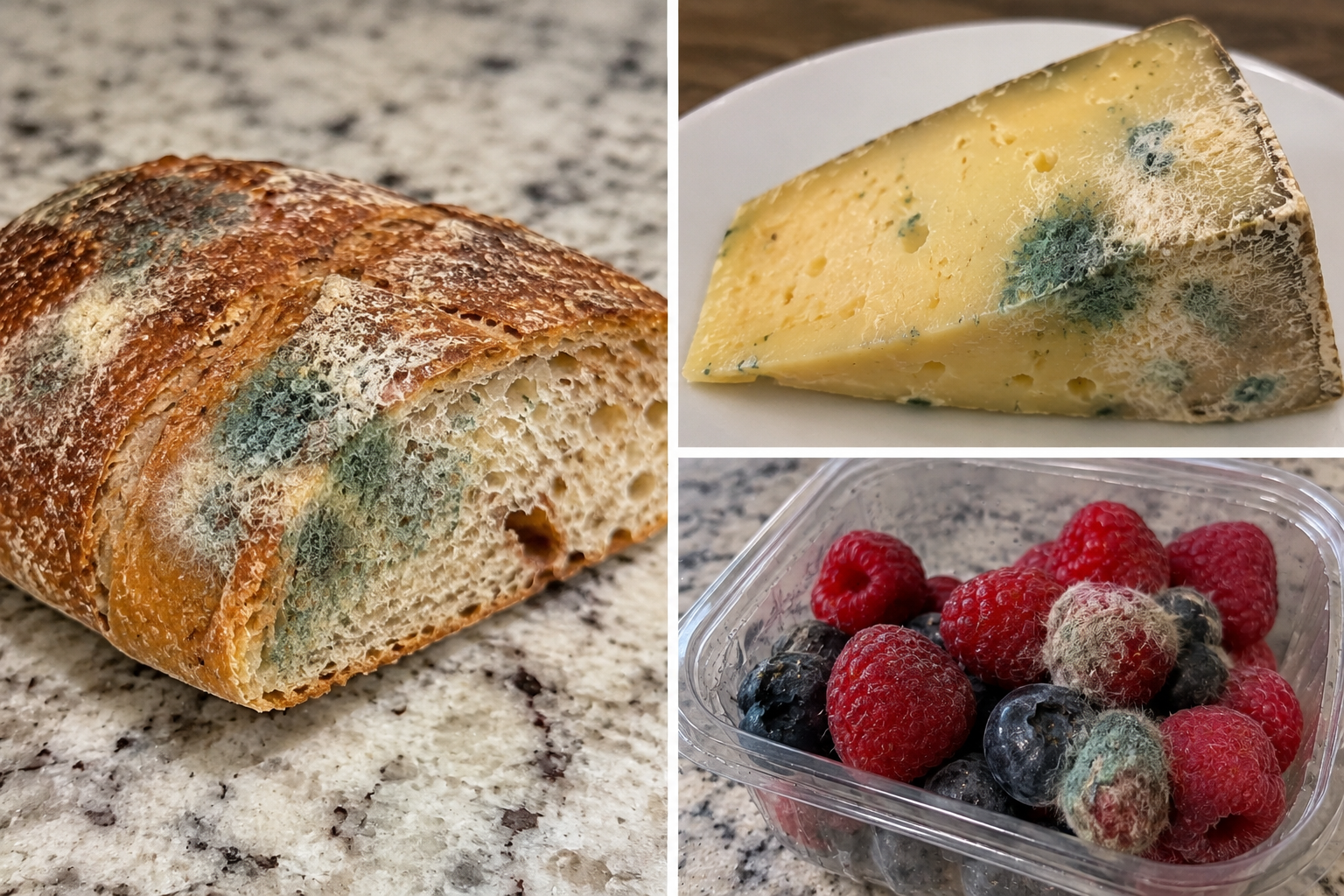
- High-Moisture Foods: Discard entirely (e.g., bread, soft fruits, prepared leftovers).
- Hard Foods: Can be salvaged by cutting at least one inch around the mold (e.g., hard cheeses, firm vegetables).
Mold Prevention Tips
To keep mold at bay:
- Refrigerate perishables promptly.
- Keep the fridge below 40°F.
- Store opened perishables in clean, sealed containers.
- Freeze excess bread instead of leaving it on the counter.
Conclusion
If you’ve accidentally eaten mold, monitor for any symptoms and don’t panic. The real concern is how to handle the affected food. When it comes to soft, moldy items, the safest choice is to throw them out.