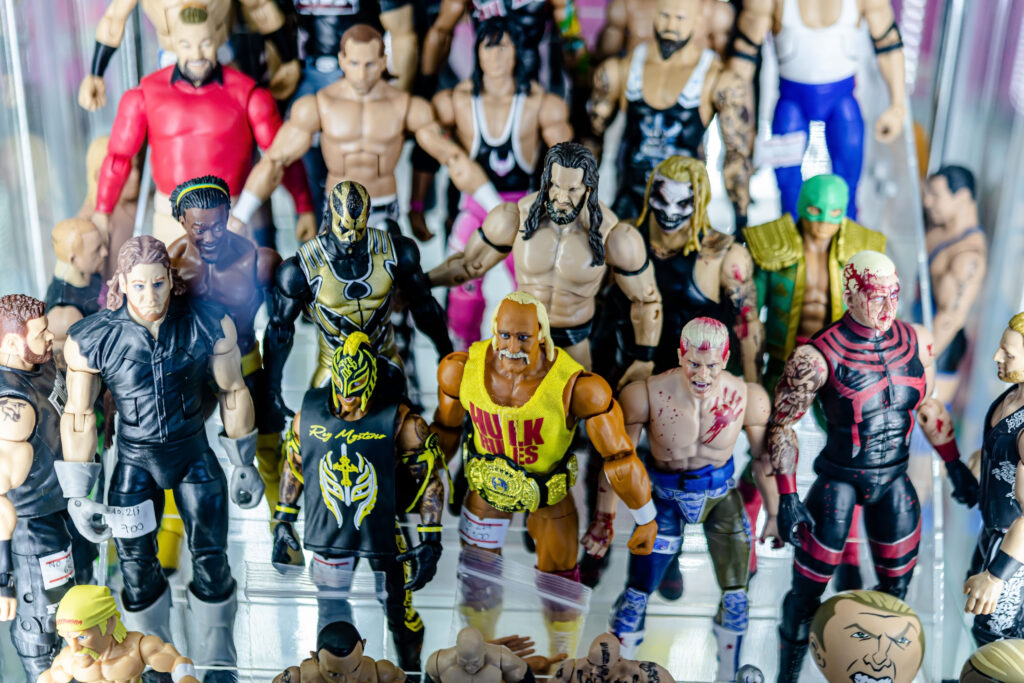
In the intricate web of global trade, every purchase reflects a series of transactions that connect various economies. Tyler Cowen and Alex Tabarrok delve into this phenomenon in their textbook, Modern Principles of Economics. To illustrate their concepts, I decided to explore what occurs when Walmart acquires toys from a Chinese supplier by purchasing an action figure of All Elite Wrestling’s Brody King at my local Walmart. This exclusive figure from the Jazwares “Unrivaled” collection cost me $21.82 after tax. The item was produced in China for a company based in Florida, represents an athlete residing in Georgia, and was bought in Alabama. While every stage adds value globally, let’s concentrate on the portion that enriches the Chinese manufacturer.
What does the manufacturer do with the dollars earned from selling me this wrestling figure through Jazwares and Walmart? Primarily, they need these dollars for transactions priced in U.S. currency. There are several possible uses for these earnings: the manufacturer may purchase American goods and services, such as higher education. They might also invest in the U.S. by acquiring corporate bonds or lend to the government through Treasury bonds. Additionally, they have the option to buy dollar-denominated assets, including existing stocks and bonds. Lastly, the manufacturer might choose to exchange the dollars for any of these investment opportunities.
How does this transaction impact the balance of payments? The trade deficit expands because we have imported the action figure. While this topic garners significant attention, concerns about the trade deficit can be exaggerated. In the long run, nations pay for their imports with their exports. Furthermore, the dollars “return” to the U.S. as foreign direct investment. The current account deficit, representing the trade balance, corresponds directly with the capital account surplus.
In the lead-up to the 2024 election, many asserted that in “Econ 101,” GDP declines with an increase in imports, as net exports (exports – imports) is the last part of the GDP equation. This highlights a misunderstanding of what GDP measures and why net exports are positioned at the end of the equation. Gross Domestic Product quantifies the total value added to the economy, a complex task in a globalized market where most purchases possess added value from other countries; similarly, many foreign purchases reflect value created in the U.S. “Net exports” embody this reality: exports indicate added value domestically (such as design), while imports account for value added elsewhere.
The conclusion is clear: increased imports do not diminish GDP. Many individuals and nations contributed to my newly acquired Brody King figure, including Brody King himself, who receives royalties for his likeness. The transaction amount of $21.82 encompasses value added by various contributors—employees at my local Walmart, executives in Bentonville, Arkansas, the logistics personnel transporting the item, U.S.-based product designers, and the business acumen of AEW CEO Tony Khan. The production and packaging might have occurred in China, yet the purchase is recorded as a consumption expenditure in the national income accounts. Part of the $21.82 comprises the value added in China, leading to an overall increase in GDP, while also acknowledging value creation outside the U.S.
A skeptic might argue, “Wouldn’t it be better if the figure were made in America by American workers?” This perspective underestimates the principles of comparative advantage. Manufacturing in the U.S. is significantly more expensive than in China and other countries. I was only willing to pay $21.82 for the action figure, as this purchase was made specifically for this article and my final class meeting of the semester. Had the price been set at $30, I would have likely opted out. While the share of U.S. value added could increase, overall value creation in the economy would diminish.
In discussions surrounding balance of payments, economists have often pointed out the widespread misconceptions surrounding the trade balance. As Daniel Klein and Donald Boudreaux remind us, the term “deficit” carries a negative connotation, while “surplus” tends to be viewed positively. However, this emotional response can obscure the truth. Imports do not harm our economy, and foreigners contribute positively to our well-being through every transaction.
