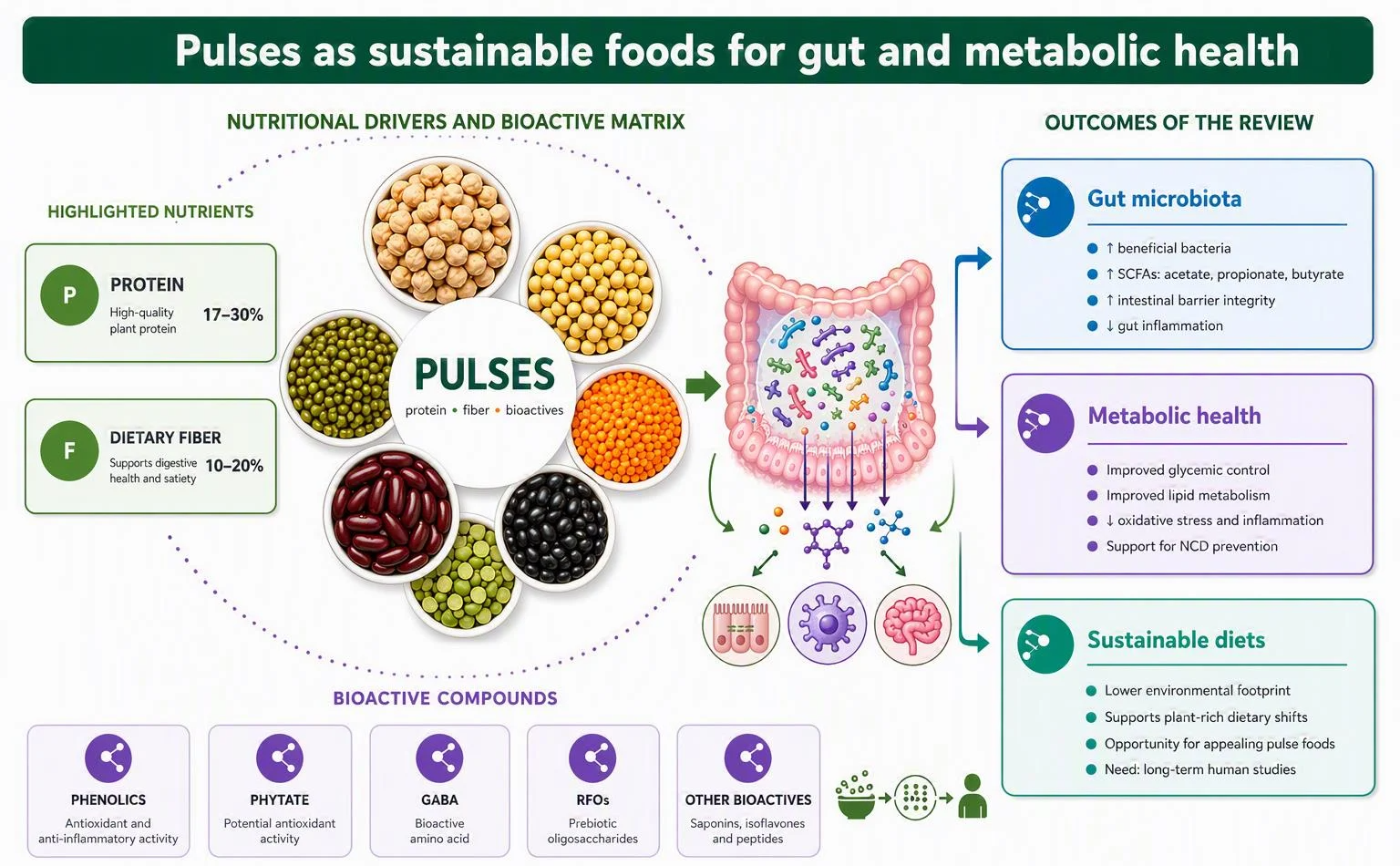
Pulses are gaining recognition for their nutrient density and potential health benefits. A narrative review published in Nutrients sums up the last decade’s research on pulses, highlighting their nutritional advantages and role in sustainable diets.
Key Points:
-
Nutritional Value: Pulses are rich in protein, fiber, and essential micronutrients, making them a healthier alternative to animal-based proteins, which have bigger environmental footprints.
-
Plant-Based Diets: The shift towards plant-rich diets in places like Europe is linked to health benefits and lower environmental harm. Pulses offer a wide array of nutrients and may help prevent chronic diseases.
-
Gut Health: Fiber in pulses supports a diverse gut microbiome, boosting the production of short-chain fatty acids (SCFAs) that enhance gut barrier function and metabolic health.
-
Processing Benefits: Traditional preparation methods such as fermentation can lower anti-nutritional factors in pulses, making them easier to digest and enhancing nutrient absorption.
-
Consumption Trends: Despite the benefits, pulse consumption is low in Europe compared to other regions like Latin America and South Asia. Current guidance varies widely, urging increased intake.
-
Research Gaps: While evidence suggests that pulses can mitigate risks for non-communicable diseases, more long-term human studies are needed to confirm the health mechanisms proposed.
-
Cultural and Market Barriers: Adoption of pulses faces challenges due to a lack of familiarity and competition from processed plant-based products.
Conclusion:
Pulses have potential as a key component in healthier and more sustainable diets, but further research is necessary to fully understand their long-term health impacts.
For further reading, check out the study: Transitioning Towards Sustainable Diets: Pulses, Their Role in Modulating Gut Microbiota and Metabolic Health.