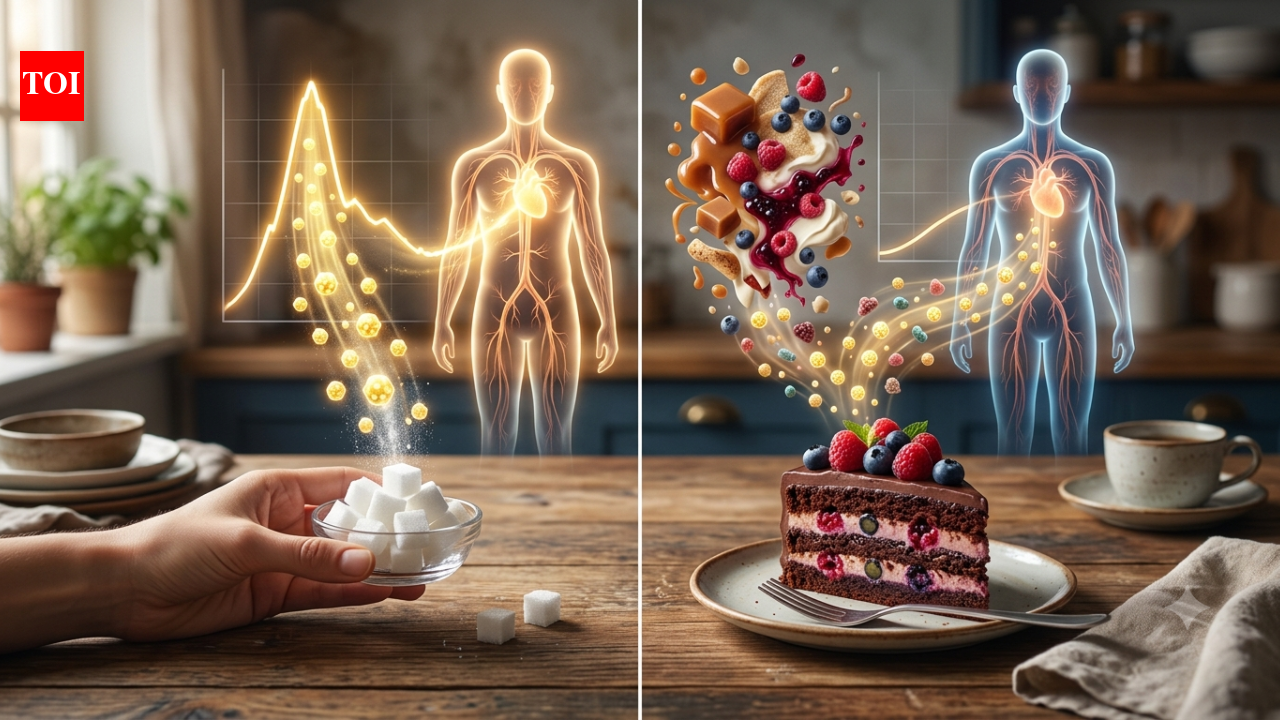
The conversation around sugar and its effects on our bodies, especially for individuals with diabetes, can be quite perplexing. Here’s a concise summary of the key points from the discussion with Dt. Surabhi Sharma, a Clinical Nutritionist:
Understanding Sugars:
-
Sugar Type and Metabolism:
- Table sugar consumed alone is absorbed quickly, leading to a rapid increase in blood sugar.
- Sugars in desserts, combined with fats, proteins, and fibers, are absorbed more slowly, which can moderate blood glucose spikes.
-
“Healthier” Alternatives:
- Sweeteners like jaggery, honey, and raw sugar are not necessarily better for managing blood sugar. They have similar carbohydrate content to white sugar and don’t provide significant nutritional benefits.
-
State of Food Matters:
- Liquid sugars (like sugary drinks) are absorbed more rapidly compared to solid desserts, which take longer to digest and thus offer a slower rise in blood glucose levels.
Managing Treats:
- People with diabetes should focus on:
- Total carbohydrate content rather than just sugar.
- Portion sizes and the overall meal composition.
- Eating desserts after balanced meals (rich in protein and fiber) can reduce glycemic impact.
Common Misconceptions:
- Many assume “natural” sugars are diabetes-friendly, but they can still spike blood sugar levels. Labels like “organic” do not equate to lower carbohydrate content.
Key Takeaway:
- Successful management of diabetes requires careful consideration of food choices, portion sizes, and overall meal planning rather than relying solely on misleading labels or the type of sweetener used. Consulting healthcare professionals for personalized advice is crucial.