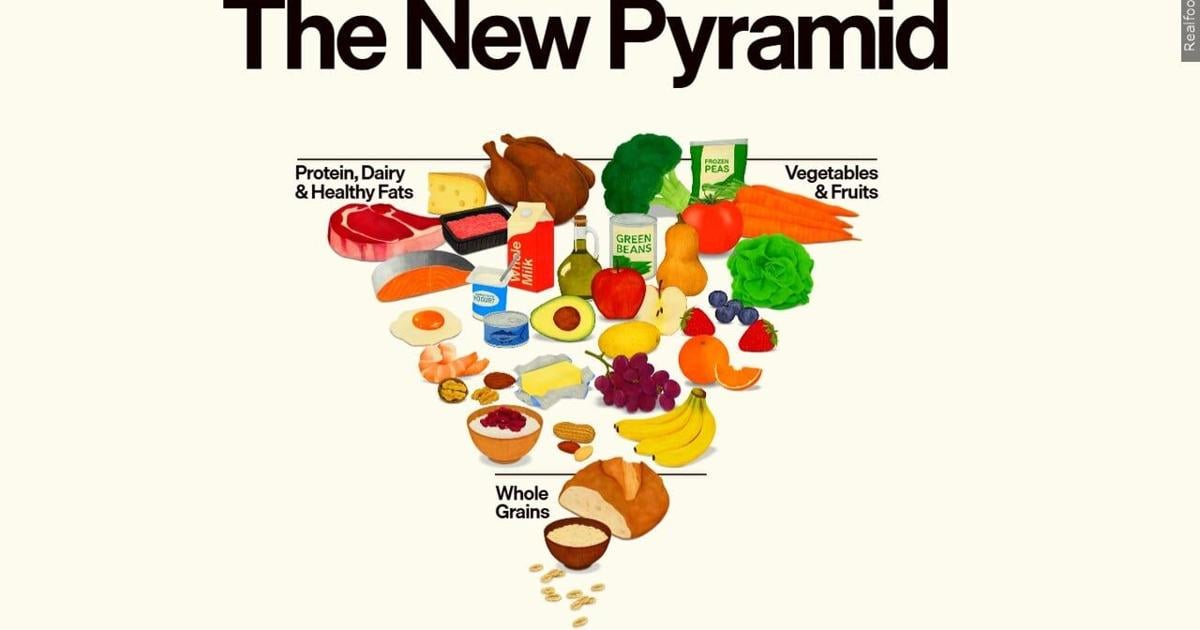
Recent updates to national dietary guidelines have revolutionized the food pyramid, prioritizing protein and healthy fats. However, despite this shift, many Americans seem to be overlooking these recommendations, which comes amid rising obesity rates across the nation.
For years, the traditional food pyramid, introduced in the 1990s, emphasized a diet heavily reliant on grains like rice, cereals, and pasta. This was followed by recommendations for fruits and vegetables, with only smaller servings of dairy and meat, while fats and sugars were to be consumed sparingly.
Nutrition experts point out that although the old guidelines were well-founded in the science of the time, they do not reflect modern research findings.
The newly updated food pyramid has inverted this structure, placing protein—derived from both animal and plant sources—at its base. Healthy fats and oils now occupy a prominent position in the middle, followed by fruits and, lastly, non-processed whole grains.
In addition to this visual transformation, the revised guidelines offer more comprehensive recommendations. Health officials now advocate for a reduction in highly processed foods, particularly many prepackaged meals and fast-food options that tend to be loaded with sugar and salt but lack nutritional benefits.
Moreover, the new guidance emphasizes the importance of healthy fats, including whole milk, and allows for some saturated fats in moderation. However, it still advises that salt intake should be capped at no more than one teaspoon, or around 2,300 milligrams, daily.
Covering Your Health is brought to you by Our Lady of Lourdes Health.
Despite much of this advice having been discussed for years, experts express concern that it hasn’t translated into improved health habits across the country. Current statistics reveal that nearly 40% of U.S. adults are classified as obese.
Louisiana ranks fourth among states for adult obesity, with a rate of 39%, trailing close behind Mississippi, which comes in at 40%.
Health officials characterize the updated recommendations as firmly rooted in modern nutrition science. However, they have noted that approximately half of U.S. adults are not adhering to these guidelines, leading to ongoing challenges with weight gain across the nation.


