The New Landscape of War
Recent conflicts, particularly in Ukraine, have ushered in a remarkable shift in warfare, reminiscent of the mechanized battles of the twentieth century. Baluyevsky and Pukhov highlight in their work, “Digital War – A New Reality” (Russia in Global Affairs, 2025), that “the fog of war has almost entirely lifted.” Modern technologies such as swarms of drones, integrated sensors, and reconnaissance satellites have created an environment of continuous visibility on the battlefield. Any emission, heat signature, or vehicle movement is vulnerable to rapid detection and destruction. The authors characterize this as a “zone of total annihilation,” which extends deeply behind the front lines.
This increased clarity fundamentally alters traditional military strategies. According to the authors, the “era of large battalions is over.” Instead of sheer numbers, success now hinges on dispersion, concealment, and adaptive electronic strategies. The core confrontation is not solely between armies but between their networks: Which side can relay data more swiftly? Which autonomous systems can coordinate actions more effectively? Whose decision-making processes remain resilient under pressure?
For elite infantry units, this evolution necessitates a significant shift in their roles. Once tasked with overcoming enemy positions, these forces are now focused on survival, perception, and integration. They serve as low-profile operatives connecting sensors, drones, and precision fire systems, applying their judgment when automation encounters challenges. The lesson from the conflict in Ukraine is clear—humans are far from obsolete; instead, adaptability and training are paramount for survival in a technology-dominated battlefield. This article delves into the nature of this military transformation.
More coordinated drone swarms. This is what 1000 hive mind drones looks like.
Now imagine them even smaller, faster, and completely controlled by AI.
Conventional warfare is over. pic.twitter.com/UbJd1pCWqM
— Green Beret Nap Time (@GBNT1952) February 13, 2025
From the Physical to the Cognitive Elite
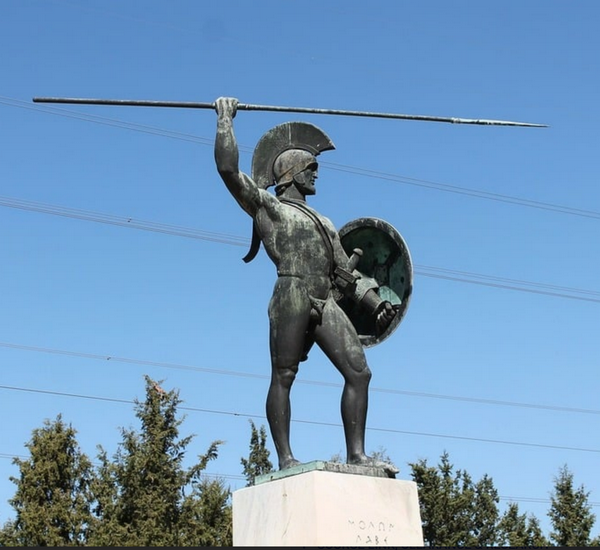
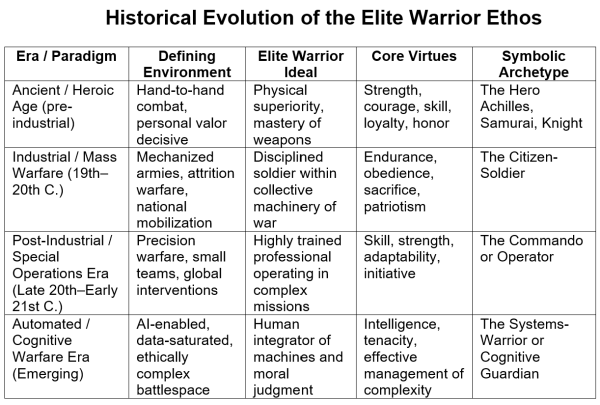
Historically, military elites were distinguished by their physical prowess. Figures such as hoplites, knights, rangers, and commandos embodied endurance and bravery amidst harsh conditions. Their extensive training honed both their physical capabilities and mental determination for combat situations.
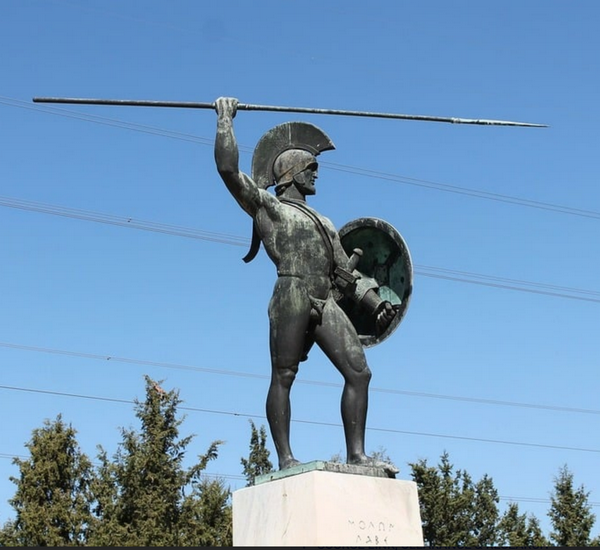
Spartan warrior
However, the defining frontier is now cognitive capacity rather than muscular strength. In contemporary combat, the ability to discern patterns amid digital noise, integrate conflicting data, and make rapid decisions is critical. Elite soldiers must navigate an onslaught of sensor information, AI-driven recommendations, and potentially misleading data from adversaries. In this context, mental fortitude—the capacity to remain analytical, calm, and responsible—emerges as the new hallmark of distinction.
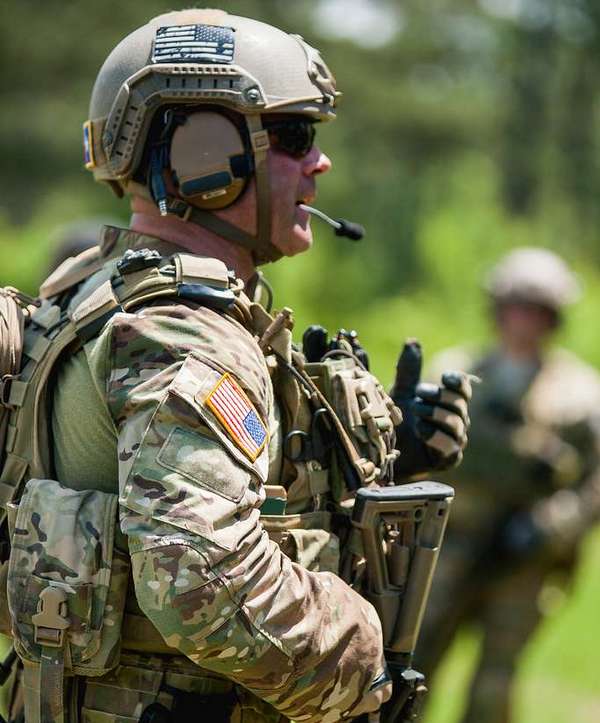
Modern special Forces soldier
This shift does not negate physical capability; rather, it transforms its role. The body must now support the mind: resilient enough to withstand stress and deprivation, yet trained to maintain clarity in chaotic situations. The future elite is defined by the soldier capable of precise thinking in an environment flooded with information.
Automation and the Narrowing of the Human Military Domain
With the rising prevalence of autonomous and semi-autonomous systems, human combatants are increasingly occupying a confined space in combat scenarios. Drones are now responsible for clearing trenches, while robotic mules aid in logistics, and machine-vision systems identify threats. Humans remain essential primarily in areas requiring ethical judgment, improvisation, or clarity. This specificity is where elite forces will focus their efforts.
In this context, the elite’s role becomes paradoxical: they operate within the smallest physical domain while bearing the greatest moral and strategic responsibilities. They serve as the crucial decision-makers in a landscape dominated by machines. Their courage extends beyond the physical to the intellectual—the willingness to take responsibility amid uncertainty and the resolve to override automation when it contradicts moral judgment. In a digital battlefield, courage equates to discernment.
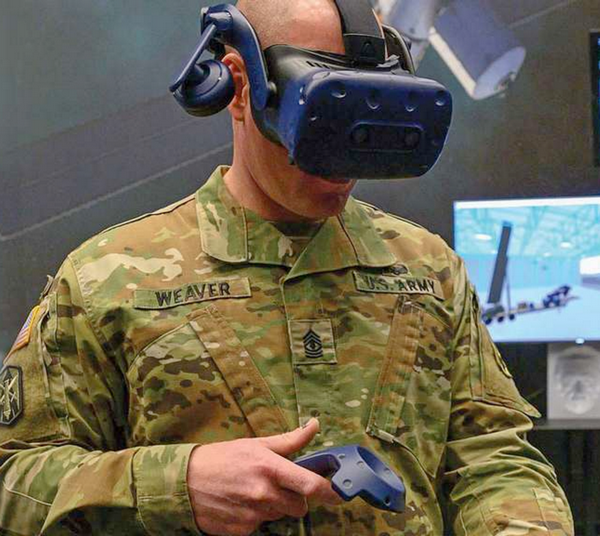
Soldier with VR headset
The New Warrior Ethos
Traditionally, the warrior ethos—characterized by valor, endurance, and sacrifice—thrived in environments where the key quality was the willingness to face hardship and peril. While this remains significant, it now merges with traits such as broad intelligence, disciplined restraint, tenacity, and resilience amid informational chaos. The modern elite must deftly navigate constant operational complexity, processing multiple data streams whose reliability may be questionable.
The definition of battlefield expertise expands to encompass the ability to make rapid, clear decisions under pressure. Honor evolves into fidelity to the truth when algorithms promise deceptive accuracy. The battlefield hero of the twenty-first century is no longer merely the warrior who charges, but the one who understands when, where, and if to engage automated systems.
Selection and Training in the New Paradigm
Historically, selection for elite military units emphasized physical challenges, such as endurance marches and pain tolerance. While these will continue, there will be an increased focus on cognitive challenges: simulations of information overload, decision-making under technological barriers, and moral dilemmas in high-pressure scenarios.
The integration of neuroscience and behavioral analytics is likely to enhance traditional training methods. Monitoring brain states, employing adaptive simulations, and incorporating virtual-reality stress exposure will help identify individuals who maintain focus amid chaos. Skills in language, coding, and systems management will become as vital as marksmanship. Elite soldiers will learn to operate mini-UAVs, analyze electronic signals, and use battlefield AI, all while executing conventional small-unit tactics.
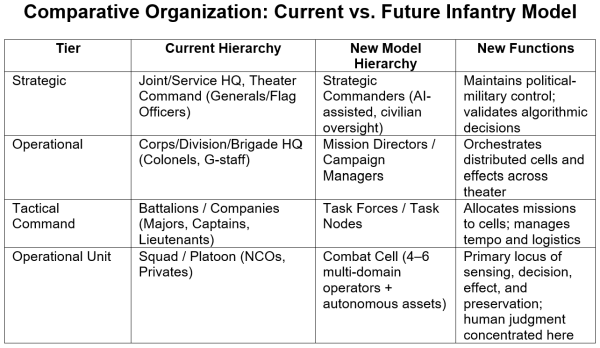
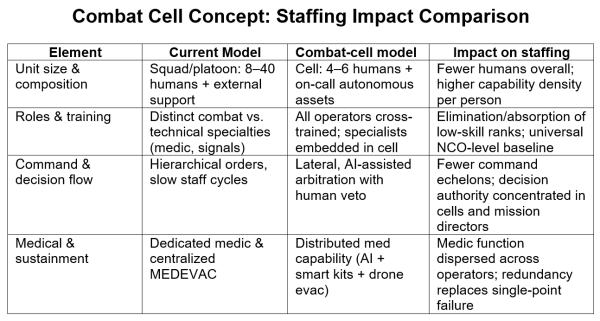
Leadership training will adapt as well. Commanders will need to manage teams functioning as self-sustaining, decentralized networks that are data-savvy. Future elite platoons will resemble armed sensor-fusion cells more than traditional squads.
A New Organizational Model for the Digital Infantry Force
Erosion of the Conscription Model
The rise of automation spells the decline of the conscription model. In a reality where every action can be tracked and destroyed, untrained soldiers become liabilities rather than assets. While large mobilized armies were fit for the industrial age, the digital realm values skill over numbers.
Conscripts cannot be trained swiftly enough to manage intricate systems or demonstrate effective judgment under the supervision of machines. The future will likely belong to smaller, professionalized forces wherein each member is a seasoned technician, analyst, or integrator. Even nations that retain conscription may pivot towards technical or cyber roles rather than frontline deployment.
This concentration on expertise will widen the divide between elite and non-elite units. Elite forces will evolve into a blend of special operations and cyber capabilities, comprising individuals selected for their proficiency in both kinetic and informational domains.
Social and Cultural Consequences
This shift carries inherent risks. As military elites become increasingly distanced from public experience, the potential for alienation between the military and society grows. When warfare mechanisms become invisible, handled by remote specialists and semi-autonomous systems, the traditional bond of shared sacrifice can weaken. Civilian admiration may evolve into detached respect or even suspicion of a distinct class of “technocratic warriors.”
To maintain legitimacy, military organizations must foster new moral narratives emphasizing accountability and stewardship. The elite warrior must be depicted as a guardian of thresholds, embodying a human conscience within automated violence instead of merely an agent of destruction.
A New Hierarchy of Judgment
While automation fosters efficiency, it also generates a lack of clarity. AI systems can identify intricate patterns that elude human perception, yet may arrive at flawed or misguided conclusions. The newfound responsibility of elite soldiers is to interpret these outcomes—determining when to trust algorithms and when to challenge them. This demands both technical proficiency and philosophical insight.
The Shrinking Circle of the Human Elite
These transformative trends converge to signal a broader trajectory: as automation deepens, the circle of human engagement tightens. The next evolution of military elites will prioritize contraction rather than expansion. As artificial intelligence undertakes more tactical and strategic responsibilities, the core group of human decision-makers engaged in combat will dwindle significantly.
This evolution carries substantial ethical and organizational implications. As human agency diminishes, there will be a concentration of power and accountability among an ever-narrowing group. Achieving elite status will become less about physical or intellectual capability and more about trust, interpretive judgment, and moral understanding—qualities that justify human involvement in lethal decision-making processes.
As warfare becomes more automated, the pool of elite warriors may shrink, but the weight of each decision will become more significant; every choice will stand in opposition to machine logic. Authority will stem not from superior calculation but from an ability to question the algorithm itself—recognizing when AI-generated outcomes might falter.
Continuity and Renewal
Despite these myriad changes, the essence of military excellence remains rooted in mastery. Whether utilizing a spear, rifle, or state-of-the-art technology, the elite have always navigated the frontiers of armed conflict. The enabling elements may shift—steel to silicon, muscles to data—but the fundamental principles of martial virtue, discipline, skill, judgment, and courage persist. The algorithmic elite carry forth the legacy of warriors willing to embrace the burdens and responsibilities of combat. Their fortitude lies in understanding; their strength is found in restraint. Thus, the automation of warfare does not obliterate the warrior tradition but purifies it, stripping away ritualized violence to reveal the core mission: achieving victory by those equipped to manage the stresses of combat and weighty decisions.
Nevertheless, there is a risk in overestimating this new paradigm of military elites. Advanced militaries may portray their highly-skilled, technological forces as instruments of precision and restraint, yet rival states will persist in seeking competitive military advantages. The spread of AI-driven command systems and cognitively trained units will not necessarily reduce the frequency of conflicts; rather, as decision cycles accelerate and modernized elite formations proliferate among competing nations, the potential for escalation may increase. Each nation’s quest for “warfighting precision” could transform into a different type of arms race, one where supremacy is defined not by firepower but by speed, autonomy, and information dominance.
Conclusion
The evolution of military elites signifies a transition from traditional heroic warfare to a focus on cognitive warfare. The critical determinant of success is shifting from physical superiority to informational adaptability. Future conflicts will not be fought by vast armies of conscripts but by specialized professionals navigating complex interactions within networks of machines and data. In this enhanced landscape, the highest virtue will be the clarity of judgment: the ability to discern pertinent truths, act decisively, and accomplish objectives amid algorithmic and informational chaos. The elite warriors of tomorrow will not solely be the strongest or most merciless but those capable of harmonizing intelligence, technology, and ethics into effective action. The battles of the future will be won not through destruction, but through the navigation toward victory, where understanding becomes the most potent weapon.


