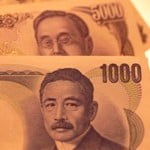
 Earlier this month, Haruhiko Kuroda, the Governor of the Bank of Japan (BOJ), revealed that Japan’s central bank is deliberating on the issuance of a 50-year government bond. This initiative aims to establish a floor for super-long interest rates. While the methodology behind this strategy raises questions, we will delve into the benefits proposed by Japan’s policymakers first.
Firstly, the introduction of a 50-year government bond is intended to provide the government with affordable long-term funding. Secondly, it offers yield-hungry investors better returns. Affordable funding combined with higher yields sounds appealing, doesn’t it?
However, it’s crucial to understand Kuroda’s historical context. Following a credit-induced bubble and the subsequent collapse of Japan’s real estate and stock markets in the late 1980s, Kuroda and the BOJ have pursued numerous strategies to revive asset prices. Three decades later, they persist in this endeavor.
The BOJ has experimented with virtually all forms of unconventional monetary policy designed to rescue the nation from economic malaise, including negative interest rates, direct purchases of Japanese stocks via exchange-traded funds (ETFs), and government-sponsored spending initiatives. Yet, the Nikkei index remains over 40 percent below its peak.
Moreover, Japan is a case study in the impacts of an aging populace, overwhelming debt, and stagnant growth. The most straightforward solution may be to default and allow the economy to reset, but this is rarely the path taken when short-term solutions appear more convenient.
What is Yield Curve Control?
The Japanese economy has struggled for the past 25 years, with government debt skyrocketing to over 238 percent of its GDP.
This staggering debt ratio highlights the extent of market intervention orchestrated by Japan’s central planners, far exceeding the U.S. debt-to-GDP ratio of approximately 105 percent. It distinctly illustrates the aggressive monetary policies implemented by the BOJ.
The increase in Japan’s government debt to this unprecedented level has largely been driven by enormous asset purchases from the central bank. Currently, the BOJ owns nearly 50 percent of the Japanese government bond market, a drastic increase from less than 10 percent a decade ago.
A significant factor in the BOJ’s increased asset purchases is the concept known as Yield Curve Control (YCC). This is not a fanciful idea; it is a formal policy of the BOJ.
The YCC mechanism allows the BOJ to intervene in the credit market at both ends of the spectrum to shape the yield curve according to its preferences. In practice, this means that when the Japanese government issues debt, the BOJ purchases this debt at predefined maturities, carefully regulating the yield curve to avoid extremes.
The proposed issuance of a 50-year bond would be designed to stabilize super-long interest rates, with the BOJ controlling the rate through its purchases. If this sounds implausible, it’s because it is; this represents an extreme approach to centralized fiscal and monetary policy that distorts the credit market and creates an artificially managed economy.
Unfortunately, the Federal Reserve and the U.S. Treasury appear to be drawing inspiration from Kuroda’s playbook…
Japan’s Yield Curve Control Regime is Coming to America
Just as the BOJ desires a well-structured yield curve, so too do the central planners at the Fed and the U.S. Treasury. Their ideal yield curve mimics topographic elevation gradients, ascending evenly from lower yields in places like California’s Death Valley to the heights of Mount Whitney.
For example, the Federal Reserve aims for the yield on a 20-year Treasury to be about 2 percent higher than that of a three-month Treasury. Currently, the difference in yields for these two durations stands at just 0.5 percent, though at least it isn’t inverted.
It’s important to note that an inverted yield curve—where long-term rates fall below short-term rates—often signals an impending recession. When this occurs, as it did between late May and early October, U.S. policymakers feel pressured to intervene, contemplating the adoption of Japanese-style YCC to stabilize long-term yields.
In September, during a period of yield curve inversion, U.S. Treasury Secretary Steven Mnuchin stated:
“If there is proper demand we [the U.S. Treasury] will issue 50-year bonds, and if those are successful, we might even consider 100-year bonds.”
What Mnuchin failed to mention is that if demand isn’t sufficient, the Fed is prepared to step in and purchase U.S. Treasuries at the desirable rate. Recently, Neel Kashkari, President of the Federal Reserve Bank of Minneapolis, confirmed that the Fed is considering YCC:
“Kashkari echoed an idea mentioned by Fed Chair Jerome Powell earlier this week, suggesting that policymakers should contemplate the potential of yield curve control as another policy option.”
“He [Kashkari] noted that while the Fed may not target yields on 10-year notes like the BOJ does, controlling the initial segments of the yield curve could be an effective tool.”
Presently, the Fed holds approximately 13 percent of the nearly $16 trillion in marketable U.S. Treasury debt. The BOJ escalated its market share from less than 10 percent to nearly 50 percent in about ten years using YCC.
Clearly, U.S. central planners have a strong inclination to fund the government through YCC in the future. While Kashkari implies this would only apply to the shorter end of the curve, history shows that such measures rarely remain limited. There’s a high likelihood that they will extend their influence to the long end when necessary.
This trend is concerning. We have little power to alter it. The government insists on it, and the next downturn almost guarantees it.
Our forecast is that within a decade, the Fed will control at least 50 percent of the U.S. Treasury market.
Keep this prediction in mind.
Sincerely,
MN Gordon
for Economic Prism
Return from Japan’s Yield Curve Control Regime is Coming to America to Economic Prism