 The U.S. stock market has experienced a remarkable and unyielding ascent over the past decade. After hitting a low of 666 on March 6, 2009, the S&P 500 has surged by more than 370 percent, consistently setting new records.
During this period, many investors have grown to believe that the stock market is on a perpetual upward trajectory. They view investing in an S&P 500 ETF as a sure path to wealth. However, this mindset may soon require a harsh reevaluation. A change is inevitable.
In the meantime, while the bull market might extend for a while longer, one thing is clear: after such a significant increase, purchasing S&P 500 shares is more a speculative endeavor than a calculated investment. It hinges on hopes that the upward trend will continue. Here’s the reasoning behind this caution.
Over the last decade, the U.S. economy, assessed via nominal gross domestic product (GDP), has grown by approximately 50 percent. This rate of economic growth is considerably modest compared to the staggering rise of the S&P 500, with corporate profits significantly lagging behind stock prices.
Thus, the current stock market rally is less a reflection of a flourishing economy and more a product of the Federal Reserve’s extreme measures. With each passing day, this situation becomes increasingly precarious.
Central bankers at the Fed, much like their counterparts at other major central banks, have taken monetary policy to bewildering extremes. Actions such as zero and negative interest rates, quantitative easing, and various forms of market interventions have proliferated.
These strategies have led to soaring public and private debt levels without corresponding economic growth. Moreover, they have resulted in significant asset bubbles, exacerbating wealth inequality and igniting various forms of populism.
Yet, the Fed remains oblivious to its role in conjuring this behemoth. Now, in a bid to amend the consequences of their creation, they propose further intervention.
A Higher Calling
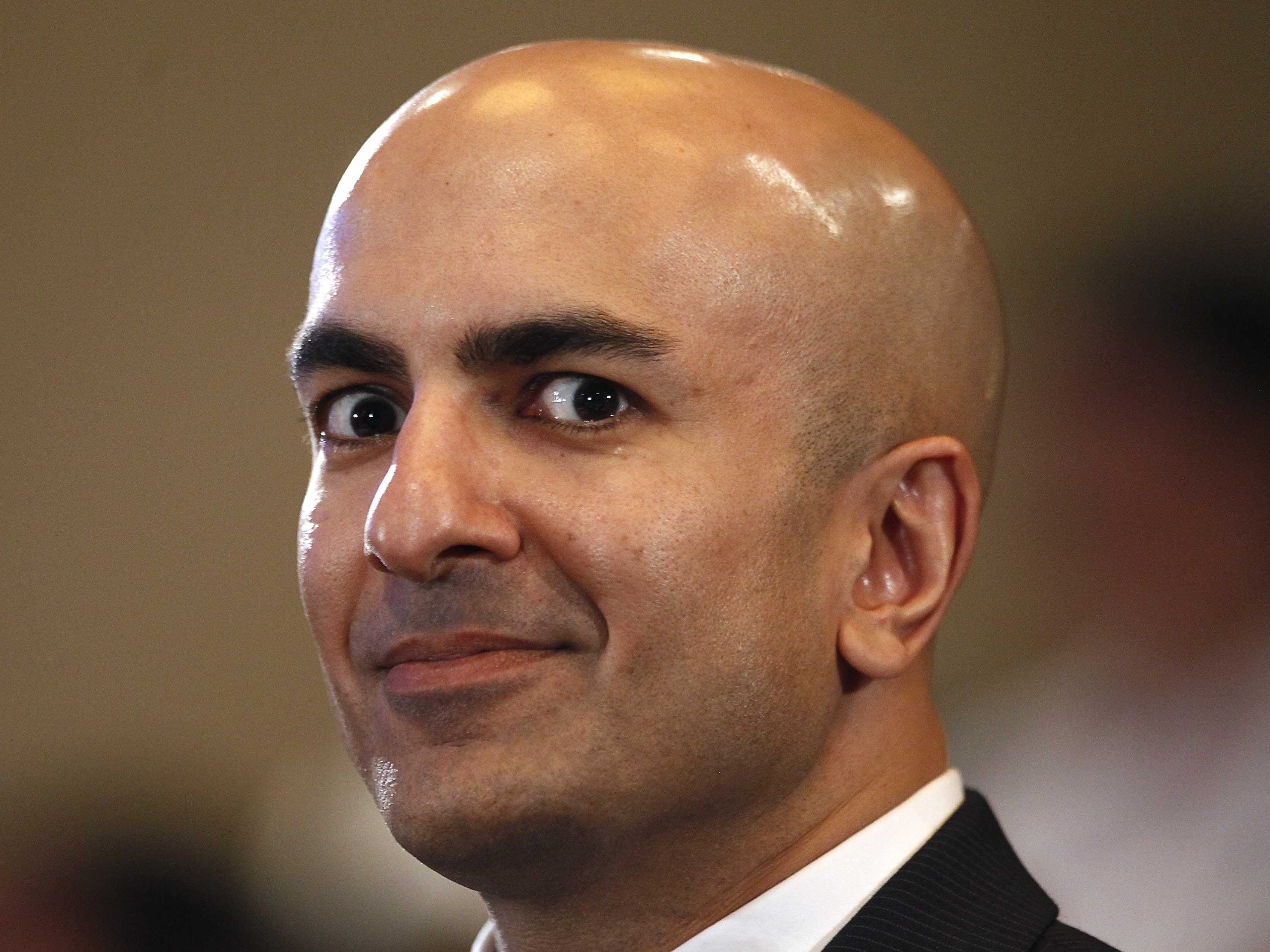
Just recently, Minneapolis Fed President Neel Kashkari stated:
“Monetary policy can play the kind of redistributing role once thought to be the preserve of elected officials.”
The rationale behind manipulating credit markets to achieve this objective remains foggy. Nonetheless, like the concept of yield curve control (YCC), Kashkari is eager to implement such strategies. These vague interventions are his answer to what he perceives as a higher purpose.
Kashkari’s track record shows he is a man with wild ideas. He is an extreme proponent of economic intervention, and his views often border on the fringe. If you recall, Kashkari, as the federal bailout chief, acted as the visible hand in distressed markets. In early 2009, amidst crisis, he worked relentlessly to allocate $700 billion from TARP to favored financial institutions.
This experience took a toll on Kashkari’s psyche, prompting him to retreat to a cabin in the Sierra Nevada Mountains, where he took up wood chopping—a clear departure from his former role. Many thought he had exited public life for good.
However, true believers seldom fade away. After an unsuccessful gubernatorial bid in California in 2014, Kashkari resurfaced as the President of the Minneapolis Fed in 2016. This appointive role seems to reward him for enduring the scorn of self-righteous lawmakers—notable figures like Barney Frank and Maxine Waters—all while distributing substantial taxpayer money to Wall Street banks. For Kashkari, such appointed positions are undoubtedly the pinnacle of achievement.
Curiously, fate seems to smile upon him repeatedly. In approximately one month, Kashkari will again serve as a voting member of the Federal Open Market Committee, positioning himself where he could once again unleash havoc on the financial markets during a significant crisis.
The Fed’s Response to Its Own Creation
As the economy faces stagnation in 2020, U.S. deficits are projected to exceed $2 trillion annually and are likely to remain at that level. The national debt is anticipated to balloon toward $40 trillion within the next decade. The Fed will undertake the task of monetizing this debt through YCC or another audacious approach by essentially creating money to lend to the Treasury.
If Kashkari has his way, the Treasury will distribute checks, backed by the Fed’s newly created funds, to the “struggling masses” that have already been disadvantaged by the Fed’s policies of wealth inequality. This is their misguided solution to the consequences of their own actions.
Nevertheless, the Fed and Kashkari are merely part of a larger landscape of bizarre proposals. An election year invariably showcases the mounting absurdity from Washington, irrespective of the outcome. The themes may differ, but the results remain consistent: an expanded government, skyrocketing deficits, and increased government control with diminishing personal freedom and liberty.
Currently, presidential candidates are enthusiastically competing to unveil the most extravagant promises, aiming to shower voters with benefits. The proposals range from economic patriotism and universal basic income to modern monetary theory and transition towards a green economy. This includes easing student debt, stopping speculation on unrealized capital gains, and even radical notions like outright currency devaluation.
The architects of these ridiculous schemes are waiting for the opportune moment—when the economy slows, markets freeze, and chaos reigns. Much like TARP or the Patriot Act, they will step forward with their plans precisely when panic peaks.
Ultimately, the resulting monster will wreak havoc in unforeseen ways.
Sincerely,
MN Gordon
for Economic Prism
Return from The Fed’s Answer to the Ghastly Monster of its Making to Economic Prism