
Scott M. Moore
Summary via publisher (Oxford U. Press)
In “China’s Next Act,” Scott M. Moore offers a fresh perspective on China’s global role by focusing on the intertwining themes of sustainability and technology. He posits that these urgent global challenges are fundamentally altering China’s economy and foreign policy, making it impossible to address them without involving China. However, the emphasis on sustainability and technological advancements also heightens economic, geopolitical, and ideological rivalries—a fact that Beijing is acutely aware of. To confront upcoming ecological and technological issues, the U.S. and other nations must adopt a similar mindset. In certain domains, like clean technology innovation, competition may foster positive outcomes for the environment. Conversely, in other situations, it could lead to dire consequences—only through collaboration can the hazards associated with artificial intelligence and other transformative technologies be mitigated.

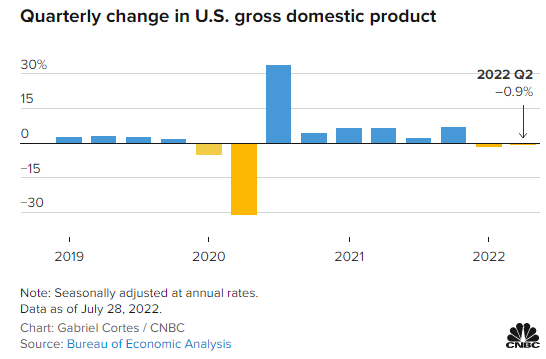
The U.S. gross domestic product (GDP) experienced a decline of 0.9% in the second quarter, according to a report by the Bureau of Economic Analysis. This decrease in adjusted real output, calculated on an annual basis, follows a 1.6% drop in the previous quarter. These consecutive declines have reignited discussions about the possibility of a recession in the United States. Nonetheless, some analysts suggest that this interpretation is debatable. The more fervent advocates for the recession narrative quickly express their views, leading to a heated exchange where both sides label each other as misguided.
* Chinese President Xi issues a warning to Biden regarding interference with Taiwan.
* Following a phone conversation, Biden and Xi plan to meet in person.
* China indicates that it has no major stimulus planned to support its slowing economy.
* The question of whether the U.S. is in a recession? Depends on the analyst you consult.
* Inflation in the Eurozone reached a record-high of 8.9% last month.
* Eurozone GDP grew by 0.7% in Q2; however…
* Germany’s GDP stagnated in Q2.
* Big tech companies appear resilient amidst the economic downturn.
* U.S. jobless claims have decreased but are still near the highest levels of 2022.
* The U.S. Q2 GDP declined, marking the second consecutive quarterly loss:
The battle against inflation is ongoing. The Federal Reserve raised interest rates by a significant 75 basis points yesterday, stepping up its efforts to combat the recent surge in inflation. The pivotal question remains: when will we start to see the impacts of these measures?
* The Federal Reserve raised interest rates by 75 basis points once again.
* Senator Joe Manchin, a crucial Democratic vote, approved climate legislation.
* The Senate passed a $52 billion bill to support U.S. semiconductor production.
* North Korea is escalating tensions with a new threat.
* The CBO forecasts a sharp increase in the U.S. public debt burden and deficit.
* Economic sentiment in the Eurozone declined drastically in July, indicating that a recession is imminent.
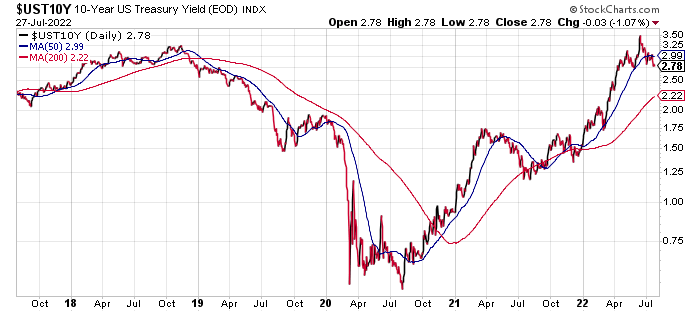
* The U.S. 10-year Treasury yield remains below 2.8% following another Fed rate hike:
While energy stocks have faced setbacks in recent weeks, this sector is now beginning to show signs of rejuvenation. Although it could simply be a temporary fluctuation or a last gasp after a robust bull run, energy shares continue to lead the year-to-date performance among various sector ETFs as of Tuesday’s close (July 26).
* Biden plans to speak with Chinese President Xi amid rising tensions.
* The IMF alerts that global growth is slowing, heightening recession risks.
* The Fed might just be beginning its fight against inflation.
* A former Fed economist argues that a Fed-induced recession could be worse than inflation, suggesting a challenging road ahead.
* A recession in Europe is increasingly likely as Russia cuts gas flows.
* U.S. home prices register a second consecutive month of slower growth in May.
* New home sales in the U.S. declined more than anticipated in June.
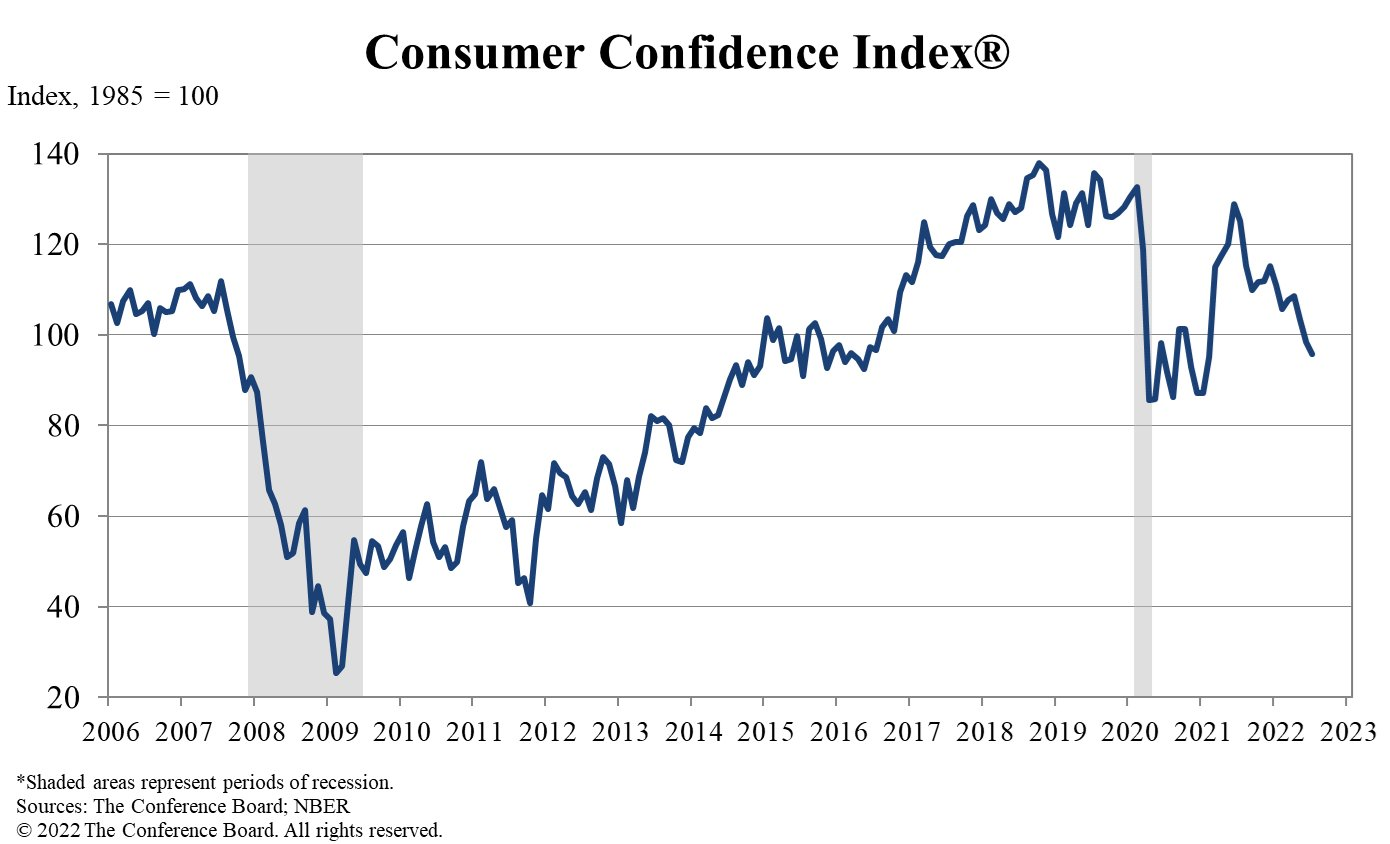
* Consumer confidence in the U.S. slumped for the third straight month in July:
Currently, high inflation dominates the economic landscape. The Federal Reserve is intently focused on inflation risks and is set to announce another interest rate hike in an upcoming policy meeting. The earlier narrative that suggested “inflation was transitory” is largely dismissed, and a clearer picture of the future is emerging. Pondering the possibility of disinflation or deflation (D/D) risks re-emerging seems far-fetched at this juncture, but it remains a point worth contemplating as an exercise in contrarian thinking.
* Tensions escalate between the U.S. and China regarding Pelosi’s planned trip to Taiwan.
* Russia is poised to cut gas deliveries to Germany once again.
* Is the U.S. in a recession? Determining this is currently challenging.
* Economist Nouriel Roubini forecasts a severe recession, partially due to high debt levels.
* The supply of negative-yielding debt has sharply declined since late 2020.
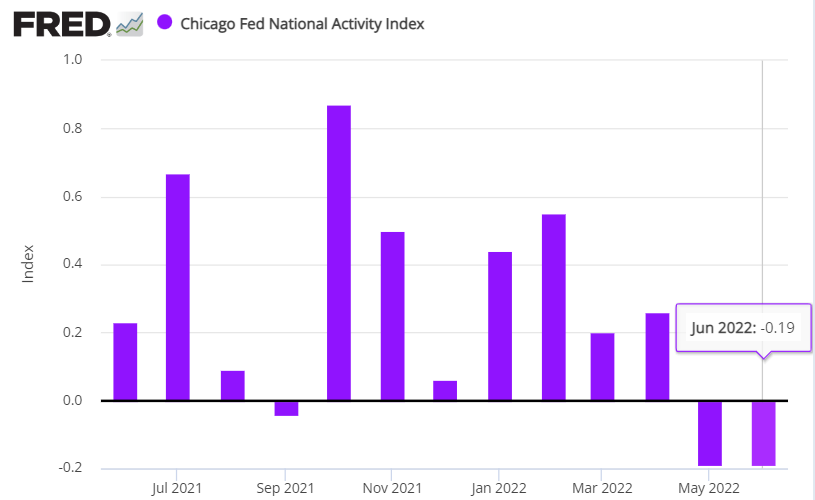
* In June, U.S. growth remained below historical averages for the second consecutive month:
A single solid bounce in the market does not negate the months of financial losses, yet optimism persists. Only time will tell if this resurgence signifies a meaningful turning point. However, for at least one week, global markets experienced a welcome change, with uniform increases across major asset classes through the trading week ending Friday, July 22, as evidenced by a series of proxy ETFs.

