Key Updates on Global Markets:
* US mortgage interest rates have risen to 7.16%, marking the highest level since 2001.
* The war in Ukraine is predicted to hasten the transition to cleaner energy sources, according to IEA forecasts.
* Shell, the oil giant, is poised to increase its dividend following a quarterly profit surge.
* Europe is currently experiencing a surplus of natural gas, which has led to a decline in prices.
* The American middle class is witnessing the most significant drop in wealth seen in a generation.
* New home sales in the US dropped 11% in September, a direct result of rising mortgage rates.
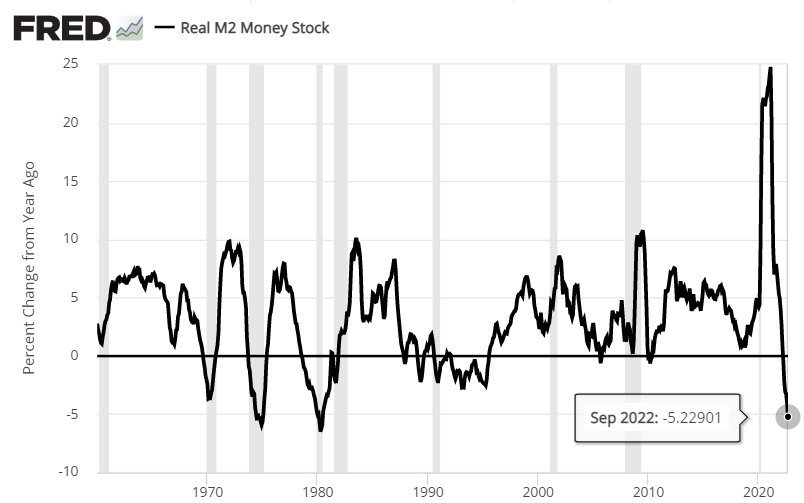
* The US broad money supply continues to decrease in real terms as of September:
Following a robust first half in 2022, the energy sector has faced challenges, leading some analysts to predict an end to the bullish market. However, this outlook may be premature as shares in major oil companies are rallying once more.
* The energy future desired by the West is described as wishful thinking.
* Natural gas and electricity rates in Europe have dropped from summer highs.
* Health insurance inflation, a significant component of the CPI, is expected to decrease markedly.
* Microsoft has reported a profit decline amid a slowdown in the personal computing sector, reflecting slower growth.
* Hydropower, the world’s largest source of clean energy, is diminishing rapidly due to drought conditions in various regions.
* The Atlanta Fed Manufacturing Index continues to indicate weak conditions in October.
* Consumer confidence in the US dropped in October following two months of gains.
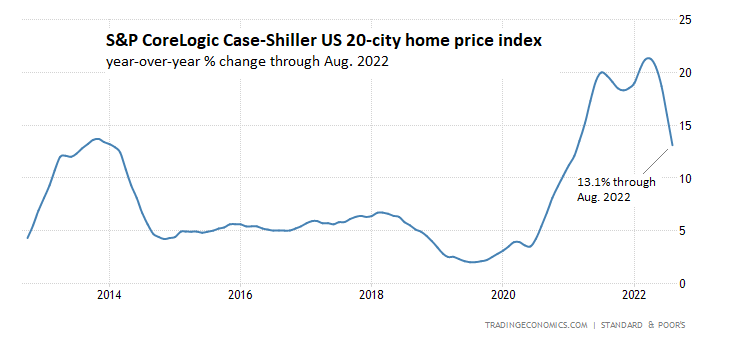
* US housing prices decelerated sharply in August:
Economic activity in the US is expected to rebound in the upcoming initial government estimate for the third quarter, based on the median of estimates compiled by CapitalSpectator.com. However, early projections suggest that this recovery may be short-lived, and any celebrations over this week’s data could be fleeting.
* The UK is bracing for economic turmoil as Rishi Sunak assumes the role of prime minister.
* The globe is experiencing a “global energy crisis,” says the head of the International Energy Agency Birol.
* Economists predict that the Fed’s rate hikes will pause once inflation decreases by half, as predicted.
* A recession could be the necessary cost of combating inflation, according to JP Morgan’s president.
* The Chinese yuan has fallen to a 15-year low against the US dollar as of Tuesday.
* Analysts believe that China is unlikely to bail out its struggling property sector, as stated by an economist quoted.
* US economic activity is reported to have contracted in October according to PMI survey data.
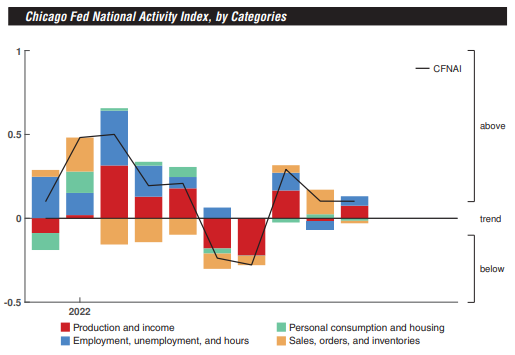
* The Chicago Fed National Activity Index shows “steady” US growth in September:
As markets faced bear conditions for much of 2022, traders found some relief, driving up prices across most major asset classes during the week ending October 21.
* Rishi Sunak is poised to become Britain’s next prime minister.
* Global tensions are rising as Xi solidifies his third term in power in China.
* The US has refuted Russia’s assertion that Ukraine might use a dirty bomb to blame Moscow.
* The two Koreas have fired warning shots along their disputed maritime border.
* China has reported delayed third-quarter GDP figures, showing a timid recovery.
* Economic contraction in the Eurozone deepens in October, according to PMI survey data.
* The UK’s economic decline accelerates as evidenced by recent PMI data.
* Illegal crossings into the US are reaching record highs.
* The Federal Reserve is expected to implement another 75-basis-point rate hike in November.
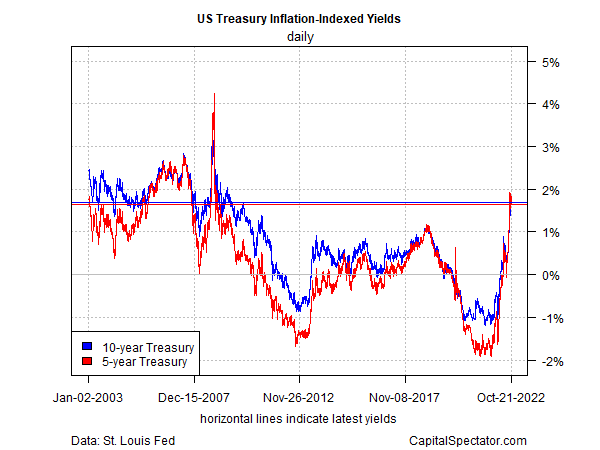
* Real yields on US Treasury notes remain near a 13-year peak:

By Nouriel Roubini
Review from Financial Times
Roubini identifies ten significant “megathreats” encompassing economic, financial, political, technological, and environmental challenges. He expresses concern that while effective policies could mitigate these risks, calamity seems almost inevitable. Readers seeking insights into the precarious nature of the current world may find this book’s perspectives both alarming and thought-provoking. It serves as a wake-up call for policymakers to devise better solutions.

Currently, there are numerous risks impacting markets and economies. A pressing question for investors is: When will the Federal Reserve pivot? While many have opinions, no one seems to have a definitive answer. Hence, tracking essential indicators is crucial for predicting the upcoming changes. The data suggests, however, that a pause in Federal Reserve rate hikes, let alone a cut, remains unlikely in the near term.
* Following the resignation of UK Prime Minister Liz Truss, the country remains in turmoil.
* High inflation is increasing political risks for European governments.
* The 10-year US Treasury yield is on track for a 12-week high amid rising interest rates.
* US home sales have declined for the eighth consecutive month, dropping in September.
* The Philly Fed Manufacturing Index continues to show weakness within the sector for October.
* Jobless claims in the US decreased last week, indicating the labor market remains tight.
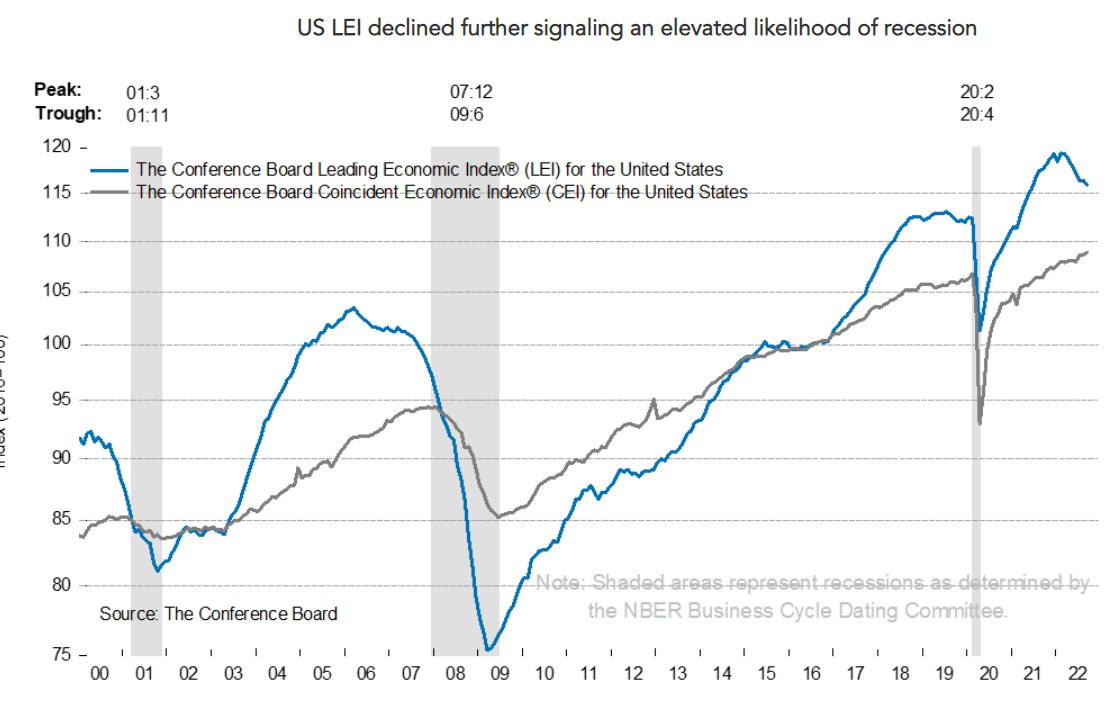
* The Leading Economic Index declined again in September, reflecting rising recession risks: