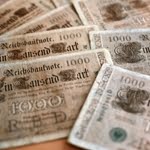
 Understanding the past through a historical lens can often be harsh on those who lived through it. Mistakes appear glaringly obvious, failures are plentiful, and vanities seem laughable. Hindsight frequently transforms historical figures into caricatures of folly.
For instance, was George Armstrong Custer merely an arrogant Lieutenant Colonel whose reckless decisions led to the tragic outcome at Little Bighorn? It’s a compelling argument, especially considering he faced Sitting Bull and Crazy Horse, who commanded a force estimated to be ten times greater than his troops.
Or take George Donner and his brother Jacob; were they simply misguided souls who led their party into the perilous Sierra Nevada during the late autumn? Perhaps, especially when their desperate situation drove them to cannibalism to survive the brutal winter storm.
Ultimately, both Custer and the Donner brothers were simply humans grappling with the information at hand. The choices they made appeared logical in the moment. Yet, what they could not perceive—until it was too late—was that each decision also nudged them closer to their downfall.
They were human, just like us—no more or less intelligent. Our intent is not to mock them, but to extract lessons from their experiences.
A Good Man in a Bad Trade
Rudolf von Havenstein had served as the president of the Reichsbank, Germany’s central bank, since 1908. He was an expert in the intricacies of central bank debt issuances and had a strong grasp of his function.
So, when history required a financial miracle from the Deutches Reich following World War I, von Havenstein knew what to do: implement monetary stimulus. In fact, he had already been expanding the money supply for several years.
On August 4, 1914, as the war commenced, the Goldmark—Germany’s gold-backed currency—was transformed into the unbacked Papermark. Without the constraints of gold, the money supply could be inflated to meet the insatiable demands of warfare.
By doing so, von Havenstein escalated public debt from 5.2 billion marks in 1914 to a staggering 105.3 billion marks by 1918. During this time, the quantity of marks surged from 5.9 billion to 32.9 billion, resulting in a 115 percent increase in German wholesale prices.
By the time the war concluded, Germany’s economy lay in ruins. Industrial output in 1920 had plummeted to just 61 percent of the levels recorded in 1913. Faced with a frail economy and suffocating debt, von Havenstein was compelled to intensify his efforts.
In reality, he had little choice. The limits of fiscal and monetary responsibility had already been overridden when the Goldmark was discarded for the Papermark. Attempting to reverse this trajectory now would inevitably lead to economic collapse and social upheaval.
The Triumph of Madness
As noted by our colleague Bill Bonner in his Daily Diary, what transpired next was astonishing:
“The authorities had financed the war by printing money. Now, they believed they could print their way out of the post-war recession…
“This decision seemed sensible at the time. It staved off immediate catastrophe—mass unemployment and political unrest.
“Von Havenstein was aware that this approach would lead to inflation, but he considered it the lesser evil. He assumed inflation would remain moderate—as it had during the war—and believed it could alleviate the unbearable burden of Germany’s war debts.
“One minor step led to another. Five years later, when von Havenstein passed away, the German central bank had printed approximately 500 quintillion marks. This hyperinflation of the money supply resulted in a catastrophic devaluation of the mark. By December 1923, one U.S. dollar was equivalent to 4.2 trillion marks.
“Despite the vast sums of ‘money’ held by Germans, they were impoverished. The economy had collapsed. Violent protests erupted in the streets. A decade later, the Nazis came to power, the Reichstag was set ablaze, and 60 million lives were lost in WWII.
“But who could have predicted such a fate?”
In truth, no one could foresee the unfolding events. Not even the most abstract thinkers could have anticipated such chaos. Yet, step by step, madness triumphed…
…and step by step, this sense of madness persists today. Below is a brief overview of events that have led us to our current crisis:
- President Nixon’s ‘temporary’ suspension of the Bretton Woods Agreement in 1971— severing the dollar’s ties to gold.
- Alan Greenspan’s introduction of the Greenspan put after the Black Monday crash of October 19, 1987—creating a moral hazard for Wall Street investors.
- The taxpayer-funded bailout of the Savings & Loans industry in 1989—setting the stage for the 2007 subprime mortgage crisis.
- The Federal Reserve’s rescue of Long-Term Capital Management in 1998—unintentionally feeding the already inflated dot-com bubble.
- Greenspan’s loose monetary policies in the early 2000s post-dot-com bubble—artificially raising residential real estate values.
- Hank Paulson’s TARP bailout during 2008-09—transforming risk into taxpayer liabilities.
- Ben Bernanke’s aggressive money printing through quantitative easing (QE) and zero interest rate policy (ZIRP) from 2008 to 2014—the seeds of today’s asset bubble.
- The abrupt halt to monetary policy normalization in 2019 by Jerome Powell—further inflating the existing asset bubble.
- The ongoing repo madness program since 2019—disrupting the overnight funding market with unprecedented liquidity provided by the Fed.
- The Fed’s ‘Not QE’ program—echoing von Havenstein’s tactics to buy U.S. Treasuries, fund colossal deficits, and sustain government operations at all costs.
What awaits us in the future?
Debts will inevitably be settled. The value of the dollar will diminish. And step by step, a madness—envisioned only by those skilled in abstract reasoning—will prevail.
Sincerely,
MN Gordon
for Economic Prism