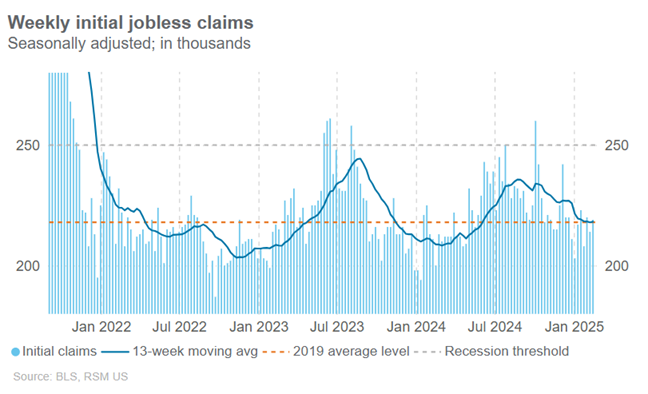
US jobless claims increased slightly last week but remain at levels consistent with those seen before the pandemic. “New claims have demonstrated a downward trend since last August, with the 13-week moving average touching 218,000 after a peak of 235,000, indicating that the labor market stays robust,” states an analyst from RSM.
Inflation concerns persist, yet the US bond market continues to maintain its rally this year, as evidenced by a selection of ETFs available up to Wednesday’s close (Feb. 19).
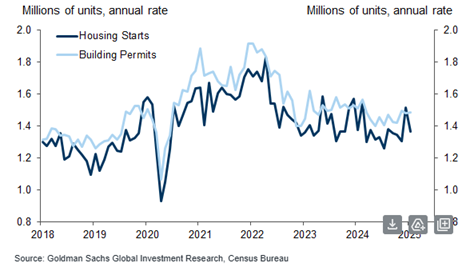
US housing starts decreased more than anticipated in January, partly due to disruptions from snowstorms and severe cold. “The outlook for increased homebuilding appears grim as import tariffs are likely to escalate building costs in the coming months, and potential homebuyers indicate that the rising borrowing costs are preventing them from affording new homes,” says Christopher Rupkey, chief economist at FWDBONDS.
In 2025, after two years of US equities outperforming, foreign stocks from developed markets are leading the major asset classes significantly, based on a selection of ETFs as of Tuesday’s close (Feb. 18). While it is uncertain if this trend will continue for equities outside the US, the current shift is a remarkable change in the recent investment landscape.
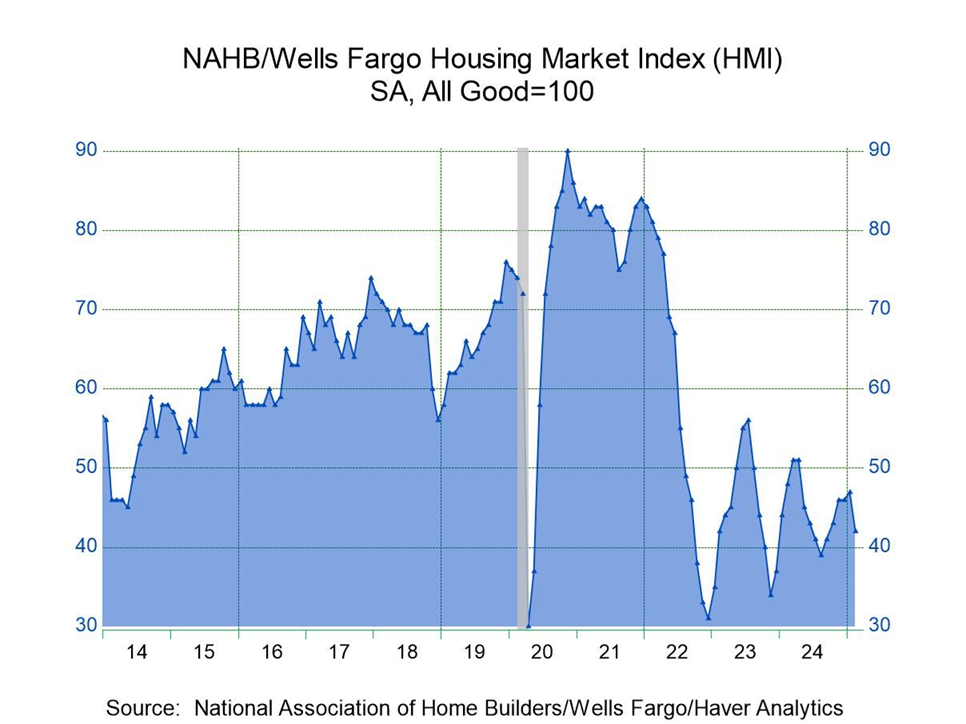
The US Housing Market Index, which gauges builder sentiment, decreased further below the neutral 50 threshold in February. This index has remained below 50 since May, indicating a cautious outlook among US home builders.
The momentum factor has been outperforming all other sectors so far this year, according to a set of ETF proxies up to Friday’s close (Feb. 14). Following a robust performance last year, momentum is climbing even higher in 2025 in both relative and absolute measures.
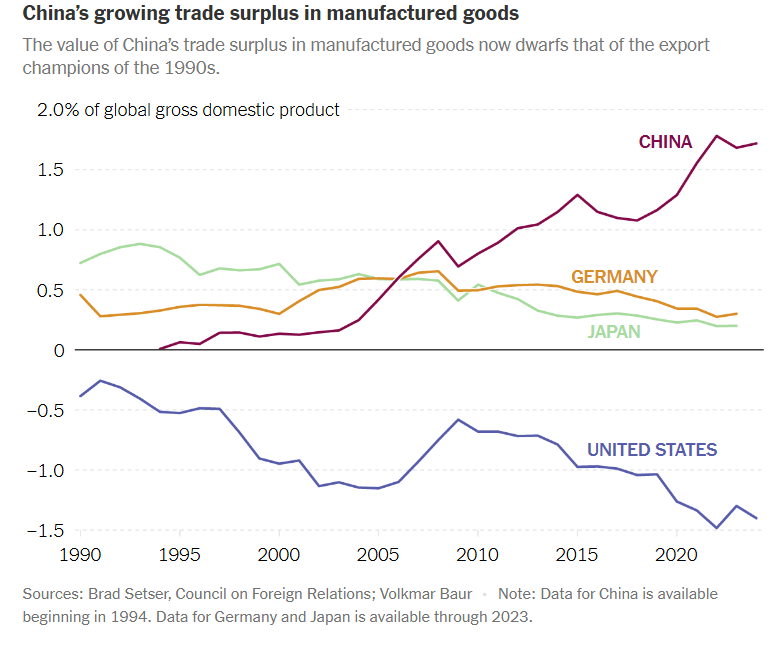
China’s trade surplus in goods continues to grow, now surpassing the peaks observed in Germany and Japan during their export-driven booms in the 1990s. “In the last six years, China’s imports of such goods have only increased by an average of $15 billion annually, which is negligible when adjusted for inflation,” writes Brad Setser, a senior fellow at the Council on Foreign Relations. “Conversely, its manufactured exports have surged, increasing by over $150 billion each year. As far as manufactured goods are concerned, trading with China is almost entirely one-sided.”
The US economy is projected to sustain moderate growth during the first quarter of 2025, according to median estimates from various nowcasts compiled by CapitalSpectator.com. The initial estimate for Q1 anticipates that the 2%-plus rate reported for Q4 by the Bureau of Economic Analysis (BEA) will persist in the current quarter.
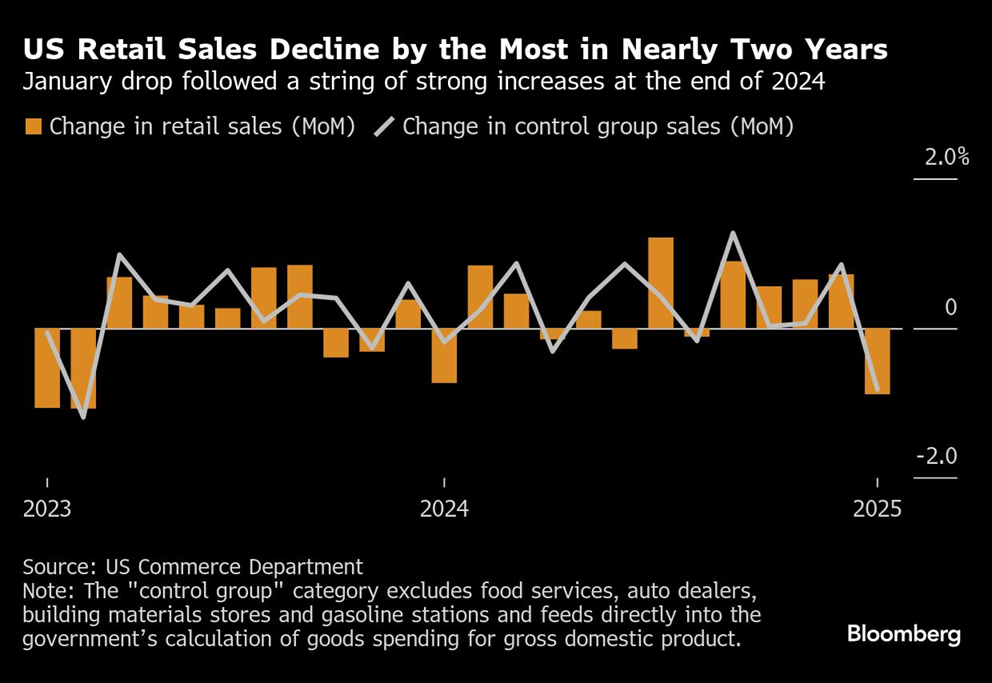
US retail sales declined more than anticipated in January. The notable 0.9% drop was partially due to adverse cold weather that affected new car sales. January recorded the lowest average temperature since 1988, according to Pantheon Macroeconomics. Additionally, the fires in Los Angeles contributed to the temporary decline in sales.
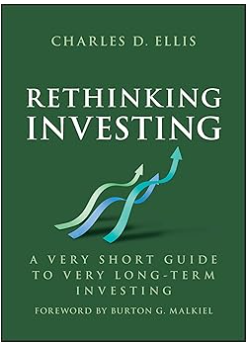 ● Rethinking Investing: A Very Short Guide to Very Long-Term Investing
Charles D. Ellis
Summary via publisher (Wiley)
In just ten concise and engaging chapters, “Rethinking Investing: A Very Short Guide” provides practical steps that individuals can take to enhance their investment strategies. The book dispels myths about the efficacy of investment managers, highlights emotional biases that may cloud financial judgment, explains why index funds are a wise choice, and reveals important insights such as why delaying Social Security benefits until age 70 is beneficial, supported by clear calculations. Authored by the acclaimed investor and author Charles Ellis, this essential reading offers guidance on achieving investment success.
In this structured overview of recent economic developments, we observe a varied landscape characterized by fluctuations in job claims, housing starts, retail sales, and investor sentiments. Analysts provide insights that reflect the complexities of market dynamics, highlighting ongoing concerns and emerging trends.
Overall, the updates reveal a critical moment in the economic landscape, where challenges such as inflation and changing consumer behavior coexist with indicators of resilience, like the strengthening labor market. The adaptability of various sectors will play a crucial role in how these trends evolve in the coming months.

