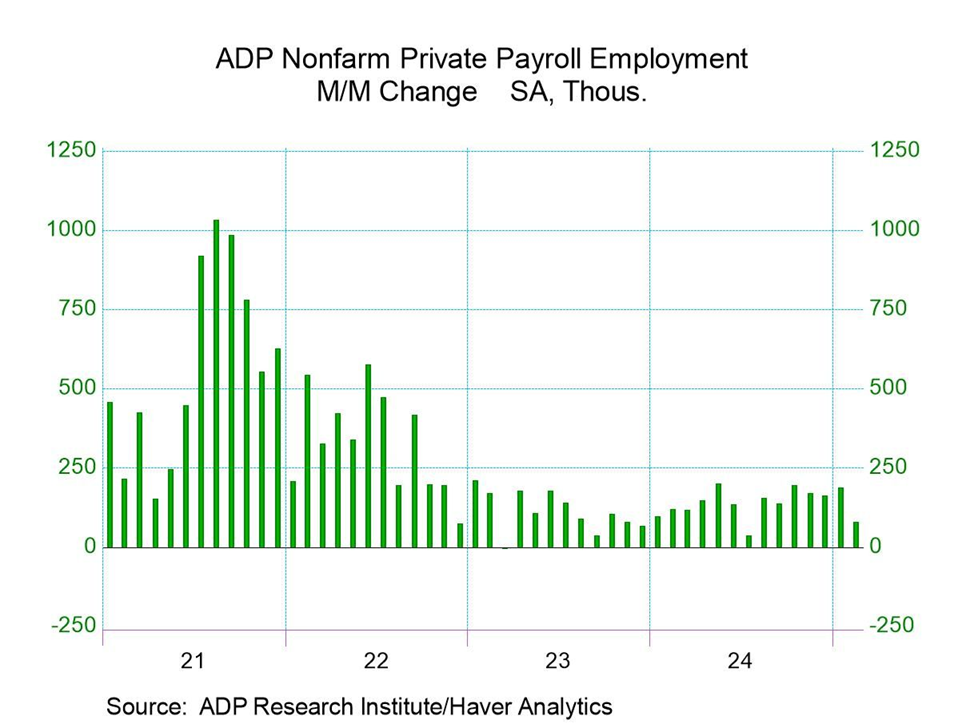
The number of available job openings in the US showed a modest recovery in January, with the government recording 7.74 million positions. This suggests that hiring by US employers remains relatively stable. Nevertheless, this data does not account for recent economic challenges stemming from shifts in Trump administration policies. “Unfortunately, this report doesn’t provide insights into how companies might react to the impending tariffs and the growing uncertainties, and it may take several months for these effects to manifest,” says Conrad DeQuadros, a senior economic advisor at Brean Capital.
The new presidential term has begun amid considerable economic uncertainty, primarily due to contentious tariff proposals that could instigate a global trade war. Surprisingly, the damages so far seem largely self-inflicted. Such policy missteps are uncommon, yet President Trump’s unorthodox approach is creating unprecedented circumstances.
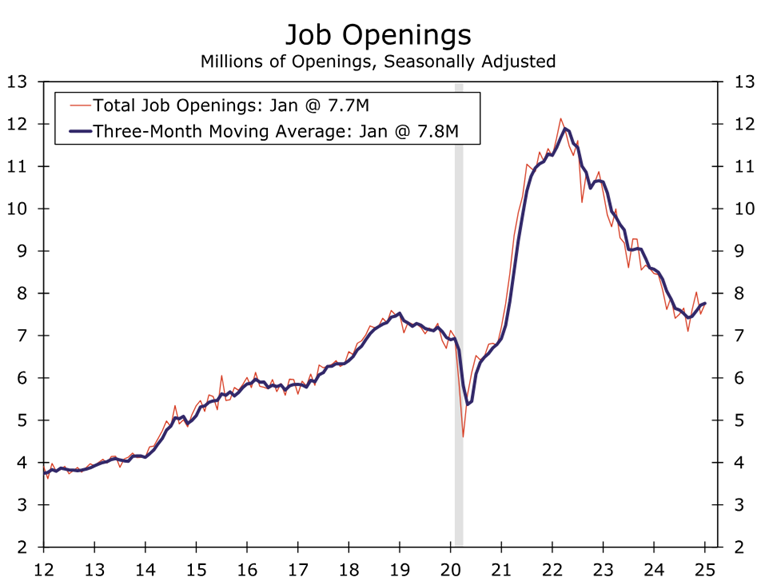
US small business optimism declined for the fourth consecutive month in February, according to an NFIB report. The latest figure remains above the 51-year average of 98, but it has decreased by 4.4 points from its peak of 105.1 in December. The Uncertainty Index associated with the survey climbed four points to 104, marking the second highest reading on record. “There is rising uncertainty on Main Street for numerous reasons,” states NFIB chief economist Bill Dunkelberg. “Expectations for better business conditions in the next six months have dimmed, and fewer small business owners view this as a good time to expand, although perceptions are still better than last fall.”
The year began on a strong note for the economy, and the financial markets anticipated ongoing growth. However, circumstances have shifted significantly since that initial optimism. The variations in the bond market illustrate this changing landscape.
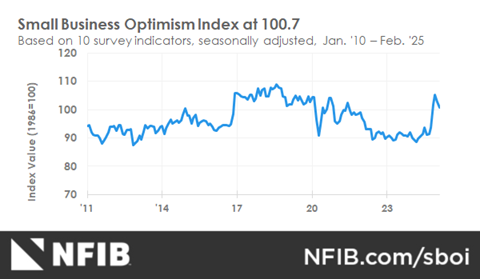
The US nonfarm payrolls saw a moderate increase in February, with the economy gaining 151,000 jobs, an uptick from January’s 125,000. “While job growth appears stable, there are emerging challenges,” says Preston Caldwell, a senior economist at Morningstar. The government’s metrics likely haven’t yet captured the full effects of federal layoffs, which should be reflected in next month’s job report.
 ● The Technological Republic: Hard Power, Soft Belief, and the Future of the West
Alexander C. Karp and Nicholas W. Zamiska
Review via The New Republic
In this work, Karp, along with his corporate affairs head Nicholas W. Zamiska, explores a compelling argument: the technology sector in the US has historically emerged from national security interests. Therefore, Silicon Valley leaders and developers should embrace collaboration with the military to sustain America’s dominance in hard power. This perspective is gaining traction amid a significant rise in venture capital directed toward defense and a slowdown in general venture funding; alongside new Pentagon initiatives bridging the gap between tech and military. The previous era of public dissent from the tech sector seems to be waning for now.
The US stock market has turned negative for the year; however, this is not reflected in the performance of the low-volatility equity risk factor. By tracking a range of ETFs in this category, it’s evident that the low-volatility risk premium has significantly outperformed other sectors as of March 6, 2025.
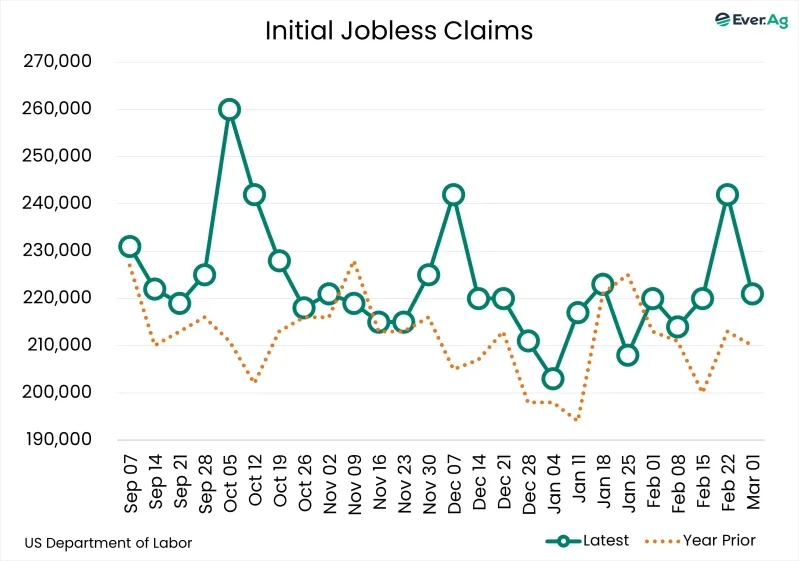
The latest jobless claims in the US indicated a positive trend, having decreased last week, suggesting an optimistic outlook for the labor market. New unemployment benefit applications fell to 221,000, maintaining a steady range of 200,000-250,000 that has been observed recently.
In a remarkable shift, equities in developed markets outside the US are now outperforming major asset classes in 2025 while US stocks are experiencing a modest decline on a year-to-date basis, based on a selection of ETFs as of March 5.
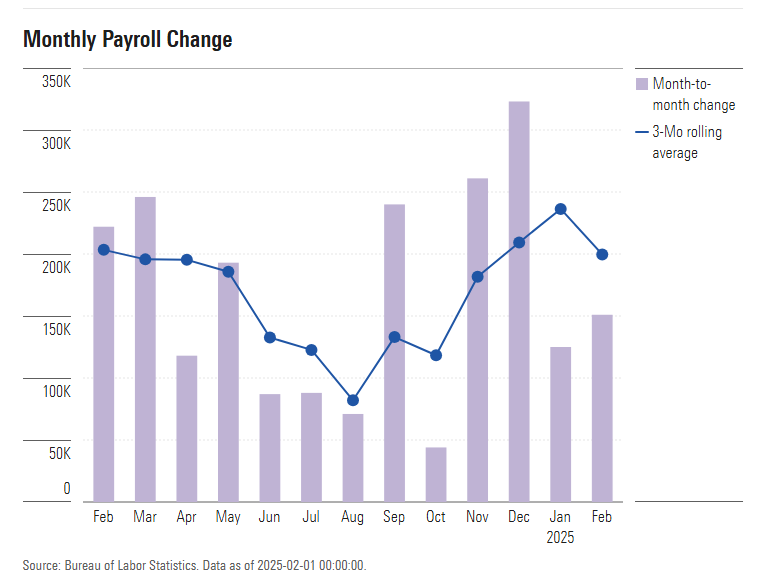
Job growth among US companies has seen a sharp slowdown according to the latest ADP Employment Report, with employers adding only 77,000 workers in February, significantly below expectations and the increase of 186,000 seen in January. “Uncertainty in policy and a drop in consumer spending likely led to layoffs or decreased hiring last month,” remarked ADP chief economist Nela Richardson. “Our data, along with other recent indicators, points to a hesitance among employers to hire as they evaluate the current economic climate.”