Recent Developments in U.S.-Iran Relations
This article explores the tumultuous dynamics of U.S.-Iran relations under President Trump, highlighting his unpredictable strategies and the broader implications for international politics, particularly concerning oil markets and diplomatic engagements. We also navigate through the controversial investigation of Trita Parsi and the ongoing crises impacting the energy and commodities sectors.
Trump’s Volatile Stance on Iran
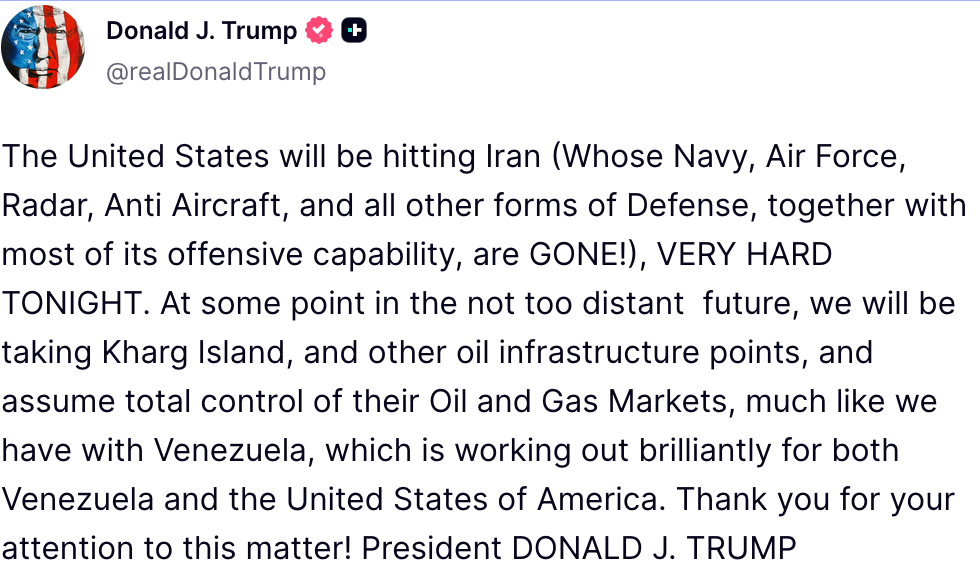
Tracking President Trump’s erratic positions can be frustrating, but it seems this volatility serves a specific purpose: to exhaust opposition. Oil traders demonstrated remarkable resilience yesterday by ignoring Trump’s latest threats to bomb Iran into submission. They likely understood the potential ramifications of disrupting the upcoming SpaceX IPO, scheduled for Friday.
In short, Trump rapidly oscillated between aggression and negotiation tactics—shouting, “We’re going to bomb Iran if they don’t comply,” one moment, then declaring, “They have capitulated; we’ll be signing an agreement next week,” shortly after. Financial markets rallied, seemingly unfazed by Iranian officials, who swiftly denied any agreements had been reached, making it clear they would not compromise on critical issues.
Unpacking the Situation
Let’s delve deeper into Trump’s bluster and examine a serious concern regarding the State Department’s investigation into Trita Parsi, co-founder of Responsible Statecraft. We will also touch upon the potential crises emerging in energy and commodities sectors, coupled with concerning developments in artificial intelligence.
Initial Aggression from Trump
Wall Street Journal: Trump Says U.S. Will Hit Iran Tonight, Threatens Seizure of Energy Markets
After posting his threats online, Trump appeared on Fox News, discussing how the U.S. could profit significantly from taking control of Kharg Island and Iran’s oil sales. However, he acknowledged that Americans likely prefer to see U.S. troops brought home rather than engaged in military operations abroad.
Currently, Trump is utilizing raw military pressure as a means to compel Iran into submission. However, if Tehran remains unconvinced by Washington’s offers, Trump risks thrusting the U.S. deeper into a widening conflict without a clear outcome.
A Rapid Retraction
Trump’s claimed that a deal was close was met with skepticism from Iranian officials. A report from Tasnim refuted Trump’s assertions, stating unequivocally that no agreement had been finalized. The IRGC promptly labeled his claims a “cover to escape war,” reiterating that Iran would retaliate against any U.S. military actions. As one Iranian outlet noted, “Every hour, he tells a lie and a boast.”
Politico reported an intervention from Gulf states shortly after Trump’s threats, as leaders from Qatar, the UAE, and Pakistan urged him to reconsider military action, suggesting that a preliminary agreement was in the works.
Continued Tension and Denials
Despite initial speculation, Iranian authorities clarified that, while discussions were ongoing, they would not yield on their core demands. Iranian Foreign Ministry spokesperson Esmail Baghaei firmly stated that a finalized agreement was merely speculation, emphasizing that Iran would not compromise on key issues. These include lifting sanctions and recognizing Iran’s control over the Strait of Hormuz.
The potential for escalation remains high, particularly with Israeli officials reacting strongly to Trump’s remarks. They threaten military action should a U.S.-Iran agreement move forward, viewing it as a direct challenge to their national security interests.
Administration Investigations and Criticism
Compounding the situation, the State Department has initiated an investigation into Trita Parsi, a notable critic of the U.S.-Iran conflict. Parsi has long advocated for diplomatic engagement rather than military confrontation. This investigation raises concerns about political repression against voices advocating for peace.
Parsi, who has lived in the U.S. for over 25 years, could face deportation as part of a broader pattern of targeting individuals critiquing the administration’s policies. This situation highlights the precarious balance between national security and freedom of expression in U.S. foreign policy discourse.
Economic Implications of the Iran War
The ongoing conflict is also triggering severe ramifications for global markets. The upheaval has created what analysts describe as a “super-squeeze” in industrial metals like copper and aluminum, with prices poised to remain high for the foreseeable future. The rising costs of raw materials, driven by the conflict, have exacerbated existing production challenges and created a pressing need for investment in energy security.
As several countries seek to enhance their energy resilience, reports suggest heightened demand for metals, particularly copper, which is essential for renewable energy projects. Despite current high prices, industry experts predict sustained investment as markets adapt to ongoing geopolitical realities.
In closing, the intricate web of negotiations, military posturing, and economic interests continues to define the U.S.-Iran relationship. The situation’s unpredictability, coupled with the implications for international markets and individual rights, underscores the complexity of modern geopolitical conflicts. Observing how this narrative unfolds will be crucial, especially amid rising tensions and significant implications for the global economy.
