There appears to be a coordinated effort to undermine food production in the United States. Several factors contribute to this situation:
- The Iran War is driving fertilizer prices sky-high.
- Tech companies are engaging in an agricultural land grab for data centers, leading to increased electricity costs and strained water resources.
- There is a growing trend of foreign entities purchasing U.S. farmland.
- Deportations are creating labor shortages on farms.
- The overarching threat of climate change looms large.
While I may overlook other examples, what conclusions can we draw from these developments? Could this signify a concerted campaign against small farmers, pressuring the remaining independents to sell to large corporations, investment firms, and institutional investors? This trend has certainly been on the rise for some time. Or, in light of the 48 million Americans already experiencing hunger and recent cuts to SNAP, might this be a eugenicist approach aimed at depriving people of food?
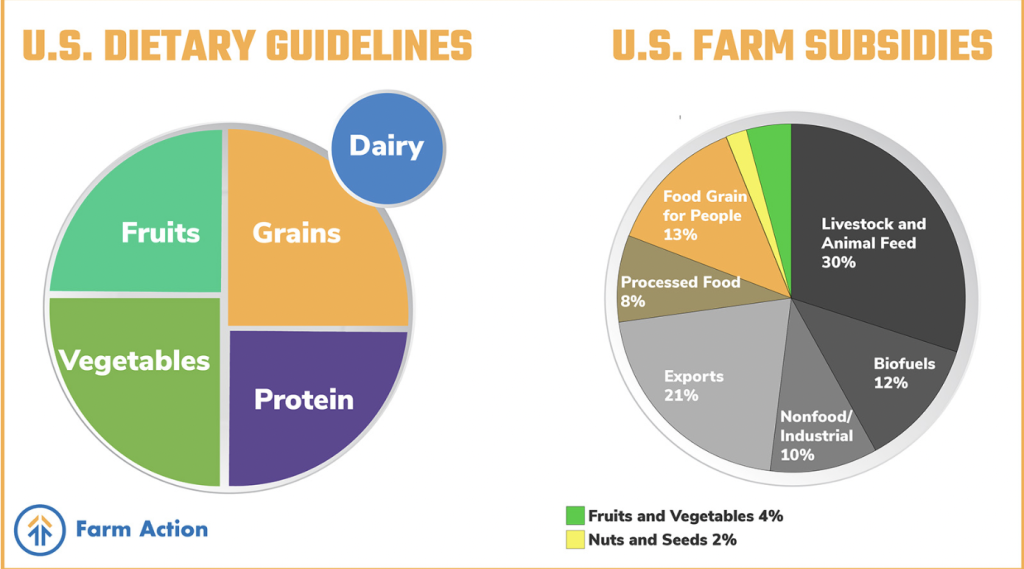
These changes come on top of a food system already skewed toward commodity production. As CNBC observed previously:
The U.S. prioritizes the growth of commodities like corn, soybeans, wheat, and sugar. Corn and soybeans hold value primarily as livestock feed and for ethanol production. The U.S. also leads in meat production, with global consumption steadily on the rise.
Although these commodities are essential to the economy, they do not directly feed people, highlighting a significant issue for many small to mid-sized farmers focused on fruits and vegetables.
With further consolidation among buyers and increasing costs for land, labor, and resources, small and mid-sized growers are finding it increasingly challenging to survive. The government seems indifferent:

Now, let’s turn our attention to the issue of bees.
By Jennie L. Durant, Research Affiliate in Human Ecology, University of California, Davis. Originally published by The Conversation.
The plight of America’s bees and beekeepers is becoming more precarious, especially now when their need for assistance is critical.
The U.S. Department of Agriculture plans to soon close the Beltsville Agricultural Research Center, a 6,500-acre site in Maryland that hosts the nation’s leading bee research and health diagnosis facility, the Beltsville Bee Research Lab.
This closure comes at a crucial time for bees. In the winter of 2025, many beekeepers experienced devastating losses, with over half of their colonies perishing as pesticide-resistant varroa mites proliferated, spreading deadly viruses. These losses contributed to declining honey yields, and skyrocketing fuel costs for transporting bees across the country for pollination have exacerbated the situation.
In my 14 years of research on bees and beekeepers, detailed in my new book, “Bitter Honey: Big Ag’s Threat to Bees and the Fight to Save Them,” I have frequently observed beekeepers turning to the USDA bee labs for guidance during crises. As honey bees generate approximately $15 billion in U.S. crop production and help pollinate over 130 different crops, these labs play a vital role in stabilizing the nation’s food system.
However, this essential scientific support is now under threat as beekeepers face unprecedented challenges amid a decline in native bee populations.
The Importance of the Beltsville Bee Lab
For over 130 years, USDA researchers have supported beekeepers, nearly 90 of those years at the Beltsville location. A key service offered by the Beltsville Bee Lab is its diagnostic service for bee diseases, allowing beekeepers to send samples for analysis at no cost.
Since the early 2000s, the lab has helped beekeepers combat varroa mites, a leading cause of annual colony losses. Currently, the lab is working on preparing for a more lethal mite called Tropilaelaps mercedesae, or “tropi” mites, which are affecting honey bees in Asia. Researchers are developing detection and response protocols to help beekeepers safeguard their colonies.

Varroa mites significantly stress honey bee populations, impacting nearly half of all colonies at times. Other stress factors affect large numbers of colonies as well. Farm Doc Daily/University of Illinois
The Beltsville Bee Lab not only assists beekeepers nationwide but is situated in a crucial farming and beekeeping region. Its closure would create a significant research vacuum in the Northeast, where beekeepers pollinate crops such as cranberries, squash, and blueberries.
The lab’s location has enabled comprehensive studies on winter colony losses, research that would be challenging to replicate at other USDA bee labs located in more temperate climates.
Consequences of Closing Bee Labs
The USDA has announced plans to shut down the entire Beltsville Agricultural Research Center due to building maintenance and renovation costs estimated at $500 million. However, the closure could impose much greater costs on beekeepers, farmers, and consumers alike.
For instance, during the winter of 2025, beekeepers faced record losses, with many discovering in January that over 1.1 million colonies had perished — an unprecedented loss amounting to nearly 1.7 million colonies nationwide. Beekeepers sought assistance from Beltsville as researchers quickly mobilized to test affected colonies for pesticide residues, illnesses, and varroa mites, gathering essential data to guide treatment options.
Shortly thereafter, while scientists were addressing the crisis, the Trump administration terminated probationary researchers and staff at the bee labs, alongside thousands of other employees within the USDA. This demoralized the Beltsville team, and the remaining personnel were restricted from engaging with beekeepers.
Because of the communication blackout, it took nearly six months for researchers to publish their findings, by which time the season had concluded and beekeepers were left to navigate the crisis independently.
Ultimately, the loss of bee colonies has resulted in an estimated loss of $600 million across honey production, pollination revenue, and colony replacement costs, far exceeding the projected expense for modernizing the Beltsville Agricultural Research Center.
These losses consequently impact consumers as well.
When beekeepers lose nearly half their operations, they often increase prices for pollination services to remain viable. These additional costs cascade through the food supply, affecting the prices that everyone pays for fruits, vegetables, and nuts that rely on pollination.

Note: The width of the arrows indicates the number of colonies moved; line curvature signifies non-linear route paths. Source: USDA, Economic Research Service calculations using USDA, National Agricultural Statistics Service, Colony Loss Survey (USDA-NASS, 2018). Beekeepers frequently transport their bees across the nation to meet pollination needs and optimize honey production throughout the year. The map illustrates bee movements from California to other states during summer and fall.
Further Cuts to U.S. Pollinator Research
The intended closure of the Beltsville Bee Lab is not an isolated incident. The administration has suggested eliminating the U.S. Geological Survey’s Ecosystems Mission Area, which could defund the USGS Bee Lab, a vital establishment for research on native bees.
Plans also include decommissioning 16 USGS research centers across the country, among them the Northern Prairie Wildlife Research Center in North Dakota, the top honey-producing state in the nation. For decades, beekeepers have transported colonies to forage in the grasslands of this region. Researchers have been observing how the transition from grasslands to cropland has impacted honey bee health and beekeeper earnings.
Additionally, the U.S. Forest Service faces significant cuts, including plans to close 57 out of its 77 research stations nationwide. Given that the Forest Service manages over 193 million acres of federal lands that support native flora and pollinators, these closures pose a substantial threat to vital pollinator habitats.
Such closures could lead to a significant loss of expertise.
When the initial Trump administration relocated the USDA Economic Research Service from Washington to Kansas City, Missouri, in 2019, the agency lost over 75% of its seasoned research staff. A recent survey indicates that this pattern may repeat. If the reorganization proceeds, farmers and beekeepers risk losing experts with decades of invaluable knowledge and experience.
The Beltsville Bee Lab represents a crucial component of the often-overlooked federal research framework that enhances the health of pollinators and the food supply of the nation.
If the USDA and the USGS advance their plans to close bee labs and research centers, the repercussions could lead to slower responses to bee threats, inadequate tracking of native bee populations, and a decline in pollinator habitats—all of which would increase costs and risks for beekeepers, farmers, and the entire food system.

