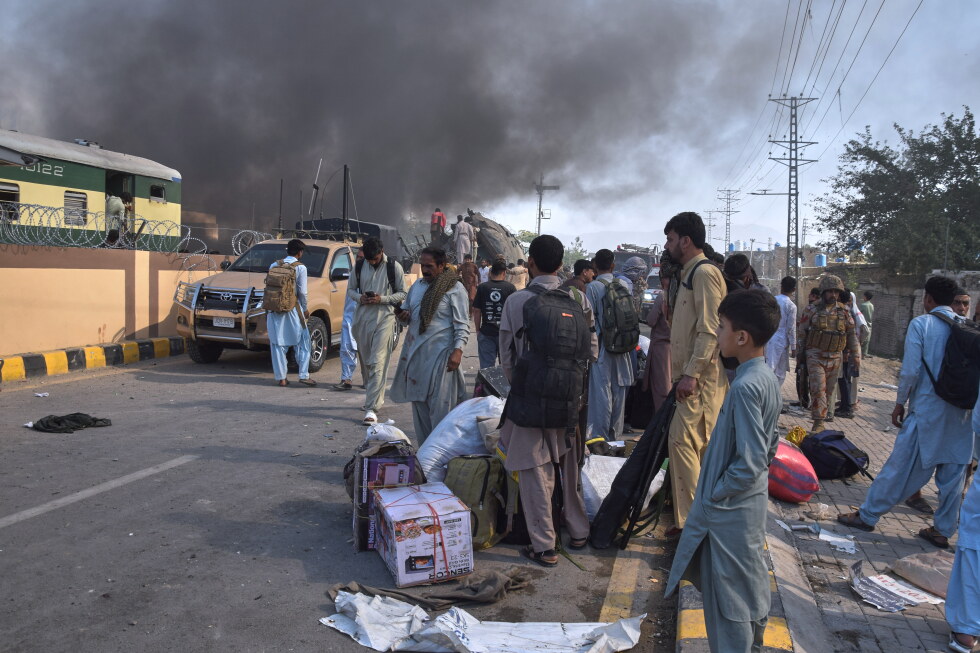
On a tragic Sunday in Quetta, Pakistan, a devastating attack unfolded as a suicide bomber detonated a vehicle filled with explosives near a railway track. This horrific act resulted in the deaths of at least 23 individuals and left over 70 wounded, according to official reports.
The explosion was powerful enough to overturn and ignite two train cars, producing thick black smoke that could be seen for miles, as showcased in footage shared online.
This incident occurred in an area typically secured by security forces, leading to substantial damage to nearby buildings and numerous vehicles parked along the route, as reported by eyewitnesses and social media imagery.
Local hospitals received numerous injured individuals, with 20 reported in critical condition. Three security officials, speaking on condition of anonymity, reported that the bodies of the deceased were transported to medical facilities following the attack.
The Baloch Liberation Army (BLA), a banned group advocating for independence from Pakistan’s central government, claimed responsibility through a statement to the media, asserting that they targeted a train carrying security personnel.
Quetta serves as the capital of the conflict-ridden Balochistan province, an oil and mineral-rich region historically plagued by low-intensity insurgencies. The insurgents frequently target security personnel, government establishments, and civilians across the province and beyond.
Shahid Rind, a spokesman for the Balochistan provincial government, condemned the attack, expressing sorrow for the innocent lives lost and emphasizing that “terrorist elements deserve no leniency.” After the explosion, a medical emergency was declared in Quetta’s hospitals, and an investigation was promptly initiated.
Prime Minister Shehbaz Sharif also condemned the attack, labeling it a “cowardly act of terrorism” in a post on X, and expressed condolences to the victims’ families.
Balochistan’s Chief Minister, Sarfraz Bugti, voiced his strong disapproval of the attack, highlighting that the militants targeted “innocent civilians, including women and children,” and committed to actively pursuing those responsible in a post on X. Bugti, along with the federal government in Islamabad, often uses the term “Fitna al-Hindustan” to refer to the BLA, alleging it receives support from India, a claim New Delhi denies.
Pakistan’s President Asif Ali Zardari condemned the bombing as well, stating that militants and their backers aim to disrupt Pakistan’s role in promoting regional and international peace efforts. This attack follows recent reports that the United States and Iran are nearing a memorandum of understanding to end the ongoing conflict in the Middle East, which began on February 28 after the U.S. and Israel targeted the Islamic Republic, affecting global travel and increasing oil prices. U.S. President Donald Trump had indicated that a deal related to the conflict had been “largely negotiated” after discussions with regional allies, including Pakistan.
In his statement, Zardari vowed that Pakistan “will defeat terrorists, their facilitators, financiers, and those providing them safe havens.”
Pakistan and India have had longstanding contentious relations, having fought two of their three wars over Kashmir, a territory both nations claim entirely.
Despite claims by Pakistani authorities that the insurgency has been subdued, violence in Balochistan continues. In 2024, at least 26 individuals, including soldiers, lost their lives in a separate suicide bombing at a train station in the province.
Key Takeaways
- Quetta, Pakistan, witnessed a tragic suicide bombing resulting in at least 23 fatalities and over 70 injuries.
- The Baloch Liberation Army claimed responsibility for the attack, targeting a train carrying security personnel.
- Emergency measures were enacted at local hospitals amidst the crisis.
- Leaders, including Prime Minister Shehbaz Sharif and President Asif Ali Zardari, condemned the attack and expressed condolences.
- Balochistan has a history of violence linked to insurgent groups seeking autonomy from Pakistan.
FAQ
What led to the explosion in Quetta?
A suicide bomber detonated an explosives-laden vehicle near a railway track as a passenger train was passing by.
Who claimed responsibility for the attack?
The Baloch Liberation Army (BLA) claimed responsibility, stating they targeted a train carrying security personnel.
What actions were taken following the bombing?
A medical emergency was declared at hospitals in Quetta, and an investigation into the attack was launched.
What are the broader implications of such attacks?
These attacks underscore the ongoing insurgency in Balochistan and the challenges Pakistan faces in maintaining security and stability.
How has the government responded to the attack?
Federal and provincial leaders have strongly condemned the attack and emphasized their commitment to pursuing the perpetrators.
This tragic incident highlights the ongoing conflict within the region and the impact it has on the lives of innocent civilians. As Pakistan grapples with such violence, the calls for justice and peace continue to grow.