The swift ascent and seemingly inevitable decline of Keir Starmer reflect a larger pattern emerging within the political landscapes of the Western world.
After the Labour Party faced a significant setback in the recent local elections, Prime Minister Keir Starmer was in desperate need of a substantial initiative to restore confidence in his faltering leadership—something to reassure disenchanted voters that their concerns truly mattered. Unfortunately, he failed to deliver.
Instead, he appointed Harriet Harman as his “adviser on women and girls.” Notably, Harman had previously authored a document in the 1970s for the Paedophile Information Exchange (PIE) which controversially defended child pornography. As The Canary points out, “Starmer’s first act during his reshuffle, following months of scandal for appointing associates of paedophiles to senior roles,” was to recruit a woman with ties to a notorious group advocating for paedophilia.
Starmer’s subsequent move involved welcoming back former Prime Minister Gordon Brown as the “special envoy on global finance and cooperation,” a decision that raised eyebrows. Brown is chiefly remembered for:
- Divesting nearly 400 tonnes of UK gold reserves between 1999 and 2002 at a market low, a misstep famously dubbed the “Brown Bottom.” By announcing the sale in advance, he triggered a 10% drop in the gold market before any gold had actually been sold.
- Igniting the “animal spirits” of financial liberalization during his time as chancellor (1997-2007), which, ironically, led to a significant economic crash in 2008—an event often associated with the collapse of those very spirits. This history didn’t stop Starmer from vowing to “revive the animal spirits of the private sector” by easing regulatory pressures on businesses last year.
Starmer then attempted to deliver a speech to regain public confidence, seeking to quell any internal unrest within his government. Yet, inspiring oration is not exactly his strong suit. As seasoned political analyst Andrew O’Neil aptly stated in reaction to Starmer’s address: “there’s rarely a situation so dire that it can’t be made worse with a Keir Starmer speech.”
While it certainly wasn’t the Gettysburg Address, nobody expects that from Starmer. Parts felt like nostalgia, with the PM showcasing his alleged working-class roots—a detail that appears to hold little interest for the public.
He spoke passionately about the need for radical change but offered no specific proposals. The three policies he announced were merely reiterations of existing initiatives.
Among his claims was that he had stabilized the economy, astonishingly asserting that the economic ‘fundamentals are sound.’ Yes, he actually claimed that.Typically, when a sitting PM faces significant backlash from voters as Starmer did, they feel compelled to communicate with the nation. However, Starmer was not addressing the public; his focus was clearly on the Labour Party, particularly its MPs who determine his fate. Thus, the crowd-pleasing remarks about renationalizing British Steel—already under government control—were intended for them, as was his talk of restoring ties with the ‘heart of Europe’—whatever that entails—and increasing apprenticeships for young people—a point already established in Labour policy. In essence, Starmer’s attempts to protect his position exemplify how NOT to navigate a political crisis.
I think I’m now at the stage of pitying him. The silence at the end – where it was obviously assumed there would be hearty applause – is so gloriously cringe-worthy. pic.twitter.com/JVEIwrHeED
— Olly (@oIIyjm) May 11, 2026
At this juncture, the only thing that might save Starmer is the lack of a clear successor among the party leadership. Labour’s neo-Blairite health secretary, Wes Streeting, seems to have taken steps toward mounting a leadership challenge. However, Streeting appears to be even more vulnerable than Starmer, especially considering the scrutiny surrounding his associations with Peter Mandelson—now embroiled in a criminal investigation linked to Jeffrey Epstein.
I called for time for serious discussion, no precipitous coup & fully democratic process if leadership election. Instead Wes Streeting has launched coup for fear of a democratic process & whilst candidates are blocked. Handing leadership to Mandelson’s protege is gift to Reform
— John McDonnell (@johnmcdonnellMP) May 12, 2026
Streeting himself lacks a distinct character and integrity, pushing corporate interests even further than Starmer. The party’s soft-left members, such as John McDonnell, will fiercely resist a Streeting premiership. Failure to thwart this ambition would signify a significant victory for the Blairite faction of the Labour Party, which previously undermined Jeremy Corbyn’s leadership with unfounded allegations of anti-Semitism.
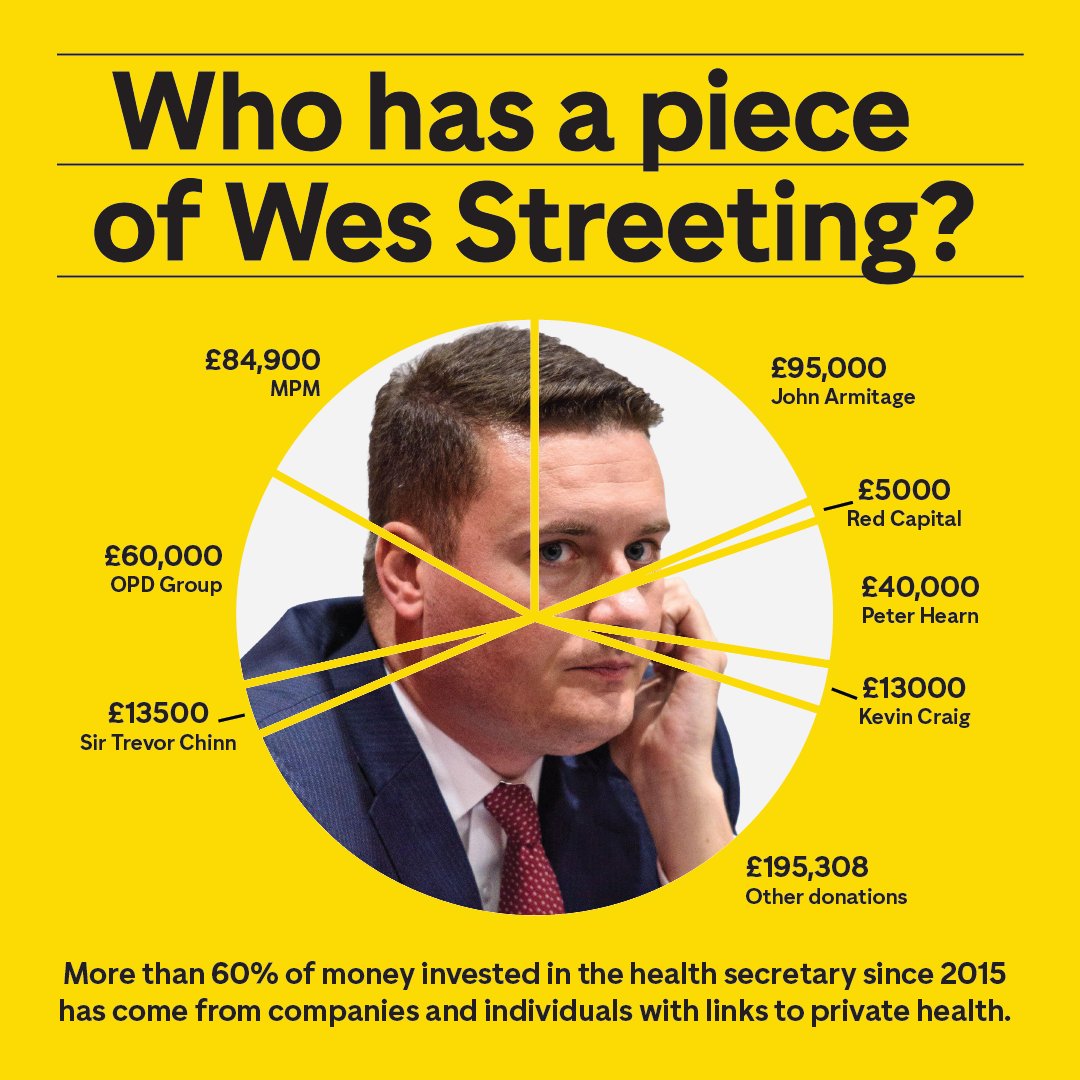
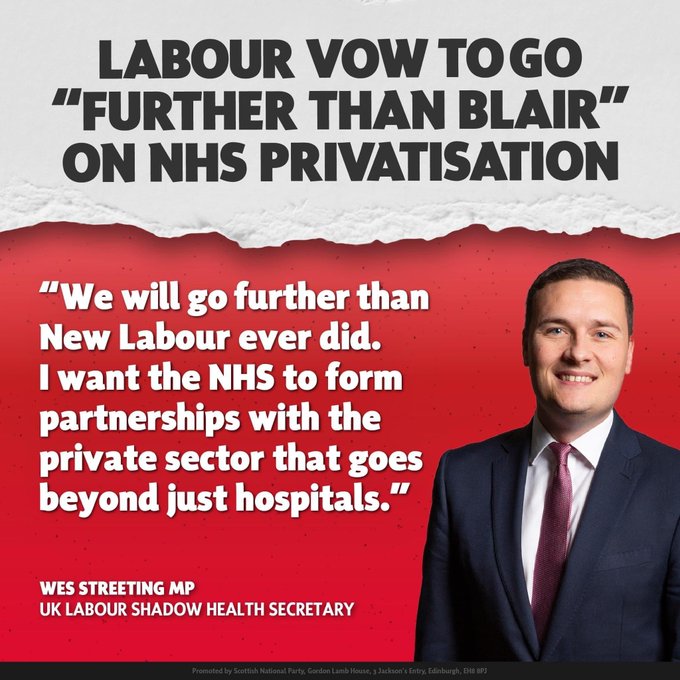
As of now (Monday evening, GMT), the odds of a challenge from Streeting seem to be increasing. According to Bloomberg’s Alex Wickham, the Prime Minister’s position appears increasingly precarious, especially as several of Streeting’s allies, including his PPS Joe Morris and constituency neighbor Jas Athwal, have started calling for Starmer to resign:
— Labour MPs and aides indicate that swift action may follow if momentum continues to build. A loyalist suggests it is a matter of “when, not if.”
— A Labour official believes several Cabinet members are prepared to urge the PM to set a timetable for his departure if it becomes evident he has lost support among backbenchers. If the public dissenters’ numbers near three figures, that eventuality is likely.
— However, Cabinet aides contend that we are not yet at that juncture and believe that the entire Cabinet is still hesitant to act. One commented that Streeting’s allies seem to have mobilized after market closures on Monday following a downturn in gilts due to political uncertainty. Attention will be focused on the market opening tomorrow.
— Streeting remains silent, but a coordinated effort by his supporters to call for Starmer’s resignation appears to be underway. There was disappointment among some of Streeting’s allies today that he has not yet made his move, but it now seems increasingly inevitable.
Another potential successor is Manchester City Mayor Andy Burnham, though he would need to secure a parliamentary seat to run for Labour leader. Recently, the Labour Party leadership blocked him from participating in the Gorton and Denton by-election. Per Wickham, “Burnham’s allies assert he is preparing to demonstrate his path to Parliament soon.”
Burnham, who previously served as a junior minister under Tony Blair, has unsuccessfully sought the party leadership twice. Like Streeting and most senior party members, he also maintains close relationships with Labour Friends of Israel and other Zionist lobby groups. Should Starmer depart, we can be certain that little would change in the UK’s relationship with Israel.
Your Reminder that Streeting, Burnham, Rayner, and Miliband have all been prominent in Labour Friends of Israel and have received contributions from the Zionist lobby.
— Craig Murray (@CraigMurrayOrg) May 11, 2026
Currently, the Labour Party is losing ground, much like the Conservatives before it—both to Nigel Farage’s Reform Party on one side and the Green Party on the other. This trend is unsurprising given Labour’s repeated betrayals of its core constituents, beginning with the proposed elimination of the winter fuel allowance shortly after Starmer took charge. As Yannis Varoufakis highlights:
The essence of this failure lies in a notably authoritarian reflex and a profound disdain for those who supported them, all while exhibiting a grotesque display of flattery toward those who would never support them.
Having systematically purged the Labour Party of its genuine voices—individuals of undeniable integrity such as Ken Loach and Jeremy Corbyn—Starmer initiated a campaign of destruction:
He cut disability benefits; armed and supplied intelligence to Israel during its military actions in Gaza; channeled a far-right narrative to vilify migrants and crudely treat refugees; slashed international aid while masquerading as a defender of defense spending; displaced wildlife and their habitats; introduced harsh anti-protest legislation; left transgender individuals in legal limbo; clung to nonsensical, damaging fiscal restrictions; and facilitated Rachel Reeves in squandering £100 billion to cover the Bank of England’s unwarranted Quantitative Tightening losses—a gift perpetually benefitting the financial sector—while imposing yet another round of austerity on governmental departments and public services.
Once a beacon of hope for the downtrodden, Starmer’s Labour has become synonymous with malice—the true nasty party. Formerly a human rights lawyer, he has plunged the UK into a shoddy, ineffective authoritarian rule.
We have examined this encroaching authoritarianism comprehensively in our two-part series, “Just How Dystopian Can Starmer’s Britain Become?” (here and here). Starmer’s most significant legacy may well be his instrumental use of law, particularly anti-terrorism legislation, to silence pro-Palestinian journalists, activists, and demonstrators.
With ruthless efficiency, his government has criminalized public dissent against Israel’s actions in Gaza while simultaneously offering tacit support for these actions through measures such as over 100 RAF spy flights over Gaza. In Starmer’s Britain, expressing even mild criticism of Zionism in private discussions could lead to arrest.
If you, in a private conversation on a train in the UK, express criticism of Zionism, British police will hunt you down to arrest you.#priorities https://t.co/e7wq1kqzNN
— Trita Parsi (@tparsi) May 10, 2026
Even before his ascension to Prime Minister in July 2024, Starmer had already displayed a clear stance on the Israel/Palestine issue. He played a pivotal role in ousting his then-pro-Palestine superior, Jeremy Corbyn. On October 11, 2023, Starmer, then leader of the opposition, stated on LBC that Israel had the right to collectively punish Gaza, including cutting off essential resources such as water and electricity, as a response to Hamas’s actions on October 7.
11th Oct’23
Starmer on the siege of Gaza 🇵🇸
“Israel 🇮🇱 does have that right” to cut off water & power from Gaza 🇵🇸
He endorsed 🇮🇱 to bomb and starve children
He allied with Netanyahu 🇮🇱
Never let anyone forget
Starmer is not a ‘decent man’pic.twitter.com/MHyEsuE5dw
— Howard Beckett (@BeckettUnite) February 10, 2026
Following Corbyn’s removal, Starmer initiated the systematic expulsion of remaining left-wing intellectuals from the Labour Party. It seems this task may have been assigned to him by the Trilateral Commission, a trans-Atlantic consortium founded by US billionaire David Rockefeller in the 1970s to steer Western democracies with a focus on corporate interests rather than labor rights.
Starmer became the first sitting British MP to join the Commission, a move performed covertly while Corbyn was leading the party, as reported by Matt Kennard.
Starmer’s mission was to extinguish socialist left organizing within Labour, to obstruct any future prospects of a left resurgence, to prevent a socialist leader from emerging in the near term, and to distance the party from the trade union movement—regardless of electoral consequences…
— Laura Pidcock (@LauraPidcock) May 11, 2026
Since Starmer’s rise in July 2024, the Blairite faction has heavily influenced the government, accomplished through the placement of Blair loyalists like Streeting and Peter Kyle, the Secretary of State for Science, as well as the affiliations with the Tony Blair Institute for Global Change (TBI). We previously warned in our May 3, 2024 post, that Tony Blair and his affiliates are waiting to reclaim political power in the UK:
One of the contradictions of British political life over the past 15 years is the paradox of Sir Tony Blair. Even though the ex-Prime Minister is broadly disliked among the British public, including many Labour voters, he remains highly regarded by the British establishment and media. Despite the critical conclusions of the Chilcot Inquiry in 2016—which deemed the justifications for the Iraq war under Blair as “deficient”—Blair continues to be a media favorite for commentary on various subjects, particularly during the COVID-19 pandemic.
Yet the sentiment among the British populace is markedly different. A recent YouGov opinion poll revealed that only 22% of respondents viewed Blair’s contributions to the Labour Party positively, while 38% deemed them negative. Even among Labour supporters, only 26% saw Blair’s impact favorably, compared to 38% who viewed it unfavorably. In a 2022 YouGov survey, just 14% approved of his knighthood, and only 3% expressed strong support, while 63% disapproved, 41% strongly so. A petition advocating for the revocation of his knighthood has amassed over a million signatures.
In summary, the British public largely wishes to avoid a political resurgence of Blair. Still, the former Prime Minister is poised for a potential comeback, albeit through a proxy Labour government led by Keir Starmer, who is favored to win the next general election. Starmer’s favorable odds are not indicative of a surge of public enthusiasm for his vision; rather, they stem from the evident plunge in support for the existing (if you can call it that) Conservative administration…
According to the FT reported in 2023, TBI effectively serves as a worldwide consultancy to the UK government, advising on a broad range of topics. It operates with over $100 million and maintains an active presence in 40 other countries, including the United States. Most of its activities are focused on the global south, where TBI provides counsel regarding digital initiatives such as vaccine certificates and central bank digital currency.
Under Starmer’s leadership, the government has embraced the digital authoritarian measures advocated by TBI, including the implementation of digital identity systems; extensive sharing of the UK’s health data, largely benefiting TBI’s main benefactor, Larry Ellison; and the nationwide rollout of facial recognition technology, a project initiated by the Conservatives but significantly expanded under Starmer’s administration.
Blair’s most recent proposal for Britain involves eliminating the triple lock on state pensions, a move that would further impoverish struggling retirees.
Once again, Tony Blair is wrong and advocates to make ordinary people worse off.
Britain has one of the lowest effective state pension entitlements in all of Europe.Tony Blair’s think tank urges the scrapping of the state pension triple-lockhttps://t.co/ipQ9PuGNUl
— Diane Abbott (@HackneyAbbott) May 1, 2026
A Streeting-led government would likely pursue these initiatives with even greater fervor. A recent exposé by the FT revealed that NHS England, under Streeting’s leadership, has granted external staff from companies like Palantir “unlimited access” to identifiable patient data—directly contradicting prior assurances that data management would remain securely under NHS control.
FT Exclusive: NHS England has granted external staff from companies like Palantir “unlimited access” to identifiable patient data while working on a component of its flagship data platform. https://t.co/sxgWCuZua6 pic.twitter.com/qR7JogFhxw
— Financial Times (@FT) May 11, 2026
It remains uncertain if Starmer will navigate his way through this leadership crisis, yet the current indicators are grim. Should he not succeed, the UK could soon witness its seventh government since the Brexit referendum a decade ago. As Matthew Syed of The Times observes, the next leader—whoever that may be—will face instant speculation about their leadership and the subsequent one, regardless of whether they hail from Labour, Reform, or the Conservatives. Britain is becoming increasingly ungovernable.
The rising political instability in the UK compels concerns about how it may impact economic stability. With unemployment nearing levels observed during the COVID-19 pandemic, stagnant productivity persisting, stagflation looming, and 10-year gilts recently exceeding 5% while 30-year gilts approached a 28-year peak, the warning lights are flashing.
Some might argue I’m reiterating this, but I’m genuinely worried about the UK economy’s health.
The yield on the 10-year gilt has risen 12 basis points today (see the CNBC chart below), diverging from both oil prices and yields in other advanced economies—each currently… pic.twitter.com/38rAwIc0uX— Mohamed A. El-Erian (@elerianm) May 5, 2026
Meanwhile, the diminishing influence of the Labour Party has invited the rise of even darker forces, a prospect articulated by the late Tony Benn in the 1980s:
“If the Labour Party could be bullied or persuaded to disavow its Marxists, the media—having experienced blood—would next demand it expel all Socialists and recombine the remaining Labour Party with the SDP to establish a harmless alternative to the Conservatives, which could be allowed to take office intermittently when the Conservatives became unpopular with the public. In this way, British Capitalism could be made eternally secure, and socialism would be systematically pushed out of national discourse. Yet if such a strategy were to succeed… it would genuinely threaten British society, ushering in a potential shift towards the far-right, as observed across Europe in the last half-century.”
What is unfolding in the UK—the rapid ascent and fall of uninspiring leaders, the erosion of living standards, unwavering support for Israel amidst its genocidal actions, the failure to adapt to a changing multipolar world, and the swift implementation of digital control mechanisms—mirrors a larger trend affecting the “Davos Regime” throughout the Western world. As Armchair Warrior recently highlighted:
We have witnessed this trend in the West for years, cycle after cycle. Party A navigates a neoliberal policy path—what could be termed the Universal Davos Policy—favoring special interests and globalism, while proving deeply unpopular with citizens due to the self-destructive economic practices stemming from warfare and environmental policies. Subsequently, Party B exploits this discontent to secure a protest vote, yet invariably adheres to the Universal Davos Policy without hesitation. Party A capitalizes on the electorate’s short memory to reclaim power in another protest vote, or in more fragmented systems, Party C emerges victoriously—and the Universal Davos Policy remains undisturbed.
Consequently, constant political churn characterizes the West, with shifting coalitions in every election, while substantive policy remains static, as the entire political establishment operates as an extension of Davos, disregarding voter concerns in favor of their directives on all crucial policy matters. Anti-Davos sentiments are ruthlessly branded as extremist, co-opted to advocate the Universal Davos Policy upon gaining power, or criminalized and eliminated. True democracy has become a concern of the past, as elections in the West are frequently canceled or blatantly rigged when the wrong candidate appears poised to win.
This scenario applies equally to Europe, where the EU—a bloc Starmer seems eager to rejoin—has interfered with national elections in Romania and Hungary, as well as to Latin America, where it is the Trump administration that engages in the most interference.