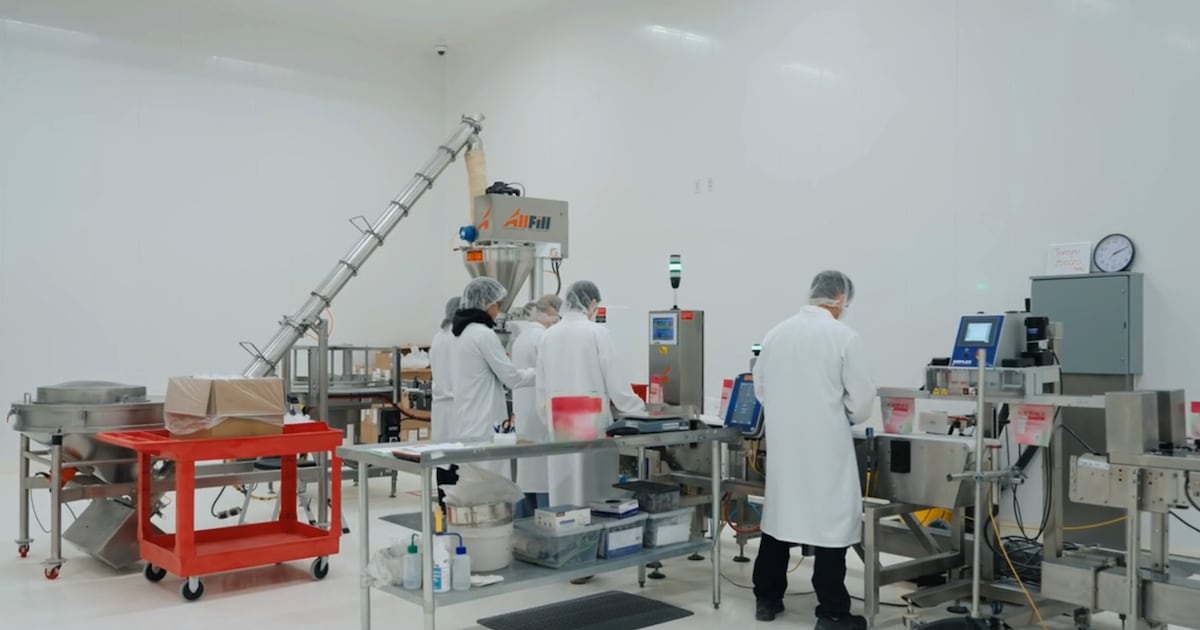
In a recent tour hosted by Women in Nutraceuticals, NutraIngredients explored facilities at Adept Life Sciences, Arizona Custom Blends, and 21st Century HealthCare. The visit provided insight into the intricate supply chain of dietary supplements, spanning from the initial raw ingredients through formulation and manufacturing, and ultimately culminating in the products that consumers find on retail shelves.
Michael Shields, CEO of Adept Life Sciences, emphasized the importance of rigorous testing for all incoming ingredients. Before they enter production, these ingredients are quarantined while the quality assurance (QA) teams obtain samples for laboratory analysis. Shields explained, “Once everything meets our specifications, we can release them for production.”
After passing these tests, the ingredients advance into the formulation and manufacturing stages, where they are precisely blended, measured, and processed according to exact specifications.
Jeff Weintraub, CEO of Arizona Custom Blends, described the company as a contract manufacturer primarily focusing on powders and capsules, with an expanding line of tablets. He noted that clients usually present a formulation which then undergoes a thorough research and development (R&D) assessment to validate its feasibility. Following this, the team initiates the creation of batch records, procures materials, and meticulously progresses through processes such as weighing, sifting, blending, encapsulating, bottling, labeling, and conducting final quality checks.
Once these products are completed, they undergo additional testing before being bottled, packaged, and distributed to consumers.
21st Century HealthCare produces a diverse array of nutritional products, including multivitamins, herbal supplements, and specialty formulas, available in tablet, capsule, and powder forms. Kirk Neil, president and CEO of 21st Century HealthCare, explained that the entire process—from sourcing and testing raw materials to blending, encapsulating, packaging, and direct distribution—is managed in-house, thereby eliminating the need for third-party distributors.
The Complexity Behind the Bottle
Behind each bottle lies a narrative often unseen by consumers, shaped by careful sourcing, extensive testing, and intricate manufacturing processes, all of which can be influenced by sudden spikes in demand.
“Things can go viral on TikTok, and we need to be prepared to support our brands and help them scale,” said Shields. He further explained, “Often, we advise brands not to overly complicate their formulations to ensure easier sourcing of raw materials. There may be branded components with only single sources, making it challenging if there’s an unstable supply chain or inadequate stock levels.” The commitment of his team is to provide solid recommendations to support these brands.
“Contract manufacturing presents numerous challenges,” stated Weintraub. He elaborated that every product introduces its own unique hurdles in the manufacturing process, necessitating comprehensive quality checks to guarantee the correct materials are received, accurately identified, and free from microbial contamination. “Ingredients are measured with extreme precision—sometimes to the milligram—before entering the production phase,” he added.
“All these components must align perfectly, and there are multiple points where things can go awry. Therefore, we implement extensive checks to ensure that the final product meets all specifications and that our end-users receive a top-quality item,” Weintraub elaborated.
Kirk Neil remarked, “What would surprise most people about our operations is the sheer complexity involved. The narrative that the vitamin industry is unregulated is simply not accurate.”
He explained that although dietary supplements may not undergo the same pre-approval process as pharmaceuticals, they are still subject to FDA regulations and are routinely inspected for compliance with current Good Manufacturing Practices (cGMPs). Highlighting the intricacies involved in supplement production, he noted the extensive processes required for sourcing raw materials, conducting tests, and manufacturing products ranging from multivitamins to herbal formulations.
Ultimately, the journey from raw materials to the finished retail product involves far more than merely compiling ingredients. It demands precision, unwavering consistency, adherence to regulatory standards, and rigorous quality control throughout every phase of production.


