 This week, while examining the balance sheet figures of the Federal Reserve, we encountered a rather intriguing note. Although we’re unsure how long it has been available on their website, it is something we cannot recall seeing before. The note states:
“The Federal Reserve’s balance sheet has experienced both expansion and contraction over time. During the financial crisis of 2007-08 and the ensuing recession, total assets surged from $870 billion in August 2007 to $4.5 trillion by early 2015. Following this, total assets decreased to under $3.8 trillion, reflecting the FOMC’s balance sheet normalization program carried out between October 2017 and August 2019. Since September 2019, however, total assets have been on the rise again.”
Directly beneath this note is a chart illustrating these changes: Continue reading
 While we might not enjoy acknowledging it, it is undeniable that over the past four decades, America has amassed an enormous amount of public debt.
It’s time to roll up our sleeves and dig ourselves out. Although the situation is daunting, it also presents numerous opportunities. But first, let’s examine the frightening details…
In 1980, the national debt stood at $908 billion; today, it has skyrocketed to over $26 trillion. Remarkably, just in June, our nation accrued $863 billion in new debt—more than was added in the first two centuries of its existence.
As this national debt has accumulated steadily over the years, economic growth has stagnated to near-sustenance levels. Initially, this decline was gradual, but it has become increasingly apparent over the last two decades.
Take the 1950s and 1960s, when the average GDP growth rate exceeded 4 percent. This fell to about 3 percent during the 1970s and 1980s and remained stagnant through the 1990s. However, the 21st century has been marked by dwindling growth rates. Indeed, over the last decade, the average GDP growth rate has been less than 2 percent. This is no laughing matter. Continue reading
 But, Mousie, thou art no thy-lane,
In proving foresight may be vain;
The best-laid schemes o’ mice an’ men
Gang aft agley,
An’ lea’e us nought but grief an’ pain,
For promis’d joy!
– Robert Burns, To a Mouse, on Turning Her Up in Her Nest With the Plough (excerpt), 1785
A New Bridge Unveiling
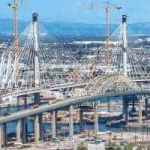
The ambitious plans of Long Beach officials have been thwarted by the pandemic. After seven years of construction, costing $1.5 billion, a traditional ribbon-cutting ceremony cannot take place.
The momentous occasion is the opening of the new, yet unnamed, replacement for the Gerald Desmond Bridge. To prevent COVID-19 spread, a virtual ceremony has been scheduled for the Friday before Labor Day weekend. Continue reading
 Captain George Pollard Jr. was starving after spending over two months adrift in a small whaleboat with some of his crew in the South Pacific.
The blazing sun was relentless, and thirst was unquenchable. The sparse food supplies had run out. Thus, Pollard had to make a harrowing decision to ensure his survival. Taking a deep breath and offering a prayer, he consumed his 18-year-old cousin, Owen Coffin.
The grim choice was made fairly. After nine weeks at sea with nothing but saltwater-soaked bread to eat, the starving crew resorted to an age-old maritime custom to decide who among them would be sacrificed. Tragically, Coffin lost the draw.
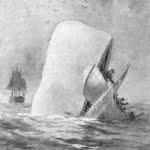
Weeks before this dreadful act began, Captain Pollard’s crew had been hunting a pod of sperm whales when calamity struck. An irate 85-foot-long whale collided head-on with their ship, The Essex of Nantucket, sinking it to the ocean depths. This terrifying disaster inspired Herman Melville’s classic, Moby-Dick. Continue reading

