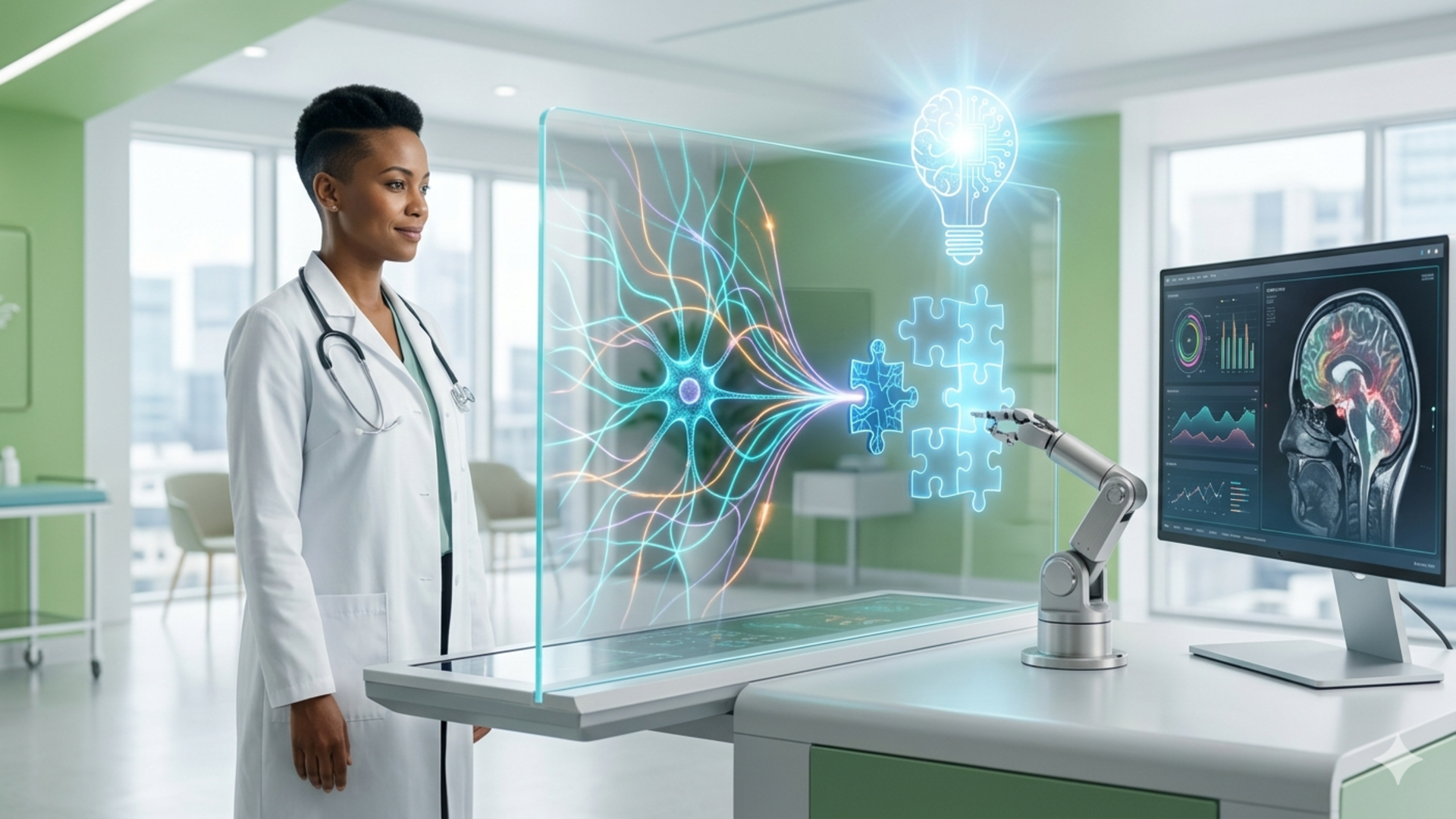
Revolutionizing Rare Disease Diagnosis with AI
Advancements in artificial intelligence (AI) are transforming the healthcare landscape, enabling faster and more accurate diagnoses of rare and complex diseases. This article explores how emerging AI models are proving to be invaluable tools for clinicians and what this means for the future of medicine.
- AI models can diagnose rare diseases more swiftly than experienced healthcare professionals.
- These systems often achieve accurate or nearly accurate diagnoses in challenging cases.
- The models analyze symptoms and test results using established reasoning techniques.
A new wave of AI tools has begun to surpass human clinicians in diagnosing complicated and rare medical conditions.
These advanced reasoning models can sift through extensive symptom lists, test results, and clinical notes, delivering diagnoses more rapidly than many specialized professionals.
Some experts believe this marks a significant technological shift that could redefine the practice of medicine, particularly for cases where diagnoses remain elusive despite thorough examinations.
Article continues below
AI Models Address Complex Diagnoses
“We are experiencing a profound technological shift that could change the face of medicine,” stated Arjun Manrai from Harvard University during a recent press conference.
Nonetheless, significant concerns linger regarding the ability of these systems to navigate the complexities of real-world clinical environments.
In a pivotal study, researchers evaluated a leading AI reasoning model using a combination of standard textbook cases alongside actual patient data from a Boston emergency department.
The model meticulously examined the symptoms, test requests, and results step by step, mirroring the approach of human clinicians.
It generated a list of potential diagnoses more frequently than human doctors, incorporating the correct diagnosis or a closely related option in approximately 80% of challenging cases.
For instance, in one case involving a transplant patient displaying subtle signs of a critical infection, the model identified the issue nearly a day before the clinical team recognized it.
Researchers highlight the technology’s strength in detecting broad patterns among rare diseases that individual doctors may infrequently encounter.
However, it’s important to note that these studies depend on curated patient data rather than the chaotic scenarios typical of emergency rooms.
These models operate on the information provided, rather than managing the complexities and uncertainties of real-world clinical settings filled with overlapping priorities and incomplete data.
The Challenge of Uncertainty in Medicine
Despite the impressive capabilities of these AI reasoning models, critics argue that clinical reasoning involves far more than a straightforward step-by-step analysis of clean data.
“Clinical reasoning is not synonymous with model reasoning,” pointed out Arya Rao from Harvard Medical School, who did not participate in the study.
“While these models excel in sequential thinking, they do not reflect the complexities we teach medical students regarding real clinical decision-making.”
Doctors often juggle multiple uncertain possibilities simultaneously, adjusting them as new information comes in.
Conversely, AI models tend to focus on a single strong explanation, updating their outputs rigidly when new data is introduced.
A research team that assessed 21 different AI systems discovered that even the best reasoning models faltered when handling several uncertain diagnoses concurrently.
They concluded that large language models are not yet equipped to make independent medical decisions.
Instead, they may serve as valuable second opinions or assist in highlighting rare conditions that might initially escape clinicians’ notice.
Experts emphasize the ongoing necessity of human doctors to interpret context, communicate with patients, and evaluate risks in real-time.
While this technology has the potential to reduce missed diagnoses in certain situations, it also presents new challenges if implemented without sufficient oversight and robust safeguards.
Via Science News

Follow TechRadar on Google News and add us as a preferred source to receive our expert news, reviews, and insights in your feeds.