Recent comments from the Israeli army chief have brought significant attention to the ongoing tensions in the West Bank. Maj Gen Avi Bluth’s remarks on military procedures and the treatment of Palestinians raise numerous ethical and legal questions about current practices. Below is a summary of the key issues surrounding these statements.
Israeli Army Chief’s Controversial Remarks
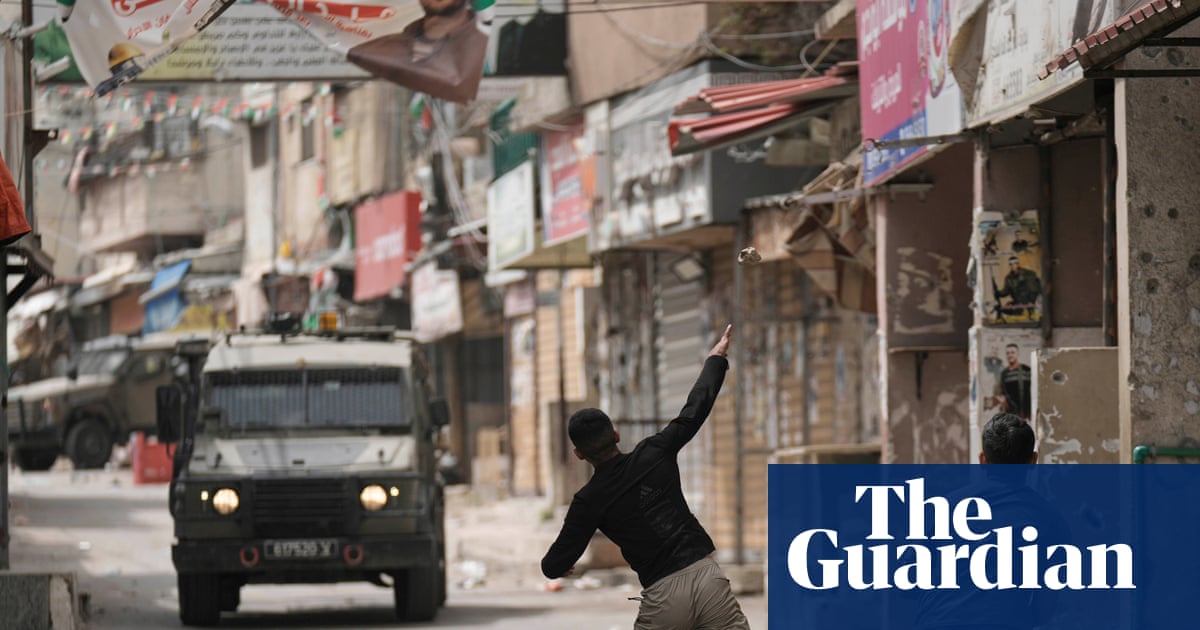
The Israeli army chief in the West Bank has stated that his troops are “killing like we haven’t killed since 1967,” indicating a drastic approach to confronting Palestinian stone-throwers, as reported by an Israeli outlet.
These comments by Maj Gen Avi Bluth, head of the army’s central command, were made during a closed meeting but were later leaked to Israel’s Haaretz newspaper. Bluth has not denied this account, and the Israel Defense Forces have yet to comment.
Discriminatory Practices in Military Justice
Bluth, raised in a West Bank settlement and educated in a religious military academy, spoke candidly about the unequal military justice his troops enforce. He disclosed that 42 Palestinian stone-throwers were shot on West Bank roads in the previous year, asserting these actions qualify as terrorism.
He pointed out that Jewish settler militants have not faced similar consequences for comparable actions, recalling an incident where a settler was injured during a stone-throwing event, which caused a public outcry. “Any such incident has very serious consequences from a societal perspective,” he noted, controversially admitting, “Yes, it involves discrimination.”
In the West Bank, Palestinians fall under military law and can be subjected to extended detention without trial, while Israeli citizens are tried in civilian courts.
Legal Loopholes and Justifications
Bluth also indicated that he has relaxed legal restrictions on Israeli soldiers, permitting them to injure Palestinians attempting to cross the separation barrier into Israel for employment. “At the [separation barrier], it is currently permitted to detain a suspect by shooting him at the knee or below to create ‘barrier awareness’,” he stated, suggesting such actions serve as a deterrent.
“There are a lot of ‘limping monuments’ in Palestinian villages of those who tried to [cross the barrier], so there is a price being paid,” he elaborated. Bluth framed these measures as necessary since each unauthorized Palestinian worker could be regarded as a “potential terrorist.”
The “Survival of the Fittest” Mentality
He argued that taking preemptive action against perceived threats is essential in the region. “If someone comes to kill you, kill them first is the norm in the Middle East, so we’re killing like we haven’t killed since 1967,” he remarked, referring to the long-standing conflict that has seen numerous lives lost.
His approach has been characterized as one that applies a different set of rules to Palestinian and Jewish individuals, raising ethical concerns about military engagement policies.
Violence and Settler Intimidation
In the wake of the 7 October 2023 Hamas attack and the ensuing conflict in Gaza, reports indicate a surge in violent intimidation against Palestinians in the West Bank, often executed with the complicity of the Israeli army, which increasingly consists of soldiers from the settlements.
UN statistics indicate that 230 Palestinians lost their lives in the West Bank due to actions by Israeli forces and settlers in 2025.
Warnings of Potential Uprisings
Just days before the controversial remarks, Bluth expressed concern over “Jewish terror” committed by extremist groups, warning that this behavior could lead to an uprising among Palestinians. He noted that these individuals often dehumanize Arabs, engaging in violence such as burning homes while occupants are inside.
While he acknowledged the current indifference of Palestinians, he cautioned that this could change, leading to potential unrest in the West Bank.
“Bluth has now revealed what everyone already knew: the Israel Defense Forces is working hand in hand with the settlers who are carrying out the daily pogroms,” Haaretz commented. “Bluth calls it Israeli terrorism, but not only does he not try to prevent it in the same way that the IDF prevents Palestinian terrorism, but he is actually abetting it.”
Key Takeaways
- Israeli army chief Maj Gen Avi Bluth’s comments have reignited discussions about military practices in the West Bank.
- Discriminatory military justice affects how Palestinians and Jewish settlers are treated under the law.
- Bluth supports actions that may harm individuals attempting to cross the separation barrier.
- There is concern over rising violence from Israeli settlers against Palestinians.
- Warnings of potential uprisings in the West Bank highlight growing tensions.
FAQ
What are the implications of Maj Gen Avi Bluth’s comments?
The comments highlight serious concerns about military practices and the treatment of Palestinians in the West Bank.
How does military law differ for Palestinians and Israelis?
Palestinians are subject to military law, while Israelis are governed by civilian courts, leading to unequal treatment.
What recent events have escalated tensions in the West Bank?
The conflict following the Hamas attack on 7 October 2023 has led to increased violence and intimidation against Palestinians by Israeli settlers.
The ongoing situation in the West Bank remains complex and volatile, with significant implications for both Israeli and Palestinian communities. Continued dialogue and analysis are necessary to understand the evolving dynamics at play.