- AI tool accelerates thermoelectric generator design, achieving top prototype performance
- TEGNet reduces simulation time from thousands of seconds to mere fractions
- Potential for more affordable waste-heat harvesters, though manufacturing challenges remain
Researchers in Japan have developed an innovative AI tool capable of significantly accelerating the design of thermoelectric generators, hinting at more economical methods to convert waste heat into electricity.
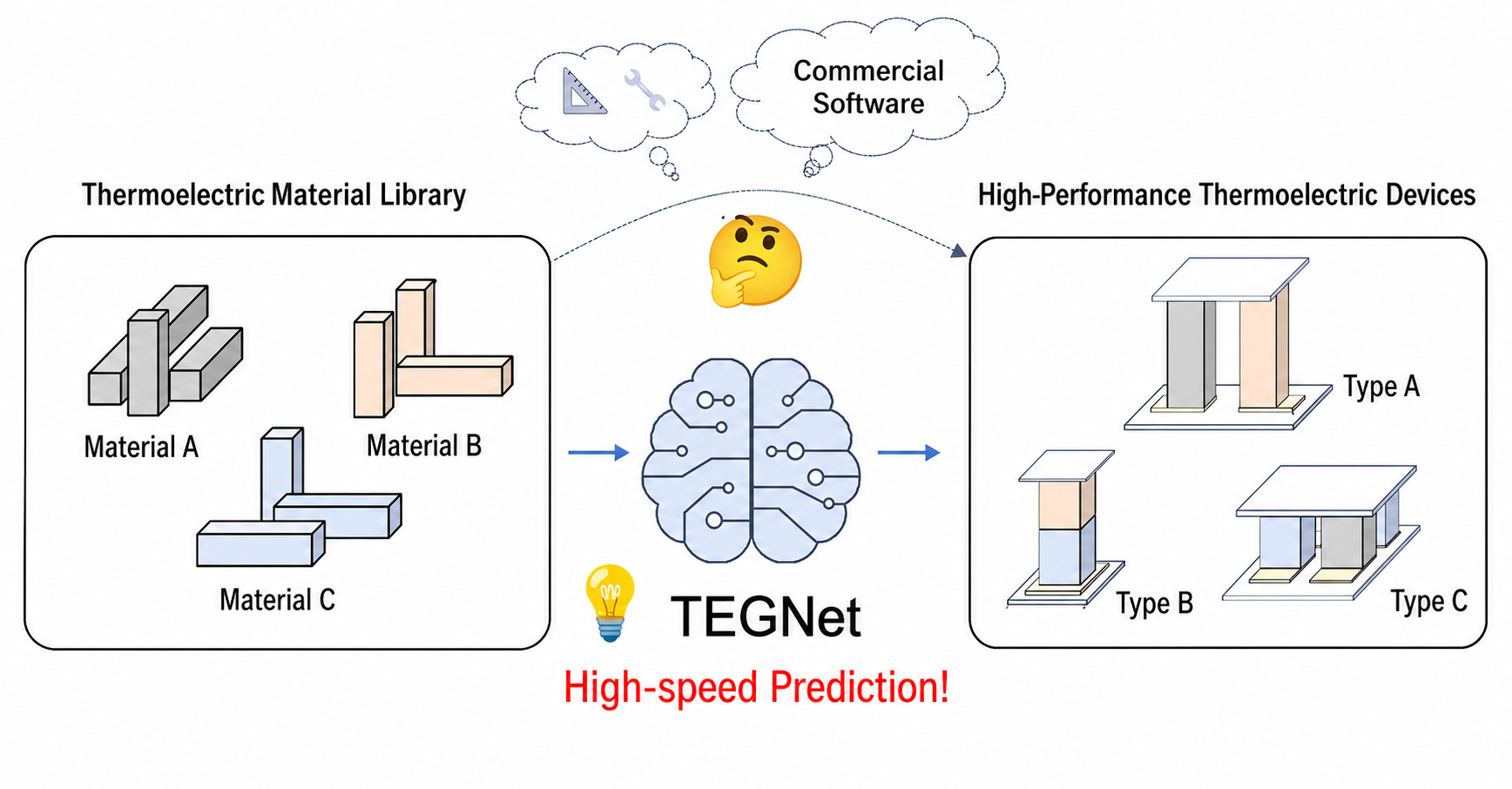
Known as TEGNet, this tool was created by Takao Mori and his team from Japan’s National Institute for Materials Science (NIMS) and the University of Tsukuba.
In a study published in Nature, the tool demonstrated over 99% accuracy in predicting generator performance while utilizing only 0.01% of the computing time typically required by commercial finite-element solvers.
Article continues below
Functioning as a Rapid Emulator
Thermoelectric generators convert temperature differences directly into electricity without requiring turbines or moving components.
These generators currently power various applications, including spacecraft, remote sensors, and select standalone systems. However, their limited performance and high costs have restricted their broader adoption in factories, refineries, vehicles, and electronic devices.
The design process for thermoelectric generators tends to be slow since researchers must consider multiple factors, including materials, geometry, temperature conditions, electrical resistance, and heat flow.
Traditional solvers frequently reevaluate complex physics equations, a process that can take days or even weeks when conducting extensive searches.
TEGNet learns from these simulations and operates as a rapid emulator. According to the research, a typical material simulation took around 2,237 seconds in COMSOL, while TEGNet achieved equivalent results in only about 0.25 seconds.
The research team utilized the AI to enhance two variants of generators: one constructed with layered materials and another utilizing paired semiconductor materials that collaborates to generate electricity.
The lab-developed prototypes achieved conversion efficiencies of 9.3% and 8.7%, respectively, ranking them among the more successful performance levels for that temperature range.
Nonetheless, thermoelectric solutions are not a panacea. The conversion of heat to electricity is limited by fundamental thermodynamic principles, and these devices require a sufficient temperature gradient to function effectively.
Of particular interest is the potential cost. Mori mentioned to IEEE Spectrum that projections indicate it might be possible to achieve an industrially competitive cost of power generation, marking a first in thermoelectric history.
TEGNet has also pinpointed designs that could utilize simpler manufacturing processes and, in certain cases, circumvent the use of bismuth telluride—a commonly used, yet expensive thermoelectric material.
This development may pave the way for more affordable waste-heat recovery systems and high-performance home heat pumps, although practical manufacturing still needs to validate these expectations.

Follow TechRadar on Google News and add us as a preferred source to get our expert news, reviews, and opinion in your feeds.