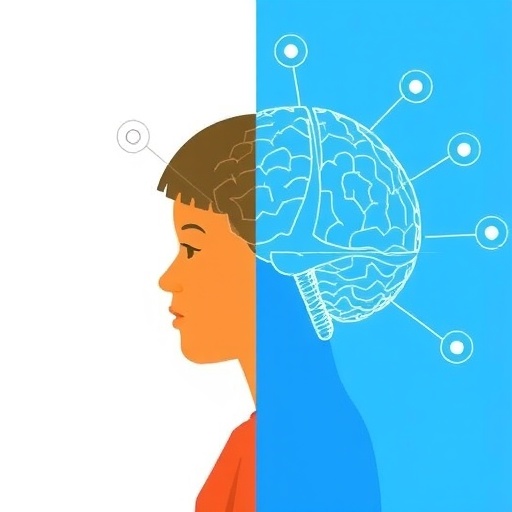
In the rapidly advancing field of pediatric medicine, one of the key challenges remains the early detection of neurodevelopmental disorders like attention-deficit/hyperactivity disorder (ADHD). This condition affects millions of children around the world and often goes undiagnosed for years due to subtle early signs. Recent advancements in artificial intelligence (AI) are paving the way for improved predictive diagnostics, potentially transforming how healthcare professionals approach early intervention and treatment strategies for ADHD.
A pioneering study conducted by Duke Health leverages AI to analyze routine electronic health records (EHRs), estimating the risk of ADHD long before a conventional clinical diagnosis can be made. Published in *Nature Mental Health*, the research delves into extensive clinical data collected in primary care environments. The team developed an advanced AI model trained on EHR data from over 140,000 children, which reveals hidden patterns in developmental, behavioral, and clinical indicators from infancy through early childhood.
This AI-driven predictive model acts as a risk stratification tool rather than a diagnostic device. It analyzes vast archives of medical histories to identify intricate interactions among variables that may suggest an impending ADHD diagnosis. Notably, the model demonstrates high predictive accuracy from the age of five onwards and maintains strong performance across various demographics, including sex, race, ethnicity, and insurance status. This broad applicability represents a significant improvement over previous efforts, which often faced issues with bias or limited data sets.
The true transformative potential of this AI-based method lies in its ability to shift ADHD assessment from a reactive approach to a proactive one. Traditionally, children with ADHD receive diagnoses only after enduring years of behavioral challenges and academic difficulties. By providing early risk estimates, pediatricians and primary care providers are empowered with actionable insights, enabling them to monitor at-risk children closely and initiate timely referrals for comprehensive diagnostic evaluations by specialists.
Lead author Elliot Hill, a data scientist at Duke’s Department of Biostatistics & Bioinformatics, highlights the untapped wealth of information contained in electronic health records. The AI effectively translates complex clinical narratives into predictive insights, demonstrating that routine medical data can yield potent prognostic signals that were previously out of reach. Rather than envisioning an AI “doctor,” the model is designed as an assistive technology that enhances clinician workflows and resource allocation.
Matthew Engelhard, M.D., Ph.D., the study’s senior author, points out that tools like this could prevent many children from “falling through the cracks.” By identifying those who are at increased risk, clinicians can provide focused attention and implement evidence-based interventions sooner, a strategy that is strongly associated with improved academic and psychosocial outcomes.
From a technical viewpoint, the AI model employs sophisticated machine learning techniques that integrate extensive multidimensional data, including developmental milestones, behavioral issues, comorbid medical conditions, and healthcare utilization patterns. This holistic analysis uses longitudinal data to identify trends rather than relying solely on static snapshots, thus significantly enhancing prediction accuracy.
Despite these promising developments, researchers caution that the AI tool needs further validation before it can be widely adopted in clinical settings. Rigorous prospective studies and real-world trials are essential to assess its effectiveness, safety, and ethical implications. Moreover, integrating this technology into existing healthcare frameworks presents logistical challenges, such as data standardization, patient privacy concerns, and interoperability with various EHR systems.
Co-author Naomi Davis, Ph.D., an associate professor in the Department of Psychiatry and Behavioral Sciences, emphasizes the critical need to connect at-risk families with timely evidence-based support. Early identification of ADHD must be accompanied by tailored resources and interventions unique to each child’s needs; otherwise, the advantages of predictive technology may go unrealized.
This research is part of a broader initiative to utilize AI in predicting and understanding mental health risks throughout life. Hill and Engelhard have also conducted studies exploring AI applications in adolescent mental health, underscoring a growing commitment to assimilating computational models into psychiatric epidemiology and personalized medicine.
Funded by the National Institute of Mental Health and the National Center for Advancing Translational Sciences, this study reflects a strong institutional backing for harnessing AI as a transformative force in medical diagnostics. As the field continues to innovate, AI-driven models like this may soon play a crucial role in pediatric care, allowing clinicians to anticipate disorders like ADHD with extraordinary accuracy and intervene at critical early stages.
In conclusion, this groundbreaking research demonstrates how AI tools can analyze routine clinical data to predict ADHD risk well in advance of traditional diagnoses. By integrating such technologies into standard healthcare practices, there exists a significant opportunity to improve outcomes and enhance the quality of life for millions of children worldwide, fulfilling the promise of precision medicine right from the start of life.
Subject of Research: Early prediction of attention-deficit/hyperactivity disorder (ADHD) risk in children through artificial intelligence analysis of electronic health records.
Article Title: Artificial Intelligence Models Predict Childhood ADHD Risk Years Before Diagnosis Using Routine Electronic Health Records.
News Publication Date: April 27, 2026.
Web References: Nature Article
Image Credits: Duke Health / Shawn Rocco
Keywords
Attention-deficit/hyperactivity disorder, ADHD, artificial intelligence, AI, electronic health records, EHR, pediatric medicine, early diagnosis, machine learning, neurodevelopmental disorders, predictive modeling, mental health.
Tags: ADHD risk stratification tool, AI early detection of ADHD, AI in mental health screening, artificial intelligence in healthcare, behavioral and developmental data analysis, childhood ADHD diagnosis delay, Duke Health ADHD study, early intervention for ADHD, electronic health records analysis, machine learning ADHD prediction model, pediatric neurodevelopmental disorders prediction, predictive diagnostics in pediatrics.