In April 2017, Deputy Defense Secretary Bob Work initiated the creation of an Algorithmic Warfare Cross-Functional Team, which led to the launch of Project Maven. This initiative aimed to incorporate artificial intelligence (AI) and machine learning into military intelligence and combat operations. The year 2017 marked a significant turning point for AI technologies, transitioning from early developmental phases to large-scale implementation. Project Maven became a trailblazer for AI applications in warfare, now established among the 800 AI initiatives adopted by the Pentagon, along with 300 machine learning tools created by the CIA and various projects from international organizations including UN bodies and non-governmental organizations (NGOs).
As AI technologies gained prominence globally through groundbreaking applications, they were embraced by organizations such as the World Food Programme (WFP), the International Rescue Committee (IRC), and the United Nations High Commissioner for Refugees (UNHCR). These organizations highlight the increasing integration of AI in humanitarian efforts. Humanitarian groups are particularly attracted to the efficiency AI solutions offer in crisis management. However, there remains a significant concern over whether these technologies can adapt to the evolving landscape of humanitarian ethical standards.
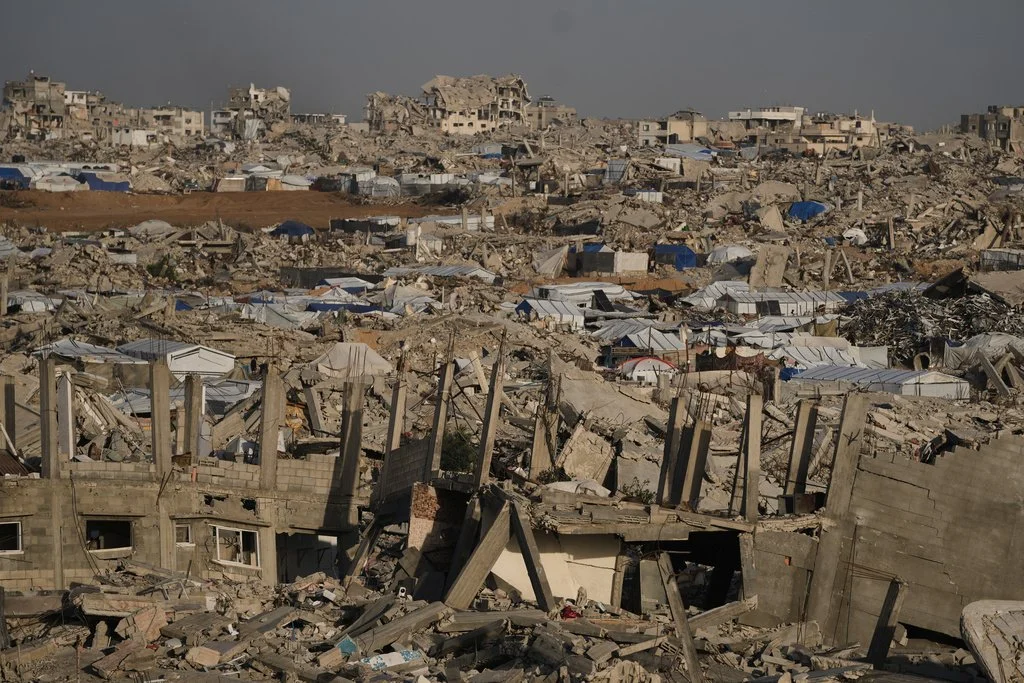
On October 9, 2023, the Israeli military enacted a “complete siege” on the Gaza Strip, resulting in widespread destruction and displacement. The military operations cut off civilian access to essential resources such as food, electricity, and fuel, leading to the collapse of critical infrastructure like hospitals, communication systems, and transportation methods. The humanitarian impact was severe, with an estimated 9,000 fatalities resulting from airstrikes, starvation, or disease, alongside 25,000 injuries and 70% of residents displaced. These figures highlighted the urgent need for enhanced disaster mapping, a need that AI capabilities uniquely address by improving responses in crisis zones.
Among AI’s most notable capabilities is its ability to deliver accurate mapping of disaster sites. Such precision is achieved by machine learning models that analyze satellite imagery taken both pre- and post-disaster, designed to highlight geographic changes. Humanitarian organizations, like the United Nations Satellite Centre (UNOSAT), utilize these analyses to pinpoint areas requiring reconstruction, thereby facilitating effective responses. In Gaza, these reports tracked infrastructure damage and mapped civilian displacement, proving crucial for directing aid efforts and enhancing overall disaster response efficiency.
However, the benefits of AI in satellite image tracking come with ethical challenges, particularly concerning civilian privacy rights. Recently, the United Nations General Assembly (UNGA) voiced apprehensions about the rapid advancement of AI technology, suggesting that it enhances the ability of governments, corporations, and individuals to engage in surveillance and data collection. The UNGA categorized “unlawful or arbitrary surveillance” as an act that violates privacy rights in non-consenting situations.
Current high-resolution satellite technology can detect features as small as 31 centimeters (approximately one foot), enabling the monitoring of individual or group movements, recognition of faces, and the generation of detailed images of private property. Nonetheless, it is crucial to delineate between responsible usage and potential exploitation of sensitive data. Humanitarian organizations adopting AI technology must navigate this delicate balance, recognizing that neglecting ethical considerations may inadvertently endanger civilian welfare.
Beyond aiding post-disaster recovery, AI technology also supports pre-disaster assistance for vulnerable communities through machine learning models and cloud-based data processing tools. For example, AI solutions such as Google’s Flood Forecasting System analyze weather patterns, while California’s Earthquake Warning System monitors seismic activity to foresee future natural disasters. The remarkable accuracy of these technologies in forecasting unpredictable events has proven invaluable for humanitarian organizations’ proactive resource allocation efforts.
In recent years, UNHCR has leveraged AI to construct forecasting models that predict refugee movements, guiding planning and resource allocation. Their 2022 initiative, Project Jetson, utilized climate, remittance, and market price data to anticipate forced displacement in Somalia and respond preemptively to potential violence and escalation of conflict. Similarly, the WFP has devised models that assess food insecurity levels in conflict zones, aiming to understand and counteract projected deficiencies in nutrition.
Conclusion
The integration of AI and machine learning into humanitarian efforts showcases both significant opportunities and critical ethical obligations. As organizations harness technology for improved disaster response and resource allocation, striking the right balance between innovative solutions and the protection of civil rights remains essential. Through careful consideration and ongoing dialogue, humanitarian entities can leverage AI effectively while upholding the dignity and rights of those they serve.