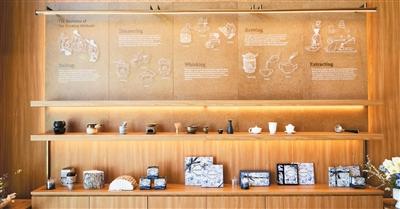
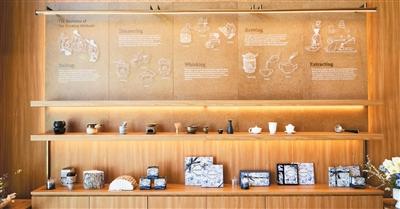
Photos show tea-drinking culture and tea ware on display at the first North American store of Chinese new-style tea brand Chagee. (Photo courtesy of interviewee)
This year has seen a surge in the international expansion of Chinese new-style tea brands. With Naisnow making its debut in Silicon Valley and other brands setting their roots in major cities across North America and beyond, the global enthusiasm for these unique tea offerings continues to grow.
China’s new-style tea brands are picking up the pace of their overseas expansion this year. Naisnow opened its first Silicon Valley store on Jan. 30, marking its debut in the western U.S., while Heytea launched its first Canadian store in Toronto on Feb. 16. Mixue followed with its first South American outlet in São Paulo, Brazil, on April 11.
According to the China Chain Store and Franchise Association (CCFA), “new-style tea” refers to freshly prepared beverages made with raw tea leaves or tea infusions and blended with fresh fruit, vegetable juices, dairy products or other ingredients — but not instant powdered drinks.
In April, the CCFA released a list of the top 50 Chinese restaurant and new-style tea brands going global. Mixue operates more than 4,000 stores abroad, while Chagee has over 200 overseas locations. Heytea, ChaPanda, Naisnow, Chahalo, and Molly Tea have also established footholds in international markets. Long queues outside many outlets underscore their growing appeal abroad.
When Naisnow opened its Silicon Valley store on Jan. 30, a long queue formed out front, with some customers waiting more than three hours. The store generated over $94,000 in revenue in its first three days.
Premium tea is one of the key factors driving the overseas appeal of China’s new-style tea brands. Molly Tea, for instance, highlights on its New York website that its drinks are crafted from jasmine flowers from Hengzhou city in south China’s Guangxi Zhuang Autonomous Region and premium tea leaves from Ya’an city in southwest China’s Sichuan Province, processed through sophisticated scenting techniques for an extraordinary fragrance.

Customers enjoy afternoon tea and snap photos inside Chinese new-style tea brand Naisnow’s Silicon Valley store. (Photo courtesy of interviewee)
To safeguard product quality, companies such as Mixue and Guming Holdings have established direct-sourcing bases and proprietary growing systems in key tea-producing regions, ensuring end-to-end control from cultivation to retail.
China’s new-style tea brands are attracting overseas consumers through product packaging and store designs that blend traditional Chinese tea culture with contemporary aesthetics — giving their offerings a distinctive Chinese appeal.
Chagee draws on historical references for its drink names, turning each cup into a form of cultural expression. Its Boya Jasmine Green Milk Tea has become hugely popular among Thai students, paying tribute to the ancient Chinese legend of Bo Ya and Ziqi — two figures who came to symbolize deep friendship.
“At first we just loved the refreshing taste,” the student said. “But once we learned the story behind it, ordering the tea when friends get together has taken on a whole new meaning. Many people have come to appreciate Chinese tea culture because of it.”
At Heytea’s Toronto store, a dedicated tea lab lets customers watch the entire journey of a cup of tea — from tea varieties and brewing equipment to ingredient selection, flavor testing, and final preparation — as they order and wait.
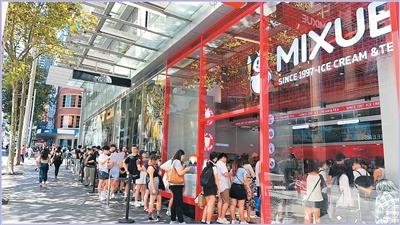
Customers line up outside a store of Chinese new-style tea brand Mixue in Australia. (Photo courtesy of interviewee)
Experts note that new-style tea brands are creating spaces where social interaction and consumption converge while conveying a sense of cultural identity. As “Becoming Chinese” has become a buzzword on social media worldwide, drinking Chinese new-style tea is emerging as a new way for young consumers globally to connect with Chinese culture.
Chinese new-style tea brands are also tailoring their offerings to local tastes as they expand abroad, making localization a key strategy.
Gaining a deep understanding of local consumers is crucial to success, said the head of Molly Tea’s Southeast Asia operations. The brand’s team visited more than 490 related shops across Bangkok and surrounding areas a full year before its first Southeast Asian store opened, conducting extensive research into local consumer preferences.
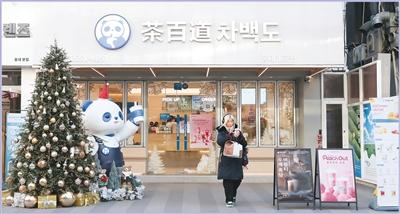
Photo shows a store of Chinese new-style tea brand ChaPanda in Seoul, South Korea. (Xinhua/Yao Qilin)
Industry insiders point out that China’s tea sector has reached a world-leading level in supply chain integration, product innovation, and digital operations. Driven by quality and culture, China’s new-style tea brands are blending millennia-old traditions with modern consumer demands and accelerating their expansion into global markets.
Key Takeaways
- Chinese new-style tea brands are rapidly expanding internationally, with notable openings in North America and beyond.
- These brands offer freshly prepared beverages, distinguishing themselves from traditional instant powdered drinks.
- Quality ingredients and innovative sourcing practices are central to their appeal.
- Cultural references in product names enhance consumer connections to the brand.
- Localization strategies are vital for success in diverse markets.
- Social interaction and cultural identity are key aspects of the tea-drinking experience.
- Chinese tea brands are setting new standards in supply chain integration and digital operations.
FAQ
What is new-style tea?
New-style tea refers to freshly prepared beverages made with raw tea leaves or tea infusions blended with fresh fruits, vegetable juices, and other ingredients, excluding instant powdered drinks.
How are these brands gaining popularity abroad?
They are appealing to local consumers by offering high-quality products, engaging cultural narratives, and visually appealing store designs that merge traditional and modern aesthetics.
What role does localization play in their expansion?
Localization helps brands tailor their offerings to match local tastes and preferences, which is crucial for their success in international markets.
How are these brands ensuring product quality?
Many brands establish direct-sourcing bases and proprietary growing systems in key tea-producing regions to maintain control over product quality from cultivation to retail.
What cultural significance do these brands convey?
By incorporating historical references and cultural stories into their products, these brands foster a deeper connection with consumers, enhancing their appreciation for Chinese tea culture.
(Web editor: Hongyu, Liang Jun)