In recent revelations, it has come to light that officials from the Trump administration intended to utilize artificial intelligence software created by one of Elon Musk’s advocates for deregulation, aimed at facilitating what they referred to as “regulation extermination.” This initiative even included drafting new federal statutes, as detailed in documents reviewed exclusively by Lever.
The newly uncovered documents provide insights into how this AI program was presented to government officials and its training to focus on specific regulations to further President Donald Trump’s pro-business agenda.
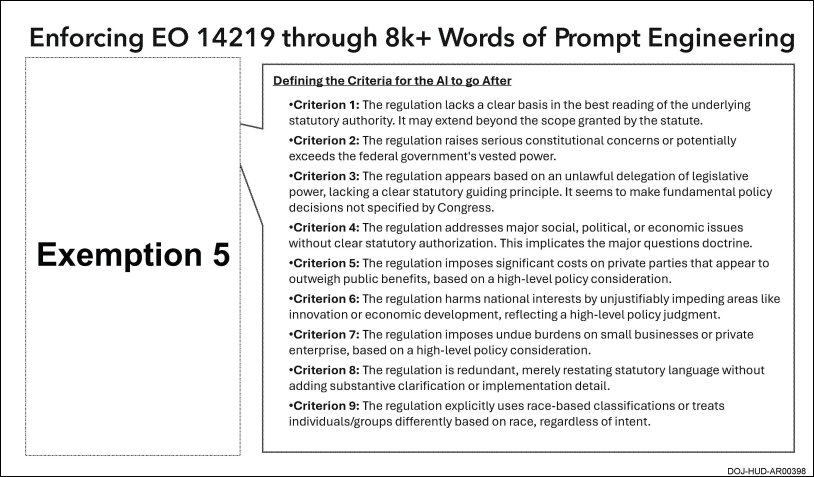
According to these records, the AI tool named “SweetREX,” developed by a protégé of Musk, was designed to identify and eliminate regulations viewed as burdensome to businesses, stifle innovation, or rely on race-based classifications, among other issues. Remarkably, the program could assess over a hundred thousand public comments in under thirty minutes, guided by these criteria.
“The documents shed light on the shortcuts that this AI tool employs in determining whether a regulation is legally mandated and if its burdens outweigh the public benefits,” explained Daniel McGrath, a senior oversight counsel at the legal advocacy group Democracy Forward, which obtained these records via a Freedom of Information Act request.
These documents elaborate on how SweetREX was introduced to government employees, although it remains unclear whether staff utilized SweetREX during its year-long operations aimed at regulations. Additionally, the extent to which they tested or evaluated the program’s accuracy is also uncertain.
The Department of Government Efficiency (DOGE), conceptualized and led by the tech billionaire and Trump ally Musk from January to May 2025, claims to have generated a remarkable $215 billion in savings through administrative cuts, contract cancellations, and the reduction of hundreds of thousands of positions. AI has demonstrated a history of high energy and water consumption while also making poor regulatory decisions that have had detrimental impacts on people’s lives.
These documents highlight how SweetREX, created by Christopher Sweet, a University of Chicago undergraduate turned DOGE staffer, was framed to employees of the Department of Housing and Urban Development last year as a pioneering “AI solution for regulation extermination.”
According to the documents, the objective of deregulation was to eliminate regulatory measures that could be seen as overreaching or that impose unnecessary burdens beyond what Congress has legislated.
A presentation deck included in the documents indicated that SweetREX could swiftly identify which statutes to “remove,” draft notices of proposed rulemaking (NPRMs) in connection with these regulatory rollbacks, sort through possibly “hundreds of thousands” of public comments regarding these changes, and compose final rules.
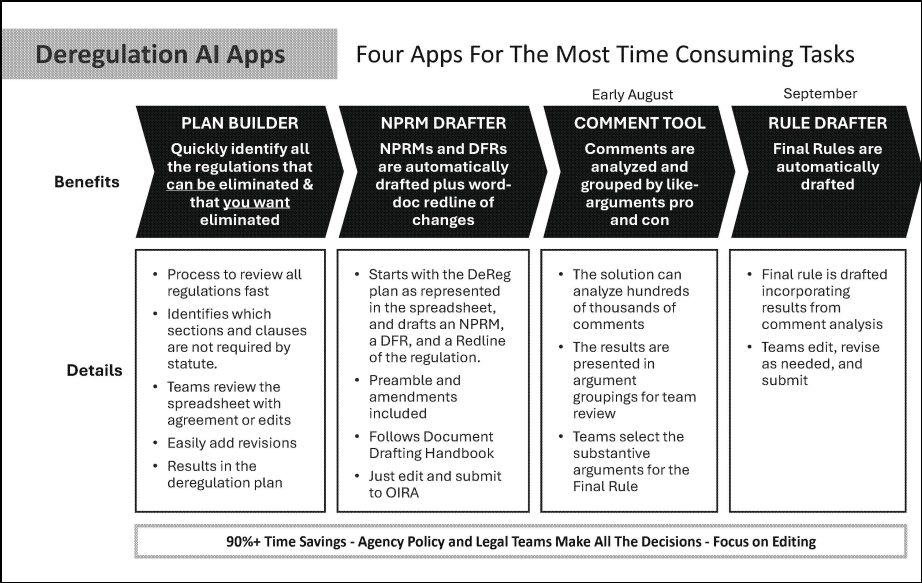
SweetREX’s advocates claimed that its implementation would reduce “average hours required per regulatory section” from thirty-six hours to less than three.
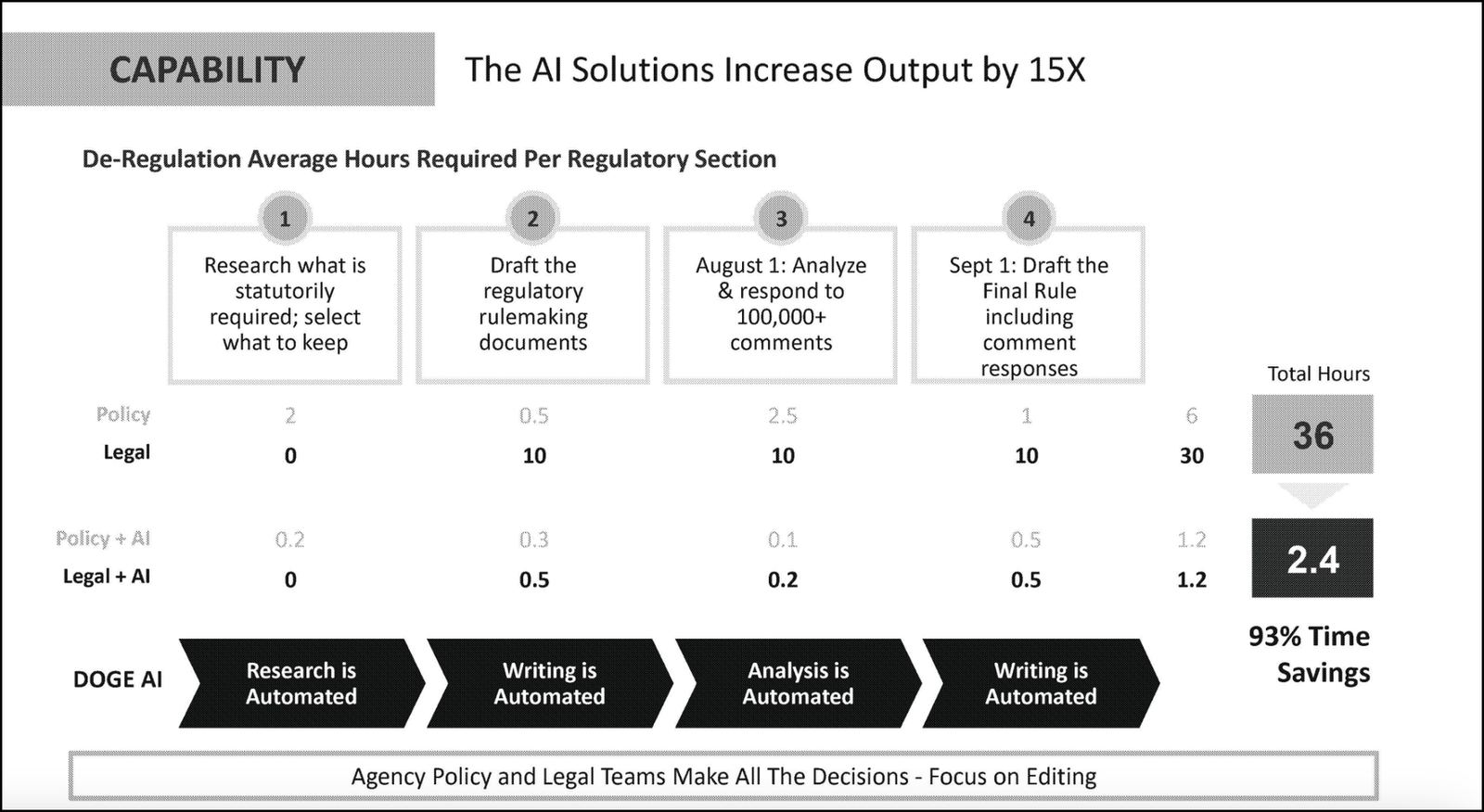
The pitch deck revealed that SweetREX would evaluate regulations for elimination based on nine criteria, including whether the rule raises constitutional questions, involves unlawful delegation of legislative authority, imposes substantial costs on private interests, hinders economic growth, imposes excessive burdens on businesses, or “differentiates treatment based on race.”
Proponents of SweetREX asserted that it would assist agencies in complying with Trump’s various executive orders aimed at deregulation across departments, which included dismantling environmental protections for fossil fuel companies. The AI documents also claimed that SweetREX could offer “evidence-supported flags to protect you legally.”
Reports on SweetREX’s development as a tool for slashing government regulations first surfaced last August. In October 2025, Democracy Forward initiated a lawsuit against several federal agencies to compel them to disclose how they employed AI to achieve Trump’s deregulatory objectives.
The documents discussed in this article are a result of that lawsuit.