At Hannover Messe 2026, SAP has introduced innovative agentic AI tools designed to enhance manufacturing and supply chain operations. This launch focuses on integrating software within business processes across various areas, including production, logistics, and cloud-based enterprise systems.
The newly unveiled products aim to assist manufacturers grappling with rising costs, increasing competition, and complex operational challenges. SAP has developed a model where AI agents monitor fluctuations in supply and production conditions, evaluate constraints, and initiate actions within essential workflows.
This announcement positions manufacturing at the heart of SAP’s overarching strategy to seamlessly integrate artificial intelligence into daily business systems rather than treating it as an isolated component. This approach encompasses design, planning, manufacturing, logistics, asset management, and supplier networks, all interconnected through SAP’s business network software.
One of the standout products showcased is SAP Supply Chain Orchestration, which employs a real-time knowledge graph along with Joule, SAP’s AI assistant, to identify and mitigate risks across multi-tier supplier networks. SAP also highlighted features like digital product passport functionalities and e-invoicing compliance tools that are embedded in routine business processes.
Factory Focus
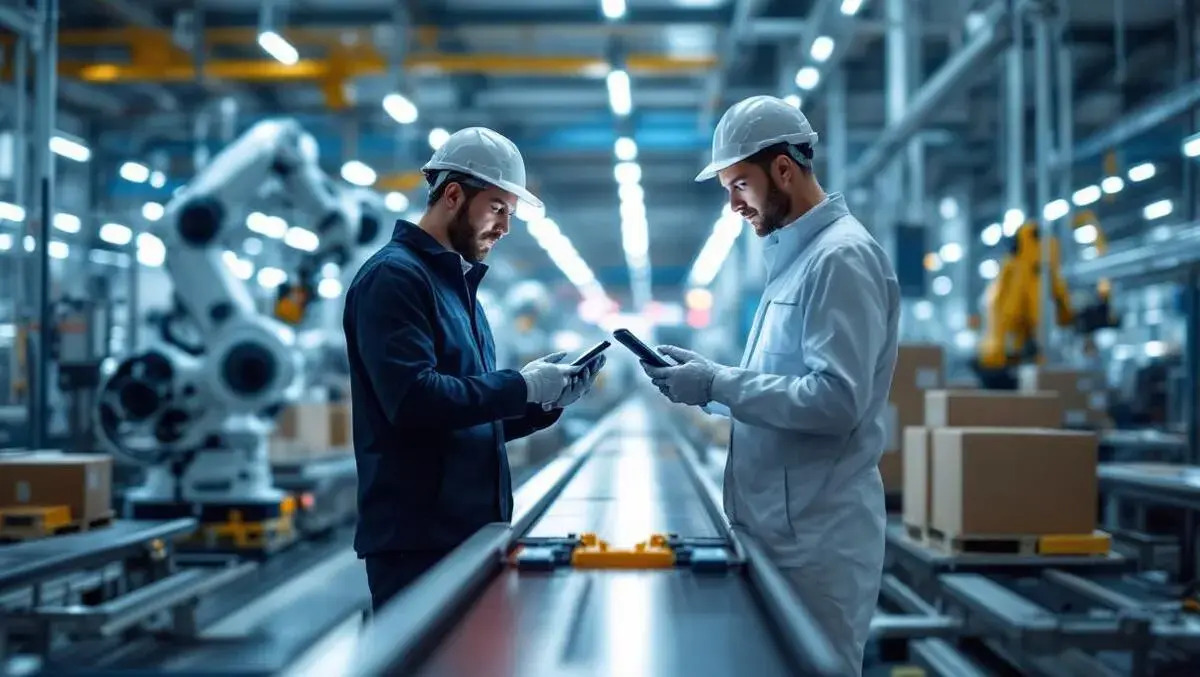
During the trade fair, SAP is conducting live demonstrations to illustrate how the software aligns digital planning with physical production. A CNC machine manufactured by DMG Mori is generating spare parts, which are then directly transferred to an Uhlmann packaging machine in a synchronized operation.
Another demonstration showcases a humanoid robot performing picking and packingtasks, illustrating how Joule can synchronize digital decisions with actions on the factory floor.
SAP is also emphasizing the importance of partnerships within its industrial strategy. Accenture, PwC, and Capgemini are collaborating to demonstrate comprehensive manufacturing and supply chain systems, while Snowflake is participating in a session centered on data management.
Additionally, the company announced its support for Manufacturing-X, a cross-industry initiative aimed at facilitating secure, standardized data exchange throughout manufacturing supply chains. This project is part of a larger European endeavor to enhance industrial data interoperability while ensuring companies maintain control over how their information is shared.
Industrial Push
The launch at Hannover Messe occurs amid a competitive landscape where large software companies are striving to convince industrial firms that AI can yield tangible benefits in various areas, such as planning, procurement, production, and after-sales service. Manufacturers are increasingly interested in systems that provide early warnings of disruptions, optimize factory assets, and enable quicker responses to shifts in demand. However, many remain cautious about the costs of implementation and the integration of new solutions with existing equipment.
SAP contends that these apprehensions can be alleviated by embedding AI directly within established enterprise applications. Instead of requiring users to navigate between disparate tools, the software company advocates for automated decisions and recommendations to seamlessly integrate with the existing systems used for managing orders, suppliers, production, and logistics.
Christian Klein, SAP’s CEO, is scheduled to speak at the event, focusing on the transition from AI strategy to practical business execution in manufacturing. His insights are expected to resonate with sentiments that reflect a market shift towards demonstrating clear, actionable use cases for AI.
Industrial organizations are facing pressure to enhance efficiency while adapting to tariff uncertainties, changing supply routes, regulatory shifts, and demands for quicker delivery and more traceable products from customers.
SAP asserts that its latest offerings for manufacturing and supply chain are intended to empower businesses to operate as a unified enterprise. This means effectively linking data and decisions from planning through delivery and after-sales service, with compliance demands managed within the same workflows.
“Today’s manufacturing companies face the dual challenge of managing complexity while responding agilely to change amidst rising costs and intensifying global competition,” explained Dominik Metzger, President and Chief Product Officer of SAP Supply Chain Management. “By incorporating agentic AI directly into core business processes, SAP enables enterprises to sense market changes in real-time and translate them into immediate action. Through orchestrating enterprise-wide operations into a single connected system—from design and planning to manufacturing, logistics, and asset management—companies can effectively bridge the gap between planning and execution, consistently delivering the reliable business outcomes that customers expect.”