Artificial intelligence (AI) is increasingly being integrated into dermatology, offering new opportunities for consumers to identify skin conditions. However, clarity on the subsequent actions remains ambiguous.
AI in Skin Condition Diagnosis: Consumer Insights
The application of artificial intelligence in dermatology is extending beyond healthcare professionals and reaching consumers directly. A comprehensive survey involving 2,345 participants from the U.S. who sought information about skin issues in the past year revealed that access to an AI-powered dermatology tool significantly enhanced their ability to correctly identify various conditions from deidentified cases. Users of the AI tool exhibited a greater willingness to provide a diagnosis compared to those using traditional research methods. These results indicate that AI tools focused on skin conditions may facilitate better recognition of visible dermatological issues, although they currently fall short in guiding users on the next steps to take.
Research Findings
The randomized survey explored three distinct groups: a control group using standard resources like web searches, an AI group utilizing a prototype dermatology application, and a “Wizard of Oz” group that used the same interface but provided dermatologist-sourced differential diagnoses rather than AI-driven predictions. Participants evaluated retrospective cases comprising images and structured medical histories.
Those using the AI tool were significantly more likely to correctly identify a condition compared to those in the control group. Condition naming accuracy soared from 7.86% in the control group to 22.79% in the AI group, while the Wizard of Oz group achieved an accuracy rate of 36.20%. Moreover, the willingness to name a condition climbed from 41.21% in the control group to 62.26% in the AI cohort. Improved confidence and satisfaction were also noted, signaling a significant shift in how consumers interact with information about skin conditions when assisted by AI outputs.
Limitations of AI Tools
However, the study highlighted a critical limitation: enhanced recognition did not equate to a better understanding of subsequent actions. Only the Wizard of Oz group exhibited a notable increase in actionability compared to the control group, implying that the effectiveness of AI hinges on the quality of predictions provided and the clarity of the accompanying explanations. Even when presented with dermatologist-grade differentials, inadequate user interpretation persisted as an issue.
This distinction is vital in clinical practice. While consumers might feel more assured after utilizing AI tools, such confidence does not automatically translate to actionable knowledge. The study underscores an essential design challenge for digital dermatology: to not only enhance diagnostic accuracy but also to improve the communication of treatment protocols, urgency, and follow-up guidance. As AI tools for identifying skin conditions become more prevalent in direct patient care, bridging this gap could be as crucial as the diagnostic capabilities themselves.
Reference
Sayres R et al. Consumer Understanding of Skin Concerns With an AI-Powered Informational Tool. JAMA Dermatol. 2026;doi:10.1001/jamadermatol.2026.0597.
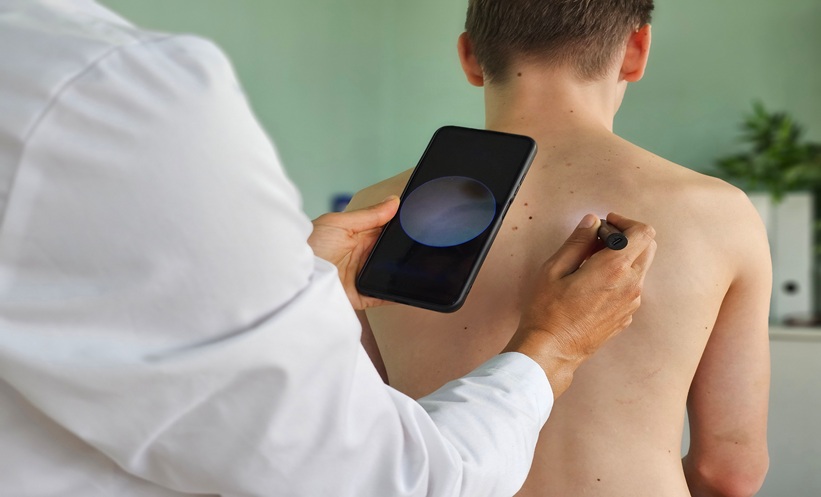
Featured Image: Nadzeya on Adobe Stock.