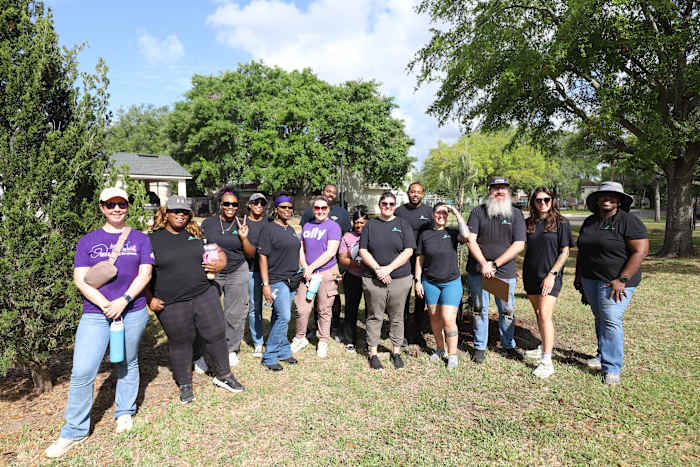
The Importance of Urban Green Spaces: A Community Initiative in Jacksonville
Urban environments can often feel overwhelming, with concrete and steel dominating the landscape. However, initiatives that introduce greenery into our cities are crucial for creating a more inviting and sustainable living space. One such effort is taking place in Jacksonville, Florida, where local organizations and volunteers have come together to enhance the beauty and resilience of the community through tree planting.
A Collaborative Effort for a Greener Future
Recently, Groundwork Jacksonville, along with Greenscape of Jacksonville and a dedicated group of volunteers, planted 60 shade trees along the Emerald Trail S-Line. These trees are not just for decoration; they include species like bald cypress, black gum, dahoon holly, wax myrtle, Little Gem magnolias, and live oaks. These native trees will provide shade and support the urban ecosystem, benefiting both residents and wildlife alike.
The planting day saw participation from over 60 volunteers, including staff from the Jacksonville Jaguars, employees of Ally Bank, and students from the Duval 4-H Home School Adventure Club. Together, they worked diligently to make a lasting impact on their local environment, all within the space of just a few hours.
Understanding the Emerald Trail S-Line
The S-Line is a notable feature of Jacksonville’s urban landscape, consisting of a 4.8-mile multiuse path that runs through neighborhoods like Durkeeville and Springfield. This trail, which was the city’s first dedicated urban trail, was created after transforming an abandoned CSX right-of-way in 2008. It forms part of the wider 30-mile Emerald Trail initiative designed to connect 14 historic urban neighborhoods to downtown Jacksonville, the St. Johns River, and various schools, parks, and community hubs.
The Role of Nonprofits in Urban Development
Groundwork Jacksonville plays a pivotal role in the redevelopment and restoration efforts within the community. Founded in 2014 as a partnership between the city, the National Park Service, the Environmental Protection Agency, and Groundwork USA, this nonprofit is working to revitalize parts of the Emerald Trail and restore waterways like McCoys Creek and Hogans Creek. In tandem, Greenscape of Jacksonville, a longstanding advocacy group since 1975, has continually contributed to the region’s tree canopy, planting over 356,750 trees.
Conclusion
Initiatives like the tree planting along the Emerald Trail exemplify how community involvement can lead to lasting improvements in urban environments. Not only do these efforts beautify neighborhoods, but they also foster a sense of community and engagement among residents. As we look for ways to enhance our urban spaces, consider getting involved in local green initiatives. Together, we can cultivate healthier, more vibrant cities that benefit everyone.