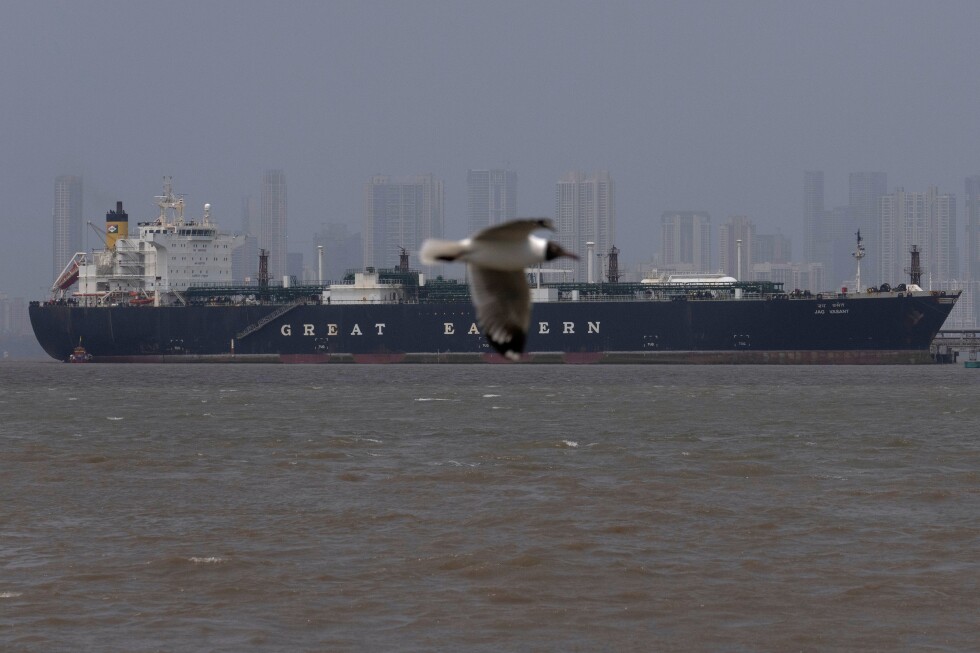
The ongoing conflict in the Middle East continues to escalate, marked by significant developments such as missile strikes and international political maneuvers. As tensions rise, the situation has broad implications for regional stability and global oil markets.
DUBAI, United Arab Emirates (AP) — Iran hit an oil tanker off the coast of Qatar and Kuwait’s airport on Wednesday, while airstrikes battered Tehran even as U.S. President Donald Trump said he was nearly ready to wind down the war and claimed that Iran’s president wanted a ceasefire.
Iran had no immediate response to Trump’s claim on social media that “Iran’s New Regime President” was seeking a ceasefire, which Trump stated would only take place once the Strait of Hormuz was “open, free, clear.”
It wasn’t immediately clear who Trump was referring to in Iran, which still has the same president.
Trump, who is scheduled to address the nation later in the day, indicated he could walk away from the war in two to three weeks once he felt confident Iran would not be able to build a nuclear weapon — even if Tehran does not agree to a ceasefire.
This raised concerns about a U.S. withdrawal without guarantees from Iran to cease its attacks on Gulf Arab neighbors or release its grip on the crucial Strait of Hormuz. During peacetime, this strait handles a fifth of the world’s traded oil, and Tehran’s actions, combined with attacks on regional energy infrastructure, have resulted in soaring oil prices, which ripple through the global economy. Even a quick reopening of the strait may not alleviate issues like higher food prices for months or longer.
Additionally, it remains uncertain how Israel, which began bombing Iran alongside the U.S. on February 28, would act if the U.S. withdraws without a deal in place. The status of Iran’s stockpile of highly enriched uranium adds further complexity to the situation.
No signs of Iran relinquishing its grip on the Strait of Hormuz
Trump’s comments represent yet another mixed signal from the American leader, who has offered shifting objectives regarding the war while frequently asserting it could soon conclude. However, he also threatens to escalate the conflict. Thousands more U.S. troops are currently heading to the Middle East, which raises questions about their intended purpose.
Just days ago, Trump warned that the U.S. would attack Iran’s power plants if Tehran did not reopen the strait by April 6. He has also threatened to target Iran’s Kharg Island oil export hub and possibly desalination plants.
However, on Tuesday, Trump stated that the U.S. “will not have anything to do with” ensuring the safety of vessels navigating through Hormuz.
Speaking to Al Jazeera, Iranian Foreign Minister Abbas Araghchi indicated Tehran’s readiness to continue its fight.
“You cannot speak to the people of Iran in the language of threats and deadlines,” he asserted. “We do not set any deadline for defending ourselves.”
Trump has faced increasing pressure to conclude the war, as skyrocketing oil prices have raised the costs of gasoline, food, and other essential goods. The price of Brent crude, the international benchmark, had increased by over 40% since the war began, trading above $103 a barrel on Wednesday.
It’s unclear where diplomatic efforts stand
The U.S. has presented Iran with a 15-point plan aimed at achieving a ceasefire, which includes demands for the strait to reopen and for Iran’s nuclear program to be scaled back.
Iran maintains that its nuclear initiative is for peaceful purposes, and its five-point counter-response emphasizes retaining sovereignty over the strait.
In the Al Jazeera interview, Araghchi acknowledged having received direct messages from U.S. Mideast envoy Steve Witkoff. Nevertheless, he emphasized that no formal negotiations were occurring, expressing skepticism about the potential of talks succeeding, stating that “the trust level is at zero.”
He cautioned against any U.S. efforts to initiate a ground offensive, declaring, “we are waiting for them.”
Iran hits tanker off Qatar’s coast and attacks other Gulf states
A cruise missile struck an oil tanker off Qatar’s coast on Wednesday, according to the Defense Ministry. The 21-member crew of the tanker, contracted by state-owned QatarEnergy, was evacuated, and no casualties were reported.
A fully-loaded Kuwaiti oil tanker was attacked off Dubai the day before, marking one of over 20 vessels targeted by Iran during the conflict.
In the United Arab Emirates, one individual lost their life due to debris from an intercepted drone in Fujairah, one of the country’s seven emirates.
Bahrain issued two alerts for incoming missiles, while a drone hit a fuel tank at Kuwait International Airport, causing a substantial fire, as reported by the state-run KUNA news agency.
Jordan’s military stated it intercepted a ballistic missile and two drones from Iran over the last 24 hours, though no injuries were reported. Two additional drones were intercepted in Saudi Arabia. Air raid sirens also sounded in Israel, but there were no immediate reports of damage or injuries.
In a separate airstrike on Tehran, it appeared a building in the former U.S. Embassy compound—controlled by Iran’s Revolutionary Guard since the hostage crisis in 1979—was targeted. Witnesses reported shattered windows in nearby structures, indicating that the strike likely hit within this secured area.
Israel also announced it had attacked a facility in Iran that produces fentanyl, a synthetic opioid. Allegations persist that Iran has experimented with fentanyl in chemical weaponry.
While Iran confirmed a strike on the Tofigh Daru factory, it insisted that the facility solely supplied “hospital drugs.” Although hospitals utilize fentanyl to alleviate severe pain, it can also be dangerous.
Israel strikes Lebanon
In Lebanon, Israeli airstrikes resulted in at least five deaths in a Beirut neighborhood.
Israel launched an invasion into southern Lebanon following missile strikes from the Iran-affiliated Hezbollah group directed at northern Israel, prompting fears of another prolonged military occupation.
According to authorities, over 1,200 individuals have died in Lebanon, with more than 1 million displaced. Ten Israeli soldiers have also lost their lives there.
In Iran, authorities report over 1,900 fatalities, while Israel has documented 19 deaths. Reports indicate more than two dozen fatalities in Gulf states and the occupied West Bank, alongside the deaths of 13 U.S. service members.
Key Takeaways
- Iran continues to launch attacks on oil tankers and infrastructure in the Gulf region.
- President Trump’s mixed signals on a potential U.S. withdrawal from the conflict create uncertainty.
- Diplomatic negotiations appear stagnant, with mutual distrust between the U.S. and Iran.
- The Strait of Hormuz remains a critical point for global oil trade, facing threats from the ongoing conflict.
FAQ
What is the significance of the Strait of Hormuz?
The Strait of Hormuz is vital for global oil trade, with a substantial portion of the world’s oil supply passing through it.
Why is the U.S. involved in the conflict with Iran?
The U.S. aims to prevent Iran from developing nuclear weapons and to curb its influence in the region.
What are the implications of rising oil prices?
Increased oil prices can lead to higher costs for gasoline, food, and various goods, impacting global economies.
How have civilians been affected by the conflict?
Many civilians have fallen victim to the violence, with casualties reported on both sides and significant displacement.
What future actions might the U.S. take regarding Iran?
Future U.S. actions may depend on Iran’s compliance with demands concerning its nuclear program and regional aggression.
___
Rising reported from Bangkok. Associated Press writers Giovanna Dell’Orto in Miami and Samy Magdy in Cairo contributed to this report.