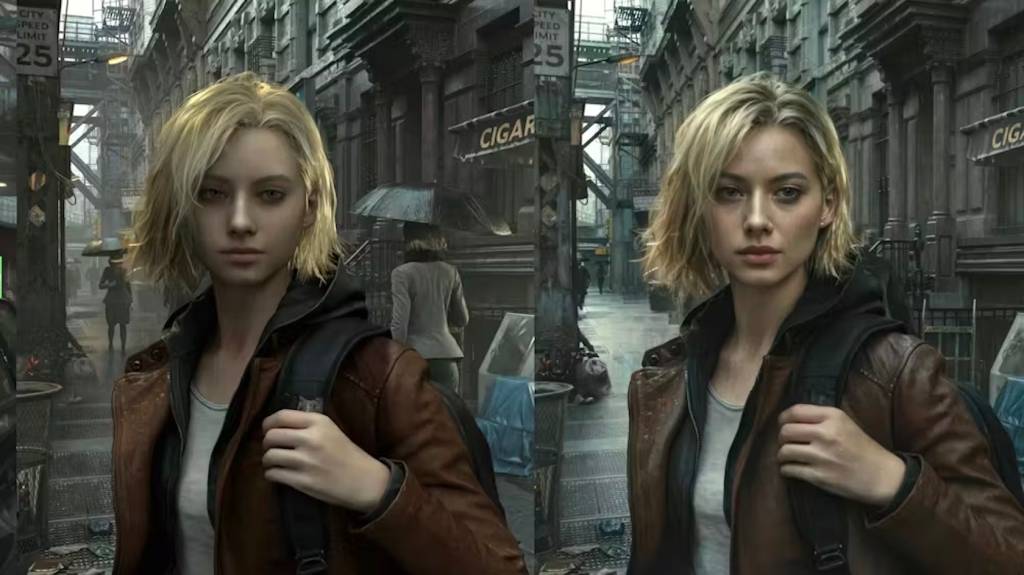
Last week, prominent chip manufacturer Nvidia unveiled DLSS-5 (Deep Learning Super Sampling), an innovative artificial intelligence (AI) rendering tool touted as a “breakthrough in visual fidelity for games.”
This software takes low-resolution images and employs AI to upscale them, introducing what Nvidia refers to as “photoreal lighting and materials.”
The primary aim of this tool is to enhance the photorealism of video games. However, the examples Nvidia showcased highlighted an unexpected aspect: the AI not only sharpens and polishes images but also significantly alters the appearance of characters, making them more traditionally attractive.
The mounting backlash stems from concerns beyond aesthetics. It reflects a wider anxiety about the implications of allowing AI to influence creative decisions—specifically, who determines what constitutes “better.”
A ‘Beauty Filter’ for Games?
Nvidia demonstrated the technology using Grace Ashcroft, the main character from the recently launched Resident Evil Requiem.
Before-and-after comparisons showcased the software’s modifications, including changes to her hair color, the addition of well-defined eyebrows, lip tint, and facial contouring. This led many gamers to label it a “beauty filter,” criticizing the manner in which it applies what appears to be heavy makeup and reshapes her face to align with conventional beauty standards.
The choice of Grace as the showcase character warrants further scrutiny. Resident Evil Requiem features an array of monstrous and gritty characters, yet Nvidia opted to highlight a young, aesthetically pleasing female character, subsequently enhancing her glamorous appearance. This decision feels particularly pointed, considering ongoing debates around the representation of women in gaming.
The Treatment of Female Characters in Games
Traditionally, female characters in video games have been depicted as either weak and helpless or as sexualized objects that serve as accessories to male protagonists.
The 2000s saw the introduction of more diverse female characters. However, this movement faced backlash, notably during the Gamergate harassment campaign in 2014, where women and minorities within the gaming community were subjected to extensive abuse, doxxing, and threats.
The discussion continues today, as some gamers have expressed outrage over the muscular portrayal of Abby Anderson in The Last of Us: Part 2, criticizing her physique as unrealistic and demanding that she conforms more to conventional beauty standards.
DLSS-5 complicates this debate further. Rather than relying on designers to make explicit choices regarding character appearances, an algorithm subtly shifts those decisions toward a particular standard.
Enhancing Game Characters
The specific modifications DLSS-5 made to Grace’s face echo the looksmaxxing trend prevalent in certain online communities.
Emerging from incel forums, looksmaxxing revolves around the belief that particular facial attributes are inherently more sexually appealing, leading some men to undergo procedures aimed at enhancing their perceived “sexual market value.” When software applies this logic to a female character, it raises troubling questions about representation.
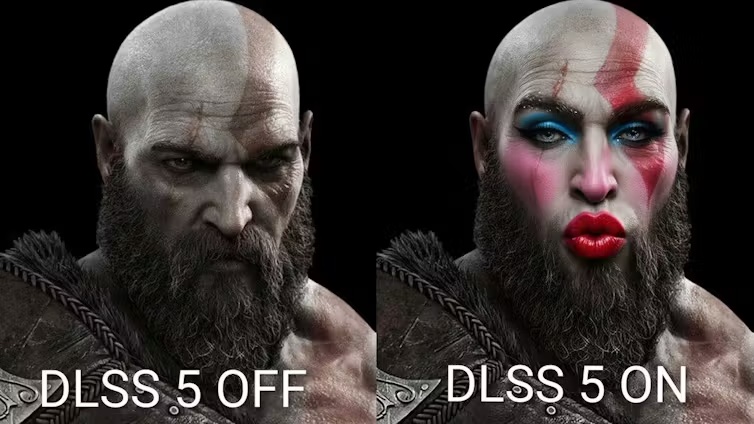
Gamers have taken notice, reacting with humor. The software has been dubbed “yassifying” characters, with one meme showing the same treatment applied to God of War’s formidable hero Kratos, now featuring blue eyeshadow, pink blush, and fuller lips. This jest highlights the absurdity of gendered expectations.
This reaction mirrors earlier instances where gamers mocked critiques directed at Aloy, the lead character in 2017’s Horizon Zero Dawn. After backlash claiming Aloy was “woke” for lacking heavy makeup or traditional beauty traits, some players produced “unwokified” versions of the character as a satirical counterpoint.
Challenges for Game Designers
Another significant concern regarding DLSS-5 is that it undermines the artistic choices of developers.
Instead of merely enhancing existing visuals, the software employs algorithms to adjust textures and lighting, often resulting in an AI-generated aesthetic that appears glossy, smooth, bright, and somewhat generic.
A gritty game like Resident Evil Requiem can inadvertently resemble a luxury skincare advertising campaign. In one notable case with EA Sports FC, the filter altered a real player’s likeness to the point of becoming unrecognizable.
The Future of Game Visuals – And Control
It’s important to acknowledge that DLSS-5 can genuinely enhance visual quality in many titles, enriching environments and revitalizing older character models.
Nvidia has defended its technology against critics, with CEO Jensen Huang asserting that DLSS-5 is not a simple filter and that developers retain authority over its application.
However, the backlash underscores a genuine tension within the gaming community. Many players were unsettled by Nvidia’s decision to select a young female character and use AI to enhance her attractiveness and sexualization. Others expressed concern over AI superseding the deliberate creative choices made by game developers.
Both issues challenge a common trend: technology companies’ determination to deploy AI widely while defining “better” visuals on their own terms.
This article is republished from The Conversation under a Creative Commons license. Read the original article.