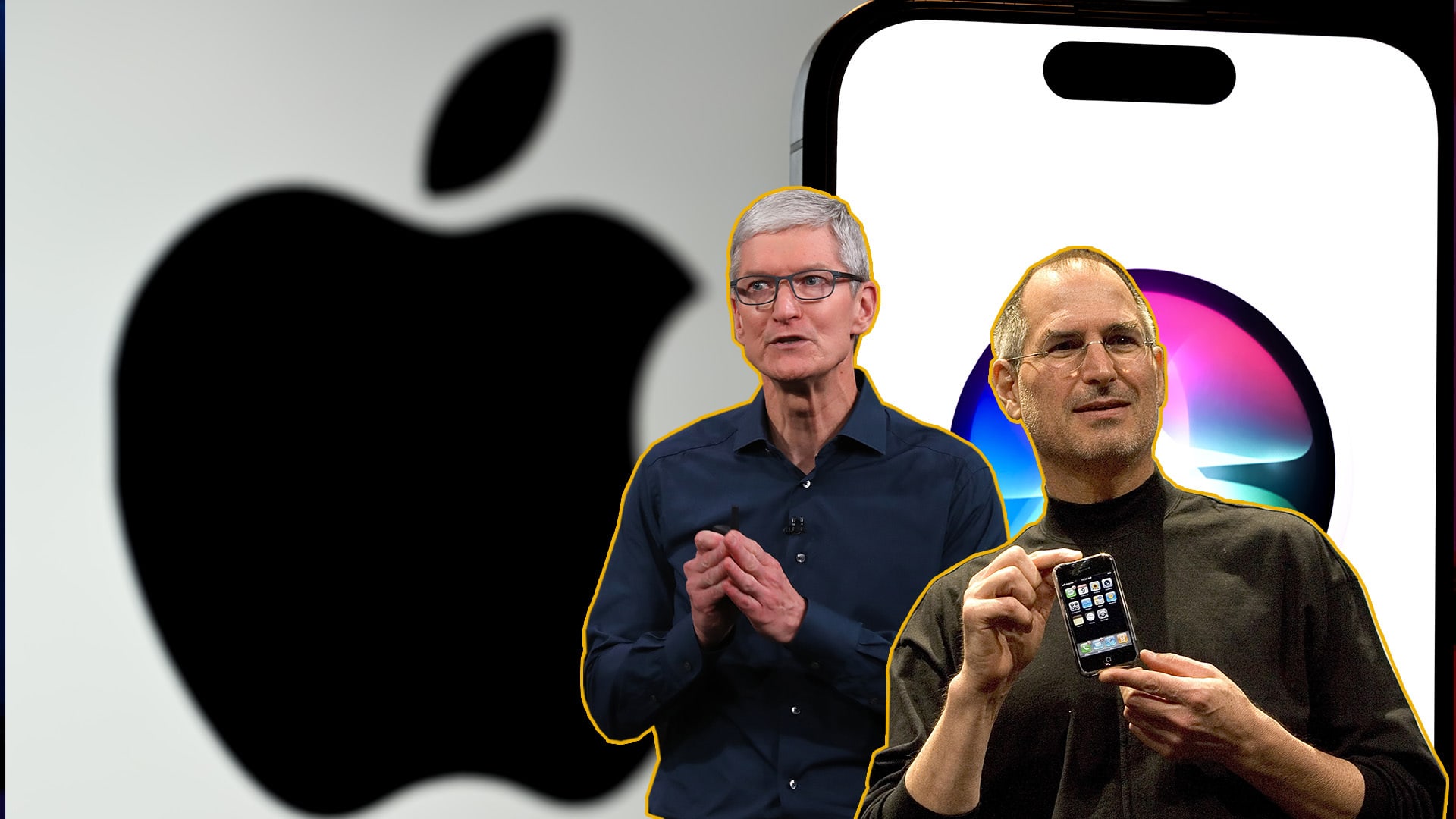

This week marks the 50th anniversary of Apple, a company founded by Steve Jobs with the vision of making computing accessible to everyone. Ironically, Apple seems to be moving away from this mission by resisting what could potentially be the most transformative development for everyday users: AI coding, also known as vibe coding.
Instead of championing this innovation, Apple is hindering its growth.
The tech giant has halted updates for at least two vibe coding applications, including Replit, and has even removed another from the App Store over supposed safety concerns. While Apple claims to encourage app development, its actions suggest a betrayal of its founding principles, potentially pushing budding developers away from the iPhone ecosystem.
Why this is different
Vibe coding, exemplified by apps like Replit, allows individuals without traditional coding skills to create functional applications simply by describing their ideas. Users can design, preview, and test their apps within Replit, without Apple needing to evaluate them beforehand. However, if users wish to publish their creations on the App Store, they must still comply with Apple’s review process. The real concern for Apple lies in the ability of users to build and run applications that haven’t been vetted by the company, and which can operate within a web browser without undergoing any scrutiny.
Apple is protective of its App Store, utilizing its review process to guard against malware, privacy breaches, and unauthorized access to personal data such as camera, contacts, or location. This stringent oversight plays a significant role in maintaining user trust in the iPhone. In contrast, Android systems and the Google Play Store tend to have more lenient policies.
However, the creations made by Replit users aren’t directly installed on iPhones; they are displayed within the app using the same web technology employed by Facebook and X (formerly Twitter) whenever users tap a link. Apple has not previously blocked such apps for displaying unreviewed web content.
Apple argues that this is not a crackdown but simply a strict application of existing rules. They point to a lack of enforcement against other similar applications to justify their actions. For instance, Anthropic’s Claude also enables users to build, preview, and utilize apps, but it does so within its own app rather than a browser environment like Replit does. Although Apple has expressed reservations about vibe coding, it has not opposed the incorporation of AI-assisted coding tools from OpenAI and Anthropic into Xcode, its development platform, introduced shortly after blocking Replit’s recent update.
Historically, Apple has defended its ecosystem against perceived threats, having previously clashed with companies like Epic Games over payment systems, resisted EU mandates regarding sideloading, and engaged in disputes with Tencent regarding WeChat’s mini-app ecosystem. In these instances, Apple has sought to safeguard its platform from outsiders trying to bypass established boundaries.
In contrast, vibe coding merely offers an alternative; developers can opt to use Replit on a web browser, bypassing iPhone apps altogether, even if the latter would be more convenient.
The implications for Apple are substantial. The App Store is essentially the revenue engine behind a Services enterprise that amassed $109 billion in revenue last fiscal year, with soaring gross margins of over 75% — nearly double its product sales. The company collects a 15-30% commission on every in-app purchase, meaning every app that shifts to the web, avoiding the App Store, represents a loss of revenue for Apple.
Moreover, if safety is the actual concern, blocking updates for Replit does not inherently enhance the app’s security. A complete ban would seem a more logical recourse.
Democratizing Coding
The rise of vibe coding is undeniable. What was once a virtually nonexistent market just 18 months ago is now populated by companies worth billions.
Remarkably, the effects are visible within Apple’s App Store. App releases soared by 60% year-over-year, resulting in over 550,000 new apps last year — the highest count in a decade, according to data from Sensor Tower and Wells Fargo compiled by VC firm Andreessen Horowitz. However, this represents a small fraction of the apps being created, as most vibe-coded software resides on the open web, skipping the App Store’s review altogether. Thus, while it enhances the App Store’s offerings, it simultaneously fosters its competitor.
Apple’s primary counterargument suggests that vibe coding applications are welcome to function as Xcode does: building on Mac, submitting through review, and distributing via the App Store.
Yet this response reveals a fundamental misunderstanding of Apple’s user base. The individuals utilizing Replit are not seasoned developers but rather first-time creators.
For example, Ruth Heasman, a UK-based graphic designer, had ideas for websites and apps percolating in her mind for two decades. It was only last year, when Replit unveiled its agentic coding agent, that she was able to realize her concepts.
“I’m not a coder. I had no prior experience. It was always a challenge to get coders and programmers to dedicate their time,” she explained.
Heasman, who believes she has launched and integrated payment solutions into a dozen websites, recently published her first iOS app with assistance from Replit — an augmented reality game centered around ghost hunting.
“I would have struggled immensely to accomplish this without Replit, as I don’t own a Mac,” she remarked. “That’s a significant barrier imposed by the App Store.”
The essence of vibe coding is to meet creators at their level, while Apple’s stance seems to suggest they should find a different route.
Fumbling the Future
If Apple’s actions reflect a calculated strategy, the execution appears muddled.
An insider familiar with Replit’s interactions with Apple indicated that the tech giant has altered its rationale for the hold multiple times since January, introducing new objections even after Replit addressed previous ones. Although Apple insists its App Review team maintains ongoing communication with Replit—including three phone discussions in the last two months—Replit’s app updates have been stalled, affecting its ranking in developer tools on the App Store, where it fell from first to fourth place. The company has suffered financially during this period, according to the informed source who requested anonymity due to the sensitivity of the matter.
Replit reiterated in a statement that it has been part of the App Store since 2022 and that Apple has approved its app over 100 times with the same attributes that it is now blocking.
“We are surprised and disappointed by Apple’s decision to prevent us from releasing updates, especially since we have adhered to their rules for years,” the company stated.
From an external perspective, Apple seems caught in a conflict: the App Store team benefits from the influx of vibe-coded submissions, while the developer tools team perceives these tools as competition for Xcode—without any unifying strategy from leadership. Consequently, since the launch of ChatGPT in November 2022, Apple’s shares have struggled compared to other tech giants, with only Microsoft performing worse.
Why You Should Care
The implications of this situation extend beyond developer tools, as vibe coding is poised to thrive, regardless of Apple’s position on iOS. The crucial question is whether this burgeoning wave of software will take shape within Apple’s ecosystem or outside of it.
Economists have long noted that monopolists allow competitive innovation on their platforms only to a certain extent, as stated by antitrust expert Rebecca Haw Allensworth from Vanderbilt University.
“They aim to steer innovation away from anything that could disrupt their monopoly,” she warned.
Should Apple continue to obstruct these tools, developing talent may migrate elsewhere, resorting to the web where they can create without requiring Apple’s endorsement. Consequently, iPhone users might find themselves deprived of a vibrant app ecosystem, as Apple alienates those who could contribute to it.
This scenario is not new. In the 1990s, Apple restricted its hardware, while Microsoft opened up the PC market to everyone, leading to a pivotal moment for the company. Jobs returned to rescue Apple by prioritizing user empowerment over constriction.
Ultimately, a company built on the principle of empowering users now appears to be reversing course.