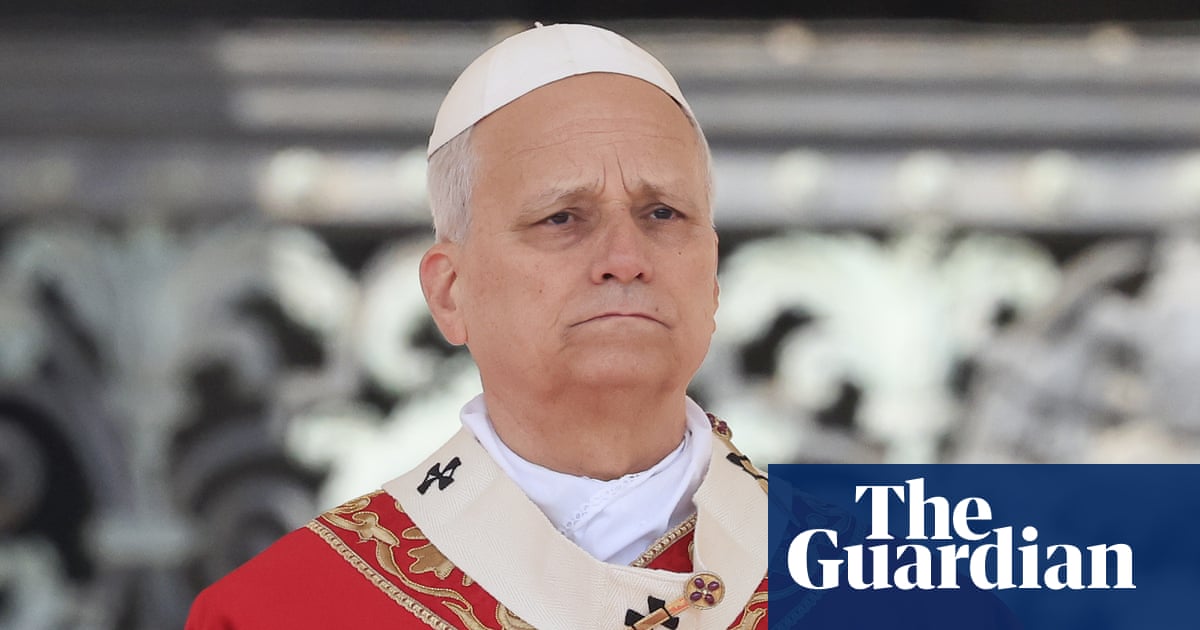
In a powerful Palm Sunday address, Pope Leo expressed his disapproval of leaders who engage in warfare, emphasizing that true divine connection is unattainable for those who act violently. His remarks coincided with increasing tensions in the Middle East and highlighted the profound moral implications of using religion to justify conflict.
Pope Leo’s Arresting Message
Pope Leo has stated that God disregards the prayers of those who wage war and have “hands full of blood,” offering an implicit critique of the Trump administration.
The pontiff made these comments on Sunday as thousands of US troops arrived in the Middle East, just days after US Defence Secretary Pete Hegseth prayed for violence against enemies he deemed deserving of “no mercy.”
During a Palm Sunday mass in St. Peter’s Square, the pope condemned the ongoing conflict involving Iran, Israel, and the US as “atrocious,” asserting that Jesus cannot be invoked to justify warfare.
“This is our God: Jesus, king of peace, who rejects war, whom no one can use to justify war,” he addressed tens of thousands of attendees. “He does not listen to the prayers of those who wage war, but rejects them.”
Quoting scripture, Leo added: “‘Even though you make many prayers, I will not listen: your hands are full of blood.’”
The Catholic Church’s first US pontiff refrained from naming any specific government or individual, but his pointed comments followed Hegseth’s prayer for violence and a significant buildup of US ground troops near Iran.
The pope referenced where Jesus reprimanded a disciple for using a sword against soldiers sent to arrest him. Jesus refrained from fighting back, displaying, according to the pope, “the gentle face of God, who always rejects violence.” Rather than saving himself, he allowed himself to be nailed to the cross.
His call for peace coincided with ongoing preparations by the Pentagon for a series of ground operations, as noted by US officials speaking to the Washington Post. Iranian parliament speaker Mohammad Bagher Ghalibaf remarked that his country’s forces were ready for US troops to “set them on fire.”
On all sides of the conflict, leaders have invoked religious justification for their actions. Hegseth’s integration of his Christian beliefs into Pentagon operations has sparked notable controversy.
Last week, during a Christian service for military and civilian personnel in Washington, Hegseth declared, “Let every round find its mark against the enemies of righteousness and our great nation. Give them wisdom in every decision, endurance for the trial ahead, unbreakable unity, and overwhelming violence of action against those who deserve no mercy.”
The Defence Secretary is linked to a church that is part of the Communion of Reformed Evangelical Churches, whose founder identifies as a Christian nationalist.
Pope Leo has consistently urged for a ceasefire and a ban on airstrikes in the conflict that has caused devastation across Lebanon, Israel, and Gulf states. In his homily on Sunday, he expressed sorrow that Christians in the region may not be able to observe Easter.
Palm Sunday marks the beginning of a holy week for Christians, signifying Christ’s entrance into Jerusalem days before his crucifixion and subsequent resurrection.
On Sunday morning, Israeli police denied Cardinal Pierbattista Pizzaballa, the archbishop overseeing Catholic jurisdiction in Israel and the Palestinian territories, access to the Church of the Holy Sepulchre in Jerusalem to hold mass.
This decision drew criticism from leaders in the US, France, and Italy. US Ambassador Mike Huckabee, a dedicated evangelical Christian, referred to the incident as “an unfortunate overreach.” Italian Prime Minister Giorgia Meloni termed it “an offence not only to the faithful but to any community that respects religious freedom,” while French President Emmanuel Macron emphasized that “the free exercise of worship in Jerusalem must be guaranteed for all religions.”
In response, Israeli Prime Minister Benjamin Netanyahu claimed there was no “malicious intent” and that the cardinal was barred for safety reasons. However, he later instructed the relevant authorities to ensure that Pizzaballa receives “full and immediate access to the Church of the Holy Sepulchre in Jerusalem.”
Key Takeaways
- Pope Leo condemned the use of religion to justify warfare during his Palm Sunday address.
- The pontiff stated that God does not hear the prayers of those who engage in violence.
- His remarks followed controversial prayers made by US Defence Secretary Pete Hegseth for violent actions against adversaries.
- The conflict’s escalation has drawn widespread condemnation and calls for a ceasefire from religious leaders.
- The importance of Palm Sunday as a significant day in the Christian calendar was highlighted.
- Access restrictions at holy sites in Jerusalem prompted international criticism.
FAQ
What did Pope Leo say about violence and prayers?
Pope Leo stated that God ignores the prayers of those with “hands full of blood,” emphasizing that true connection with God cannot coexist with violence.
Who is Pete Hegseth?
Pete Hegseth is the US Defence Secretary known for his vocal support of military action, including prayers for violence against adversaries.
What is the significance of Palm Sunday?
Palm Sunday marks the beginning of Holy Week in Christianity, commemorating Christ’s entrance into Jerusalem before his crucifixion.
What controversy arose regarding Cardinal Pizzaballa’s access to holy sites?
Cardinal Pizzaballa was prevented from entering the Church of the Holy Sepulchre, leading to criticism from several international leaders about religious freedom.
In conclusion, Pope Leo’s message reinforces the imperative of peace and the ethical considerations surrounding warfare. His remarks and the accompanying events serve as a poignant reminder of the ongoing struggle for understanding and coexistence in regions fraught with conflict.