EDITOR’S NOTE: This story involves discussion about suicide that some readers may find upsetting. If you feel you are in crisis, call or text 988 to reach the 24-hour Suicide Crisis Lifeline.
Noelia Castillo’s life was marked by profound pain, both physical and emotional. This intense suffering led the young Spaniard to seek euthanasia in 2024. At just 25 years old, her request was granted, bringing her tumultuous journey to a close.
“I want to leave in peace and stop suffering, period,” Castillo stated a few days before her death during an interview with Spanish news channel Antena 3.
Her decision ignited a heated debate in Spain, especially following the airing of the interview, which drew reactions from those in support and others urging her to reconsider.
In the interview, Castillo attributed her choice to a turbulent home environment stemming from her parents’ separation when she was 13. She spent time in a supervised care center and faced diagnoses of Obsessive-Compulsive Disorder and Borderline Personality Disorder.
She also recounted three traumatic episodes of sexual abuse: one allegedly by an ex-partner, another involving rape at a nightclub, and a third involving three men at a bar. Although these incidents profoundly affected her, she chose not to report them. Following the second assault in October 2022, she attempted suicide, which resulted in her becoming paraplegic and wheelchair-bound.
This tragic event became a pivotal moment that led her to consider euthanasia.
“Sleeping is very difficult for me, and I have pain in my back and legs,” Castillo shared. However, she emphasized that her struggles extended beyond physical ailments. “My world was very dark… I had no goals, no objectives, nothing,” she reflected before her request for euthanasia.
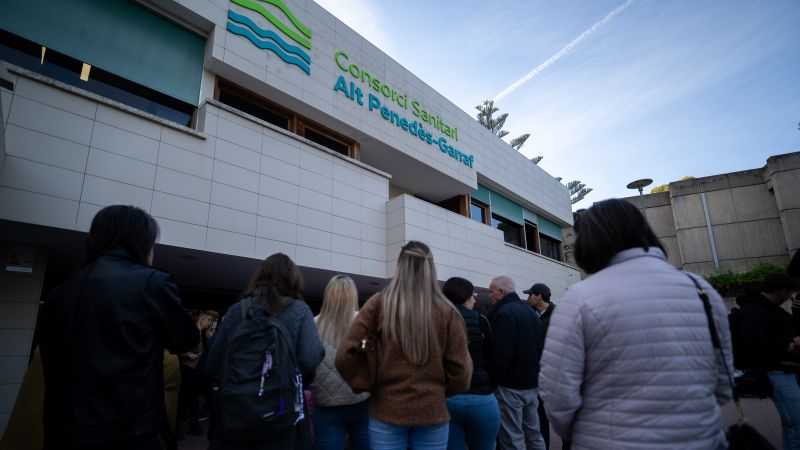
Her euthanasia was performed at the Sant Pere de Ribes hospital where she had resided.
Assisted suicide has been legal in Spain since June 2021. For Castillo, applying for it marked the beginning of a complicated journey, primarily due to her family’s opposition.
Her application received approval on July 18, 2024, from the Catalonia Guarantee and Evaluation Commission, which confirmed that she met all legal criteria, including having a “nonrecoverable clinical situation” that resulted in “severe dependence, pain, and chronic, disabling suffering,” hindering her ability to live autonomously and significantly impacting her daily life.
However, in August of that year, her father, advised by a conservative religious group, initiated a legal battle against the decision, contending that she was incapable of making such a choice.
“He has not respected my decision and he never will,” Castillo commented about her father.
Subsequently, her father launched a lengthy legal process that postponed Noelia’s euthanasia for 20 months, navigating through five judicial levels: a Barcelona court, the High Court of Justice of Catalonia, the Supreme Court, the Constitutional Court, and the European Court of Human Rights.
None of these judicial bodies opposed the young woman’s decision, all confirming that she met the criteria and was capable of choosing to end her life.
“I understand he’s a father, and that he doesn’t want to lose a daughter,” Castillo reflected during her interview. She expressed confusion regarding their distant relationship.
“He ignores me. So why does he want me alive? To keep me in a hospital?” she questioned.
Ultimately, Castillo’s struggle enabled her to fulfill her decision.
“I finally did it, and now maybe I can finally rest,” she shared with the Antena 3 journalist. “I can’t take this family anymore, I can’t take the pain anymore, I can’t take everything that torments me in my head.”
Castillo bid farewell to her family, requesting solitude in her final moments.
“I don’t want anyone inside my room,” she insisted. “I don’t want them to see me close my eyes.”
Key Takeaways
- Noelia Castillo’s life was plagued by emotional and physical suffering.
- Her requests for euthanasia sparked a national debate in Spain.
- Castillo faced significant trauma, including episodes of abuse.
- Legal opposition from her father delayed her euthanasia for 20 months.
- She ultimately received approval through legal channels prior to her death.
- Castillo expressed a desire for peace and solitude in her final moments.
FAQ
What led Noelia Castillo to request euthanasia?
Castillo sought euthanasia due to severe emotional and physical pain caused by trauma and medical conditions.
When was euthanasia legalized in Spain?
Assisted suicide became legal in Spain in June 2021.
Did Noelia Castillo’s family support her decision?
No, her family, particularly her father, opposed her decision and engaged in a legal battle against it.
How long did the legal process delay her euthanasia?
The legal process delayed her euthanasia for 20 months, going through various judicial levels.
What were her last wishes?
In her final moments, Castillo requested to be alone and did not want anyone to witness her passing.