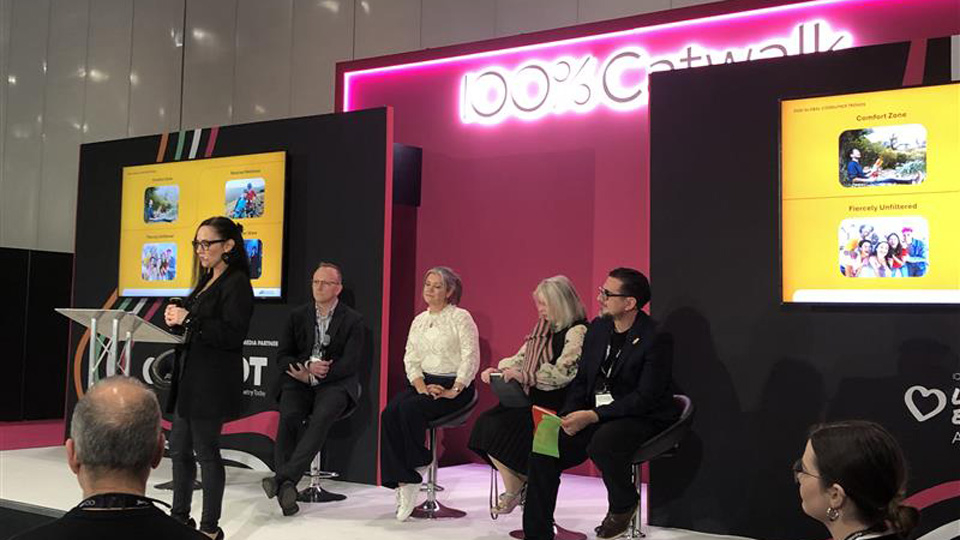
Experts gathered at 100% Optical from February 28 to March 2 to discuss consumer trends related to wellness and how businesses can adapt. A notable session on March 1, titled Rewired Wellness: using science-led storytelling to showcase health outcomes in optics, delved into these important topics.
Natasha Cazin, Euromonitor International’s global insights manager for eyewear, highlighted four key consumer trends anticipated to have a significant impact in the upcoming year. These trends include ‘Comfort Zone,’ ‘Rewired Wellness,’ ‘Fiercely Unfiltered,’ and ‘Next Asian Wave.’
These trends emerge amidst continuous external pressures of modern life. “Life is fast-paced, complex, and often overwhelming,” Cazin noted, revealing that over 70% of consumers are worried about the rising cost of living. Nearly 60% report daily stress and anxiety. “Such pressures are deeply influencing buying behaviors—what, how, and where people shop,” she explained. “It’s crucial to grasp consumer behavior to understand its implications for your business.”
Customised and tech-driven wellness
The discussion focused on the ‘Rewired Wellness’ trend, which Cazin describes as a shift where wellness is not just slow-paced but personalized and rapid. “Consumers are embracing science-based products to enhance longevity, appearance, and daily performance,” she stated.
This transition toward wellness is powered by a desire for immediate outcomes and advanced self-care options. Cazin noted that consumers are utilizing artificial intelligence (AI) tools, smart wearables, and tailored therapies to regain control over their well-being. Older demographics, for example, are monitoring health issues like blood pressure, while younger consumers, particularly Gen Z, are embracing preventative habits.
“Wellness is becoming a premium market, and consumers are willing to pay for scientifically-backed solutions,” Cazin remarked. Brands are responding by offering ‘on-the-go’ wellness solutions through portable tech, mobile lab kits, and micro-treatments. “The emphasis now is on frictionless access,” she added.
Tailoring and telling the science story
Cazin highlighted CooperVision as a brand exemplifying effective storytelling that empowers parental choice and instills confidence in eye care professionals. “Businesses should embrace clinically proven technology to foster trust through compelling storytelling,” she stated.
Rodenstock’s B.I.G Exact Sensitive lenses were cited as another notable example, tailored uniquely to the wearer using biometric data and individual visual sensitivity.
“Brands are meeting various life stage challenges with science and technology-backed solutions,” Cazin noted.
How do practices respond?
Understanding the ‘Rewired Wellness’ trend, Cazin suggested, is vital for businesses to connect with eyewear consumers during uncertain times. Embracing innovation and personalized, technology-driven solutions is key.
Storytelling emerged as a crucial factor. Cazin emphasized that the message should be “simple, transparent, and clear, supported by scientific evidence.” She highlighted the need for clear communication to demystify complex technologies and make them less intimidating:
- “Educate and guide consumers throughout their wellness journey.”
- “Help them interpret data and understand treatment options.”
- “Empower consumers to navigate uncertainty with clarity and confidence.”
Biometry and bespoke
Following Cazin’s presentation, a panel discussion led by optometrist Garry Kousoulou, managing director of Loving Social Media, delved into the critical themes of wellness, storytelling, and AI. Panelists included communication specialist Sarah Morgan, CooperVision’s Elizabeth Lumb, and Rodenstock UK’s Jason Halsey.
Halsey addressed the concept of bespoke lenses, stating: “There’s a myth that ‘a lens is a lens’. Just like cars, not all lenses are the same; we prefer luxury. Biometry transforms lens design, allowing us to measure each patient’s eyes and create customized lenses.”
He further revealed that consumers are willing to invest in bespoke products, recognizing their value. “We can now create lenses with 8K resolution, yet many patients still use standard definition lenses—this reflects on their quality of life,” he observed.
Myopia management: a standard of care
The panel also discussed the future of myopia management. Lumb emphasized the profession’s duty to treat myopia management as a standard of care and to begin intervention early. “Recent surveys indicate a shift towards a proactive approach,” she noted.
Even though single vision spectacles remain the most frequently prescribed solution for children with myopia, Lumb believes the prescription frequency will gradually lean toward myopia control solutions.
As awareness at the global and consumer levels rises, she expressed optimism about the ongoing shift, stating, “The future of myopia management depends greatly on eye care professionals actively engaging in these discussions.” Morgan shared her observations from a recent visit to Hong Kong and Singapore, where parents were discussing ‘myopia hygiene,’ highlighting the importance of involving parents in myopia management dialogues.
The human story
The role of storytelling in eye care was further emphasized. Lumb reflected on how the conversation around myopia management has transformed since 2017, moving from a strictly scientific focus to a more “human story.”
CooperVision has previously shared compelling narratives from participants of a myopia control study who highlighted the positive impact it had on their quality of life.
“These personal stories are incredibly powerful,” Lumb affirmed. This year at 100% Optical, Lumb introduced Elaine Shaw, a 67-year-old woman living with myopic macular degeneration. “While we may think about impacts through clinical measures, Elaine faces these daily challenges in real life,” she remarked.
Dry eye technology
Morgan expressed enthusiasm for advancements in dry eye technology, stating, “We have immense potential to assist patients.” She shared how technology and imaging can enhance discussions about dry eye with patients. “A picture speaks volumes; showing them meibography and tear break-up time can be incredibly effective,” she concluded.
In summary, the discussions at the 100% Optical event illustrated the growing significance of wellness in consumer choices. Businesses in the optical industry are encouraged to adapt to these trends through innovation, clear communication, and compelling storytelling that resonates with consumers during these uncertain times.


