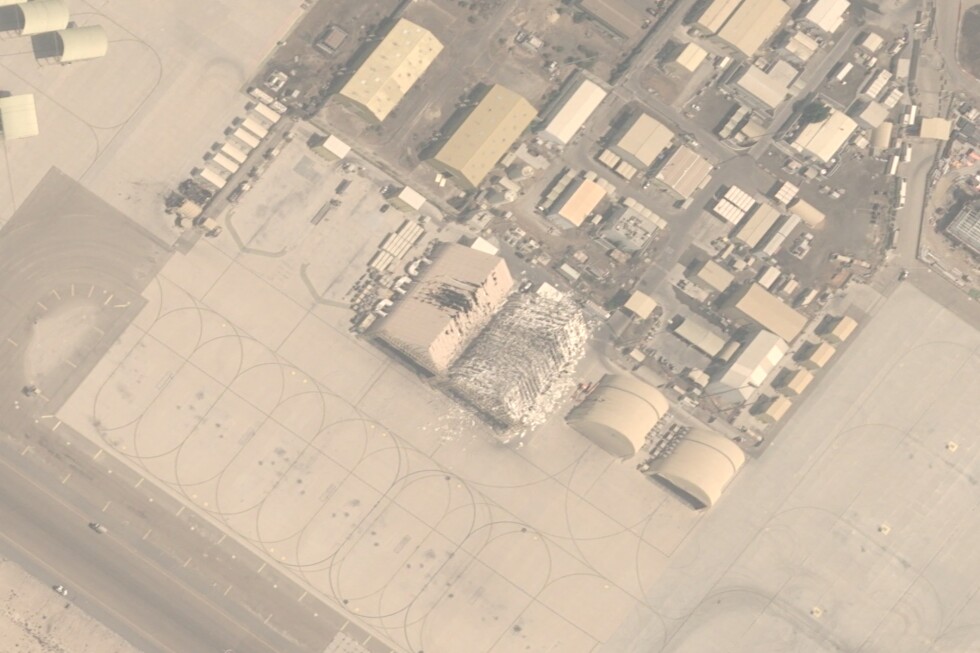
Violence and conflict have surged in the Middle East as global tensions rise, significantly impacting the region’s energy supplies. As Iran celebrated Nowruz, or the Persian New Year, airstrikes orchestrated by Israel added another layer of complexity to the ongoing war that threatens to influence the global economy.
DUBAI, United Arab Emirates (AP) — Israel pounded Tehran with airstrikes Friday as Iranians marked Nowruz, or the Persian New Year, in the midst of a war that has sent shock waves through the global economy and risked drawing Iran’s Arab neighbors directly into the conflict.
Activists reported hearing strikes around Iran’s capital. The attacks came a day after Israel pledged to refrain from more strikes on a key Iranian gas field and Iran intensified attacks on oil and natural gas facilities around the Gulf.
Heavy explosions shook Dubai early Friday as air defenses intercepted incoming fire over the city, where people were observing Eid al-Fitr, the end of the holy Muslim fasting month of Ramadan, and mosques made the day’s first call to prayers.
Iran kept up its wave of attacks launched at Israel that have sent millions of people to shelters, with sirens sounding across a wide swath of the north, from Haifa to the Galilee and along the border with Lebanon. It came after an intense day that saw more than a dozen missile launches on Thursday alone, according to Israel’s military.
Global fuel supplies have been under intense pressure because of Iran’s stranglehold on the Strait of Hormuz, a strategic waterway through which a fifth of the world’s oil is transported.
Israeli Prime Minister Benjamin Netanyahu said late Thursday that, at the request of President Donald Trump, Israel will hold off any further attacks on Iran’s offshore South Pars gas field. Iranian strikes in retaliation have led to already elevated global energy prices further surging and spurred Gulf allies to call for Trump to rein in Netanyahu.
Since the U.S. and Israel launched the war on February 28, Iran’s top leaders have been killed and the country’s military capabilities have been severely degraded. Netanyahu claimed in a televised address that Iran no longer possesses the ability to enrich uranium or produce ballistic missiles, although he did not provide evidence.
Despite these claims, Iran, now led by the son of the supreme leader killed in the war’s opening moves, remains capable of missile and drone attacks.
Brent crude oil, the international benchmark, briefly surged above $119 a barrel, reflecting a 60% increase since the start of the war. The European benchmark for natural gas prices has also seen a significant rise, nearly doubling over the past month.
U.N. Security Council meets over Iran’s attacks on Gulf states
The United Nations Security Council convened an urgent closed meeting Thursday, where Gulf countries reiterated the necessity for Iran to cease its attacks against them, as stated by Bahrain’s U.N. Ambassador Jamal Alrowaiei, who represents the Arab nations on the U.N.’s most influential body.
However, Iran has shown no inclination to relent. Saudi Arabia reported that its SAMREF refinery in the Red Sea port city of Yanbu had been struck. In response, Saudi Arabia had begun diverting oil westward toward the Red Sea to mitigate risks associated with the Strait of Hormuz.
Qatar, a vital supplier of natural gas to the international markets, reported substantial damage to its Ras Laffan liquefied natural gas facility due to Iranian missiles, accounting for a 17% reduction in exports and an estimated loss of $20 billion in revenue annually. Repairing the damage is expected to take up to five years, despite prior suspensions in production.
Two oil refineries in Kuwait and gas operations in Abu Dhabi were also reportedly targeted by Iranian forces, according to local authorities.
To emphasize the danger to ships in the region, a vessel caught fire Thursday off the coast of the United Arab Emirates, while another was damaged near Qatar. Attempts to circumvent the strait faced additional challenges when an Iranian drone struck a Saudi refinery on the Red Sea, which was expected to serve as an alternate pathway.
AP AUDIO: Iran intensifies attacks on Gulf energy sites after Israel struck its key gas field
AP correspondent Charles de Ledesma reports global fuel prices soar as Iran hits Gulf energy sites.
Meanwhile, the UAE announced Friday that it disrupted what it described as “a terrorist network funded and operated by Lebanon’s Hezbollah and Iran,” arresting several suspects. The accused were said to be laundering money while operating under a fictitious business cover, allegedly aiming to execute plans that could jeopardize the nation’s financial stability.
Images of five detainees were published by the state-run WAM news agency, although their identities were not disclosed.
Netanyahu says Iran’s military has been severely hit
During Thursday’s news conference, Netanyahu stated: “Iran’s air defenses have been rendered ineffective, their navy is lying at the bottom of the sea,… their air force is nearly destroyed.”
He expressed hope that the Iranian populace would rise against the Islamic Republic that has governed for nearly five decades. However, since the war began, there has been no visible organized opposition following the suppression of large-scale protests by Iranian authorities in January.
The prime minister’s remarks came at a challenging time for both Trump and Netanyahu, amid claims by a top U.S. intelligence official resigning, alleging that Israel had influenced Trump into the war, alongside Israel’s military operations against South Pars, which incited Iran’s retaliatory strikes on the region’s oil and gas infrastructure.
“I misled no one,” Netanyahu asserted. “And I didn’t have to convince President Trump about the need to prevent Iran from developing its nuclear program.”
Iran has consistently maintained that its program is peaceful, though reports indicate that it was enriching uranium to levels of up to 60% purity, just shy of weapons-grade thresholds. This stockpile of highly enriched uranium remains within Iran.
Gen. Dan Caine, chairman of the Joint Chiefs of Staff, mentioned that U.S. forces are advancing further into Iranian territory, with warplanes targeting Iranian vessels in the strait and deploying 5,000-pound bombs on underground weapons storage facilities.
Trump says he is not deploying troops to Iran
Iran condemned Israel’s strike on South Pars, a segment of the world’s largest gas field shared with Qatar and situated offshore in the Persian Gulf.
Given that approximately 80% of Iran’s power generation relies on natural gas, according to the International Energy Agency, the attack poses a severe risk to the country’s electricity infrastructure.
After Trump requested that Israel refrain from further attacks on South Pars, he warned on social media that should Iran continue its assaults on Qatar, the U.S. would “massively blow up the entirety” of the field.
When asked about the likelihood of deploying U.S. ground troops to Iran, Trump replied, “No. I’m not putting troops anywhere.”
Death toll climbs in third week of war
More than 1,300 individuals in Iran have died amid the ongoing conflict. Israeli actions targeting the Iranian-backed Hezbollah militant group in Lebanon have led to the displacement of over 1 million people, according to reports from the Lebanese government, which states that more than 1,000 people have been killed. Israel claims to have killed over 500 Hezbollah militants.
In Israel, 15 individuals have been killed due to Iranian missile attacks. Additionally, four casualties occurred in the occupied West Bank because of an Iranian missile strike.
At least 13 U.S. military personnel have also lost their lives during this period.
___
Melzer reported from Tzukim, Israel, and Watson from San Diego. Associated Press writers David Rising in Bangkok, Mike Corder in The Hague, Netherlands, Edith M. Lederer in New York, Lisa Mascaro in Washington, Giovanna Dell’Orto in Miami, and Fatma Khaled in Cairo contributed to this report.
Key Takeaways
- Israel launched significant airstrikes on Tehran as Iran celebrated Nowruz.
- Iran’s retaliatory attacks have put pressure on global fuel supplies.
- High tensions persist among Gulf countries regarding Iran’s military developments.
- The conflict has led to increased energy prices, particularly oil and gas.
- The U.N. discussed Iran’s aggressions against Gulf states in a recent meeting.
- Tragic loss of life reported on both sides continues to escalate.
- U.S. officials assert that ground troop deployment to Iran is not being considered.
FAQ
What initiated the current conflict involving Iran and Israel?
The conflict intensified following a series of airstrikes by Israel on Iranian targets, prompting retaliatory actions from Iran.
How have global fuel prices been affected?
Global fuel prices have risen significantly, with Brent crude oil prices increasing by over 60% since the conflict’s outbreak.
What has been Iran’s response to the attacks on its facilities?
Iran has intensified missile and drone strikes on Israeli and Gulf energy facilities in retaliation for the strikes on its military capabilities.
Are U.S. troops being deployed to Iran?
No, President Trump has stated that he is not considering deploying U.S. ground troops to Iran.
What are the broader implications of the conflict?
The ongoing war risks destabilizing the region, affecting global energy supplies, and escalating tensions among neighboring countries.