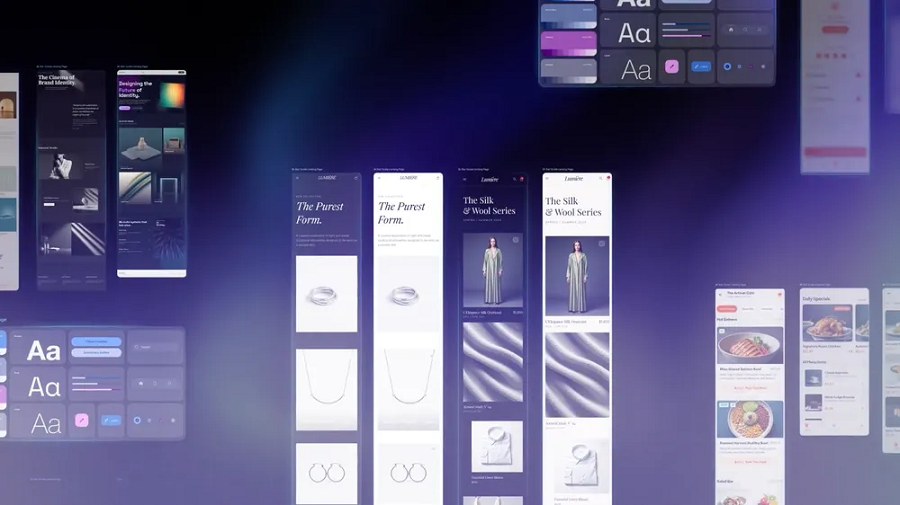
Today, Google LLC unveiled an updated version of Stitch, an innovative artificial intelligence tool designed to create user interfaces for websites and mobile applications.
Following the announcement, shares of graphic design software company Figma Inc. fell by over 4%. Figma’s platform is notably popular for UI development tasks.
Creating a user interface involves more than just design; it requires developers to convert visual concepts into HTML and CSS. This translation process can be extremely labor-intensive, as every detail—from font sizes to spacing—needs to be coded manually.
Stitch simplifies this procedure by utilizing Google’s leading Gemini series of large language models to convert interface designs into HTML and CSS code. Moreover, it is compatible with Tailwind, a popular development framework that offers pre-made design components.
The original version of Stitch was launched by Google last May. The latest release, introduced today, includes a redesigned interface that features an “AI-native, infinite canvas.” This canvas allows users to view multiple visual assets side-by-side, providing a comprehensive overview of their design projects.
Users can have Stitch generate code for specific interface sections by either uploading a reference image or providing text instructions. For instance, one could instruct the tool to create a sign-up page for an AI application. Unlike the original version, which could only produce one screen at a time, the new iteration can now generate up to five screens simultaneously.
A developer working on an e-commerce website, for example, could request Stitch to generate a product catalog page, a checkout page, and a confirmation screen for the purchase. A convenient “Play” button allows users to simulate how customers will navigate through these screens.
“You can ‘Stitch’ multiple screens together in seconds and simply click ‘Play’ to preview your app’s interactive flow,” explained Josh Woodward, vice president of Google Labs, in a blog post. “Stitch can automatically generate logical subsequent screens based on user clicks, mapping out user journeys effortlessly.”
If an AI-generated interface element needs adjustments, developers can refine it using natural language prompts. Additionally, the tool supports voice commands, allowing developers to request changes like font size or more complex instructions such as “emphasize the checkout button.”
Many features in Stitch are powered by a newly introduced AI agent. Developers also have the option to integrate an MCP tool that connects Stitch with external agents, such as Google’s Antigravity coding tool. This integration can assess an interface design and automatically create new variations.
Furthermore, Stitch enables users to export interface elements to other external tools. According to Google, users can now save design details in a natural language file named DESIGN.md, making it easier to maintain a consistent aesthetic across various design tools and projects.
Stitch is available for free through Google Labs, a platform utilized by the tech giant to test experimental products.
Image: Google
Support our mission to keep content open and free by engaging with theCUBE community. Join theCUBE’s Alumni Trust Network, where technology leaders connect, share intelligence and create opportunities.
- 15M+ viewers of theCUBE videos, powering conversations across AI, cloud, cybersecurity and more
- 11.4k+ theCUBE alumni — Connect with more than 11,400 tech and business leaders shaping the future through a unique trusted-based network.
About SiliconANGLE Media
Founded by tech visionaries John Furrier and Dave Vellante, SiliconANGLE Media has developed a vibrant ecosystem of leading digital media brands that connect with over 15 million tech professionals. Our new proprietary theCUBE AI Video Cloud is pioneering in audience engagement, employing theCUBEai.com neural network to assist technology firms in making data-informed decisions and maintaining a leading role in industry discussions.