Remember Regina George munching on her Kälteen protein bars in Mean Girls? She thought they would help her lose weight, only to discover they were far more caloric than expected. Recently, this iconic scene resurfaced online due to a class-action lawsuit against a protein brand, spurring discussions among dietary experts. The situation is more complicated than it appears.
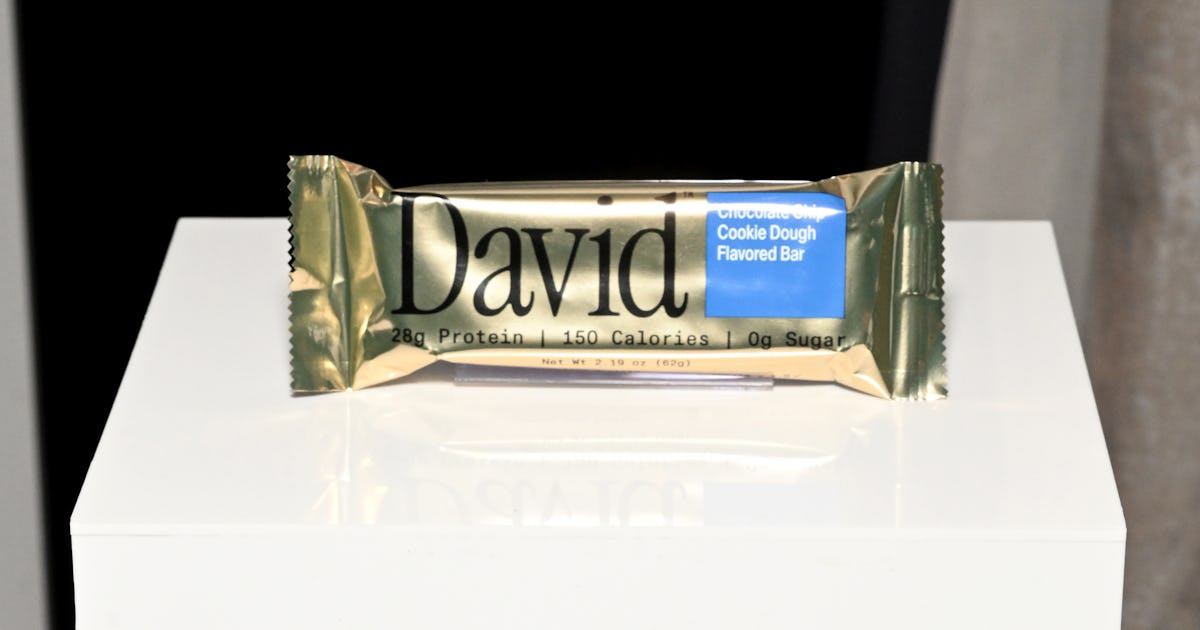
The brand under scrutiny is David Protein. Their mission, according to their website, is to assist individuals in building strength, losing fat, and enhancing their appearance. The bars are purportedly designed to promote muscle gain while reducing body fat, and the brand took inspiration from Michelangelo’s chiseled statue.
Since its launch in September 2025, David Protein rapidly became a favorite among models and influencers, receiving numerous endorsements, including one from Candice Swanepoel. Fitness creator @j_jungy remarked on TikTok, “This has better macros than some protein powders out there.”
What’s the Controversy?
In January, a group of three consumers filed a class-action lawsuit against David Protein, claiming the company misrepresented its nutritional information. The packaging states that each bar contains 150 calories and 28 grams of protein (along with 12 grams of carbs, two grams of fat, and zero grams of sugar), but the lawsuit alleges that independent testing at Anresco Laboratories showed they actually contain between 268 and 275 calories, along with 11 to 13.5 grams of fat. The lawsuit argues that these discrepancies violate FDA guidelines.
David Protein disputes the claims. In an official statement, CEO Peter Rahal asserted that their products are correctly labeled and compliant with all FDA regulations, calling the lawsuit’s claims “meritless” and a misinterpretation of established scientific principles regarding calorie determination in U.S. nutrition labeling.
What Do the Experts Think?
Sahar Berjis, a registered dietitian and CEO of Inner Health & Wellness, explains that the difference in calorie counts arises from how those figures are calculated. “A laboratory test measures the total calories in the food, while nutrition labels typically reflect calories that the body is expected to absorb,” she notes.
David Protein bars include esterified propoxylated glycerol (EPG), an ingredient that may be unfamiliar to many. “It’s a modified fat that provides a creamy texture while being partially absorbed by the body,” Berjis adds. “Some of those calories may bypass absorption, which is why it’s often used in products that aim for richness without the full calorie load.”
Due to the incomplete digestion of EPG, manufacturers may report fewer “usable” calories than the total amount present.
As registered dietitian Alix Turoff highlighted in an Instagram post: “The lab that tested David bars employed a method called bomb calorimetry, which measures the heat produced when food is burned, but does not account for the fact that EPG isn’t digested by your body. Nutrition labels are based on usable energy, not on heat produced.”
That’s how David arrived at their 150-calorie claim. “The FDA permits alternative calorie calculation methods for ingredients like EPG,” Turoff explains.
Caloric intake can vary from person to person; thus, these numbers are approximate rather than exact figures. Generally, the U.S. Department of Health and Human Services recommends a daily intake of 0.8 grams of protein per kilogram of body weight. For a person weighing 150 pounds (approximately 68 kilograms), this amounts to around 54 grams each day.
Berjis notes that while bars like David’s can serve as a convenient source of nutrition, they shouldn’t replace other protein sources. “A well-made protein bar can deliver 15 to 20 grams of protein, similar to foods like Greek yogurt or eggs,” she states. “Think of protein bars as a handy snack for busy moments, rather than substitutes for balanced meals.”
Online Reactions
The Mean Girls reference has certainly sparked discussions, but David’s marketing team has cleverly embraced the situation, responding with a playful video that pokes fun at various rumors about their product. Check it out below.
Source:
Sahar Berjis, RD, dietitian, nutrition coach, CEO of Inner Health & Wellness
This article was originally published on


