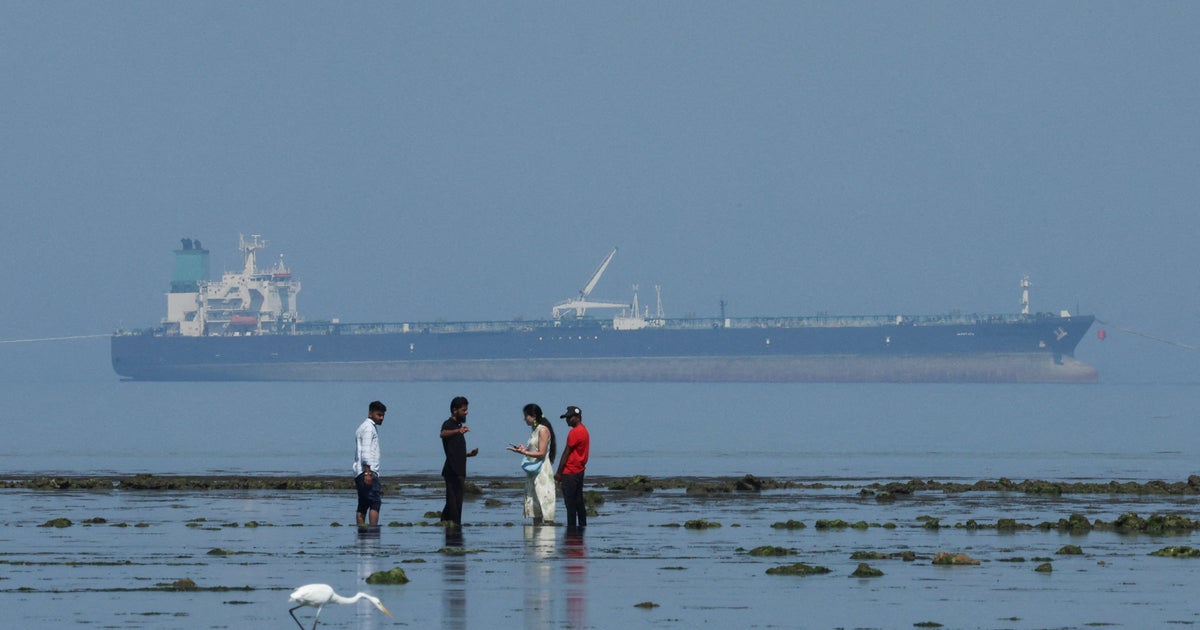
The ongoing conflict involving Iran is having significant impacts on the global energy market, particularly benefiting Russia financially. As the situation unfolds, analysts are observing shifts in oil prices and trade dynamics that could reshape the energy landscape in the coming months.
Financial Gains for Russia
Russia is capitalizing on the U.S.-Israeli conflict with Iran, according to analysts speaking to CBS News. The retaliatory actions from Tehran have disrupted crude oil transport through the Strait of Hormuz, leading to a spike in global energy prices.
The U.S. Treasury issued a 30-day waiver last week, temporarily easing sanctions on Russian energy sales that had been imposed due to the ongoing invasion of Ukraine. This waiver allows Russia to sell oil already loaded onto tankers.
Treasury Secretary Scott Bessent characterized the waiver as a “narrowly tailored, short-term measure” aimed at “promoting stability in global energy markets,” although he assured that it would not “provide significant financial benefit to the Russian government.”
Contrary to this assertion, some analysts and Russian officials contend otherwise. “The increase in oil revenue is quickly becoming a lifeline for Russia,” remarked Luke Wickenden, a Europe-Russia Energy and Sanctions Analyst at the Centre for Research on Energy and Clean Air (CERA), in an interview with CBS News.
Before the waiver, “Russian crude oil was trading at around a 10 to 20% discount,” Wickenden noted. “Now, that discount has completely vanished; it is now at a level comparable to Brent crude,” the standard international oil pricing benchmark.
Wickenden explained that the waiver likely incentivized nations to increase their imports of Russian oil, with Chinese imports up 22% from last month, Brazilian imports up 32%, and Singapore’s nearly tripling.
Further analysis from CERA found that Russia’s average daily earnings from crude oil exports during the initial two weeks of the Iran conflict reached approximately $230 million, a 26% increase from February’s daily average.
The Kremlin has acknowledged its heightened earnings since the war commenced, with spokesman Dmitry Peskov stating, “We’re talking about additional revenue for our oil companies, which sell oil and petroleum products and are guided by the current price environment. Company revenues mean increased budget revenues.”
Earlier this month, Bessent also approved a 30-day waiver allowing Indian refiners to purchase Russian oil to ensure that oil continuously flows into global markets amid the Middle East turmoil. This marked a policy change for the Trump administration, which previously imposed a 25% tariff on Indian imports due to their extensive Russian oil purchases. India remains the second-largest buyer of Russian fossil fuels, as per CERA analysis.
Ukrainian President Volodymyr Zelenskyy expressed concern that the Kremlin’s additional income could bolster Vladimir Putin’s resolve to sustain military operations in Ukraine. “Our intelligence indicates that, despite all sanctions by the United States and EU, Russia faced a deficit exceeding $100 billion in 2026 alone. Now, we see they have made about $10 billion over two weeks amid the Middle Eastern war.”
Wickenden warned that if the Iran conflict persists and keeps energy prices elevated for two to three months, it could “offset the losses that Russia incurred over the last year.”
When questioned about whether Russia has profited significantly from rising oil prices and the sanctions pause, Director of National Intelligence Tulsi Gabbard acknowledged, “that is what has been reported,” before deferring to the secretaries of treasury and energy for detailed insights.
At the same Senate Intelligence Committee hearing, CIA Director John Ratcliffe refrained from making economic predictions, stating that there are decisions that inadvertently benefit adversaries while policymakers aim for public good.
Ian Bremmer, founder of the global political risk consultancy Eurasia Group, expressed that any financial gains for Russia are unlikely to drastically change the situation concerning its war on Ukraine. “The hardships faced by the Russian populace, including substantial casualties, have not deterred Putin, allowing him to continue with the campaign,” he said.
However, Bremmer noted that an increase in state revenues could afford the Kremlin more financial “flexibility,” potentially becoming a point of tension for the U.S. and its European partners. He highlighted that this situation has caused discontent given the contradictions inherent in U.S. foreign policy, where actions in Iran inadvertently support Russian interests.
Key Takeaways
- Russia is experiencing a financial boost from the ongoing conflict in the Middle East.
- A recent U.S. Treasury waiver facilitates the sale of previously loaded Russian oil tankers.
- Energy revenue for Russia has reportedly increased, benefiting its economy during ongoing sanctions.
- Analysts indicate that countries like China and Brazil are rapidly increasing their imports of Russian oil.
- The Kremlin remains vocal about its increased oil profits during the war.
- Concerns exist that rising revenues could embolden Russia’s military ambitions.
FAQ
How has the U.S.-Israeli conflict impacted oil prices globally?
The conflict has disrupted significant oil shipments, leading to increased global energy prices.
What is the significance of the Treasury waiver for Russian oil?
The waiver allows the sale of oil loaded onto tankers before sanctions were reinstated, potentially increasing Russia’s revenue.
Which countries are importing more Russian oil lately?
Countries such as China and Brazil have notably increased their imports of Russian crude oil in light of the situation.
What are the implications of Russia’s increased oil revenue?
The rising revenue could provide the Kremlin with more financial resources to continue its military operations.
What has been the overall stance of analysts regarding Russia’s economic situation?
While some view the financial boost as significant, others argue it won’t drastically change Russia’s war strategy or outcomes.