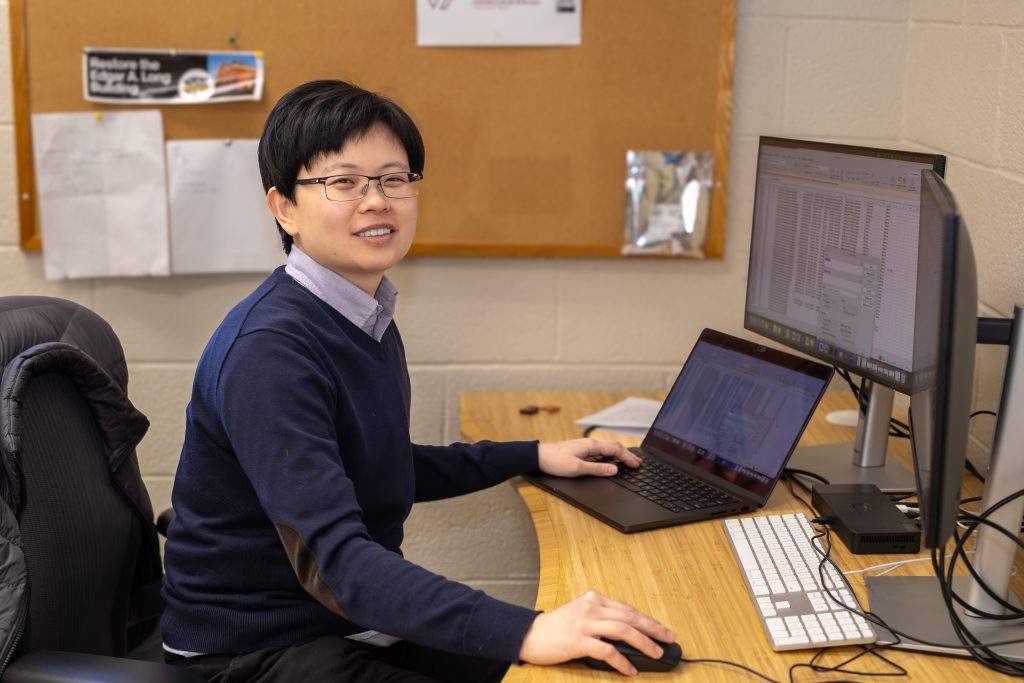
Hands-on Student Learning
Student engagement is a crucial component of the pilot program, focusing not only on technical skills but also on developing professional judgment and critical thinking. Library student employees work with actual metadata sets, engaging in activities like subject enrichment, vocabulary mapping, and assessing description fields within various collections. This hands-on experience, enhanced by AI-assisted workflows, allows students to learn how to evaluate, question, and place automated outputs in context. The aim is not just to teach the usage of AI tools but also to instill an understanding of their limitations and the responsibilities involved in their application within cultural heritage fields.
“Students gain insights into not only how to utilize AI tools but also when—and why—they might not be appropriate,” explained Ng. “The training is purposeful, designed to foster professional judgment by encouraging students to analyze AI-generated outputs, identify discrepancies, challenge assumptions, and grasp the limitations of automated systems. While some argue that AI hampers critical thinking, our experience suggests otherwise. When AI is approached as a tool rather than an authority, students begin to question, reflect, and engage in deeper reasoning.”
Ng provided a poignant analogy to illustrate the project’s educational philosophy.
“A spoon aids in eating, but it doesn’t instruct you on how to use it,” Ng stated. “You must learn the angle, grip, and movement yourself. Tools are utilized differently across cultures—while a spoon may be for soups or softer foods in many Western contexts, in Southeast Asia, it serves as an essential utensil for scooping rice. Though the tool remains unchanged, technique and understanding arise through human learning and experience. Similarly, AI can support certain tasks but cannot supplant the essential human abilities needed to interpret context, apply standards, make ethical choices, or appreciate cultural nuances. These responsibilities remain firmly with people.”
Reflecting Real-World Digital Curation
The workflow created through this pilot closely aligns with the realities of digital curation, balancing the integration of innovative technologies with accountability.
“We employ tools, but we also critically evaluate them,” Ng emphasized. “Each collection requires bespoke attention to its community, purpose, and context rather than a one-size-fits-all approach.”
By documenting straightforward processes, ethical considerations, and decision points, the pilot aims to assist not only major institutions but also smaller museums, community archives, and organizations with limited resources that may lack specialized staff.
A Replicable Workflow with Broad Impact
A significant outcome of the project will be a reusable, AI-assisted metadata workflow designed to be lightweight and adjustable, particularly for smaller and resource-limited institutions. Through clear documentation and human oversight, this workflow aims to support community archives and smaller organizations that may not have the necessary technical resources. This approach reduces barriers to metadata improvement while facilitating the responsible preparation of more collections for aggregation and discovery.
“Much like the spoon analogy, this workflow offers a shared structure, allowing each community to adapt it according to their specific collections, staffing, and values,” noted Ng.
This flexibility is vital for preparing collections for aggregation within DPLA’s national digital ecosystem, ensuring that more stories and community histories become visible and accessible.
Positioning Virginia Tech as a Leader
This project provides immediate and long-term benefits for University Libraries. AI-supported metadata remediation is set to decrease processing bottlenecks and enhance readiness for the Digital Virginias service hub. Overall, the initiative establishes Virginia Tech as a pioneer in responsible, community-driven AI experimentation in libraries.
“This project significantly lowers barriers to sharing local histories across Virginia and Appalachia, ensuring that a greater variety of voices and stories are represented in national digital frameworks,” said Ng.
Ng’s personal commitment to the project stems from his firsthand experiences with the intricacies of metadata remediation.
“I’m passionate about this work because I’ve witnessed the extensive time and labor that metadata remediation demands,” Ng shared. “It’s foundational for granting access to materials but can be daunting for institutions with limited resources. While AI should never substitute for expertise, it can effectively support it, creating more space for meaningful human contributions. I hope this project serves as a model for using AI thoughtfully, with accountability and respect for cultural nuances, all while enhancing the skills of emerging professionals.”