The Rise of Carbon-Neutral Beauty: Trends and Insights
The beauty industry is undergoing a transformative shift as sustainability takes center stage. Consumers are increasingly seeking products that not only enhance their appearance but also align with their environmental values. This article delves into the emerging trends in the carbon-neutral beauty formats market, highlighting practical insights for both consumers and brands.
A Growing Market
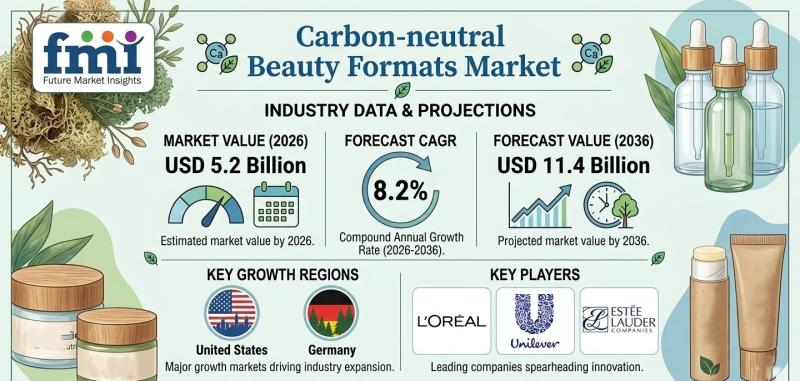
By 2026, the global carbon-neutral beauty formats market is expected to be valued at approximately $5.2 billion, with projections indicating an impressive compound annual growth rate (CAGR) of 8.2% through 2036. This growth signifies a pivotal change in the industry—a transition from sustainability being a niche concern to a critical factor influencing consumer choices, investor trust, and brand identity.
Drivers of Growth
Several key factors are driving the rise of carbon-neutral beauty products:
- Increased Awareness: A global surge in climate awareness is prompting consumers to favor eco-friendly products.
- Corporate Responsibility: Many beauty brands are making net-zero commitments, showcasing their environmental accountability.
- Lifecycle Assessment: More brands are adopting lifecycle assessments to measure and reduce their emissions.
- Transparency: Consumers demand clear information about ingredient sourcing and production practices.
To remain competitive, manufacturers are actively working on reducing their carbon emissions across all scopes—Scope 1 (direct emissions), Scope 2 (indirect emissions from energy), and Scope 3 (indirect emissions in the supply chain). Third-party certifications are also essential for verifying these sustainability claims.
Emerging Trends
Innovation is key to reshaping how sustainability is incorporated into beauty products. Notable trends include:
- Natural Ingredients: Plant-based inputs are increasingly favored, constituting over 52% of sourcing strategies due to their environmental benefits.
- Waterless Formulations: These products aim to minimize packaging and enhance environmental performance.
- Refillable Packaging: Solutions that support a circular economy are gaining popularity.
- Digital Tools: Technologies that allow consumers to track the carbon footprint of products are on the rise.
Brands are also utilizing carbon offset programs alongside emissions reduction strategies to bolster their claims of carbon neutrality.
Regional Insights
North America and Europe lead the charge in adopting carbon-neutral beauty formats, backed by strong regulations and an environmentally conscious consumer base:
- United States: Anticipated to see a CAGR of 9.1%, fueled by robust regulatory support.
- Germany and the United Kingdom: These countries benefit from their commitment to circular economy practices and net-zero policies.
- Canada and France: Known for innovative approaches in natural ingredient sourcing and sustainable luxury beauty.
Competitive Landscape
As competition intensifies, leading companies in the carbon-neutral beauty market emphasize credibility and innovation. Key players include:
- L’Oréal
- Unilever
- The Estée Lauder Companies
- Procter & Gamble (P&G)
- Shiseido Company
- Johnson & Johnson
Strategies among these brands focus on investing in carbon accounting systems, collaborating with environmental organizations, and boosting sustainable offerings across various product lines.
Future Opportunities
Looking forward, the market presents vast potential for innovation, including:
- Biodegradable and bio-based materials
- Carbon tracking technologies integrated with e-commerce
- Subscription-based sustainable beauty models
- Alignment between environmental policies and global trade standards
As consumer activism grows, the demand for transparent sustainability claims will only increase, offering a competitive edge to brands committed to measurable impact.
Conclusion
The ongoing evolution of the beauty industry towards carbon neutrality embodies a larger shift in consumer expectations. Brands that prioritize sustainability, transparency, and innovation stand to benefit not only from heightened consumer trust but also from a more sustainable future for the planet. As consumers, staying informed and supporting brands that prioritize environmental responsibility is crucial for fostering a healthier world.