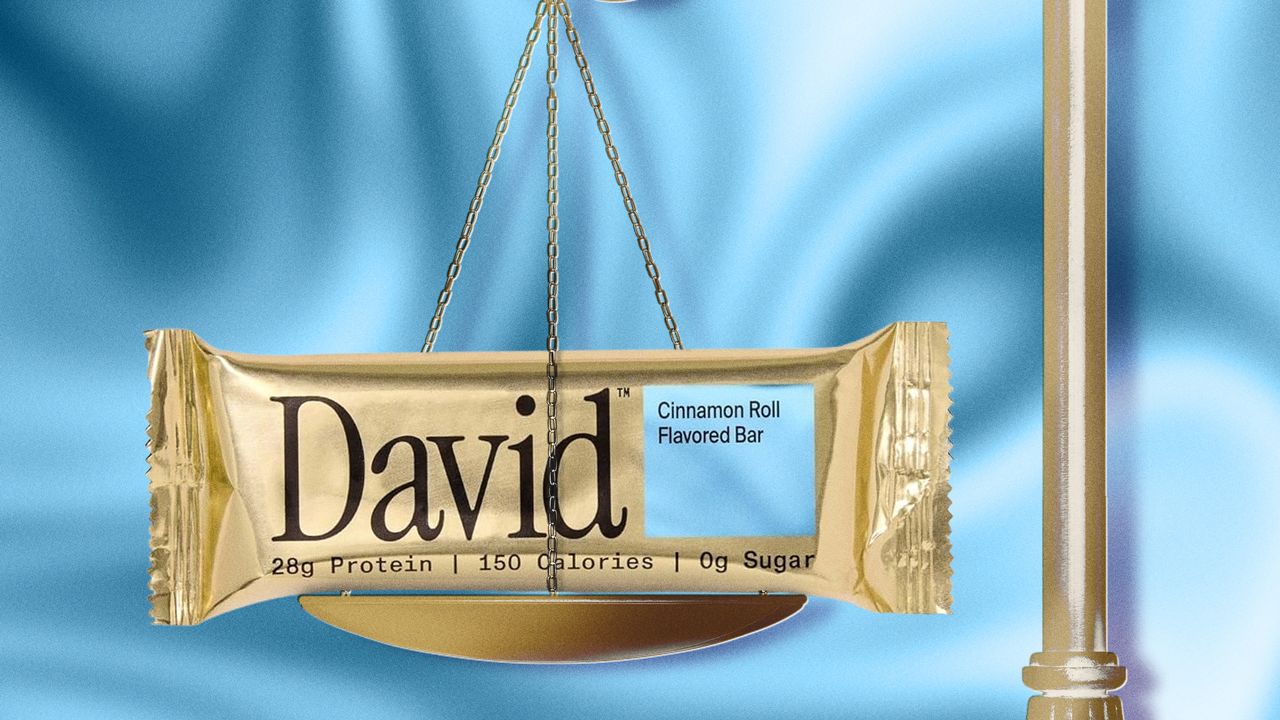
David Protein has emerged as a notable player in the health food market, characterized by its eye-catching gold packaging and a unique marketing strategy that prioritizes platforms like TikTok. Their protein bars have made waves due to their remarkable nutritional profile, claiming to have 0 grams of sugar, 28 grams of protein, and only 150 calories. However, recent developments have ignited a firestorm of controversy. A lawsuit claims that these protein bars may contain as much as 83 percent more calories and 400 percent more fat than what is stated on their labels, prompting a significant public outcry. On TikTok, users likened David Protein to Kälteen, the fictional bars from Mean Girls, that contributed to rapid weight gain. One TikTok user quipped, “David Protein Bars are actually Fat Bars.”
In response to the allegations, co-founder and CEO Peter Rahal released a statement on March 12th, asserting, “Our products are labeled correctly and in full compliance with all FDA regulations.” He further stated, “The claims in this lawsuit are meritless and reflect a fundamental misunderstanding of well-established scientific principles regarding how calories are determined under U.S. nutrition labeling standards for ingredients like EPG [esterified propoxylated glycerol].”
The lawsuit alleges that both the fat and calorie contents of the protein bars have been misrepresented. This situation highlights a broader misunderstanding of calorie calculations among the general public. As Debbie Fetter, a nutrition professor at UC Davis, explains, calorie counts in the U.S. are typically based on the Atwater method, which assigns average calorie values to macronutrients (4 calories per gram of protein, 4 per gram of carbohydrates, and 9 per gram of fat), sometimes adjusting for digestibility.
According to the lawsuit, tests conducted by a third-party, FDA-recognized lab suggested that the actual calorie counts of the bars significantly surpassed what is listed on their labels. The lawsuit claims this discrepancy would breach FDA regulations, which stipulate that nutrient contents must not exceed stated amounts by more than 20 percent.
However, David’s CEO argues that these findings stem from a misapplication of “bomb calorimetry,” a scientific method for measuring energy. The lawsuit does not provide specific details about the testing methods but indicates that Atwater factors were likely included. The lab responsible for the tests declined to comment when approached by NBC News, citing confidentiality agreements. Nonetheless, if the tests in the lawsuit were indeed based on bomb calorimetry, it could explain the differences between their findings and those reported on David’s labels. While the Atwater method relies on established calorie benchmarks, bomb calorimetry measures calories directly through experimental methods.
So, how does bomb calorimetry actually work? In essence, the method involves burning food. A sample is placed in a sealed chamber filled with oxygen and surrounded by water. When ignited, the heat from the burning food warms the water, and the temperature increase reveals the total energy content (measured in calories) of the food.
Although this method effectively gauges the energy contained in food, it may overestimate the calories that the human body can absorb. “Take fiber as an example,” Fetter points out. “It does contain energy and calories, but our bodies lack the enzymes to break down fiber, meaning that energy is unavailable for absorption, even though it could be counted as energy.”
“While bomb calorimetry is a recognized method for calorie testing in many foods,” David’s CEO noted in his March 12th statement, “it is widely accepted in the industry that this is not the appropriate testing method for foods with certain ingredients, including dietary fiber, specific sweeteners, and crucially for us, fat substitutes like esterified propoxylated glycerol.”


