
Introduction
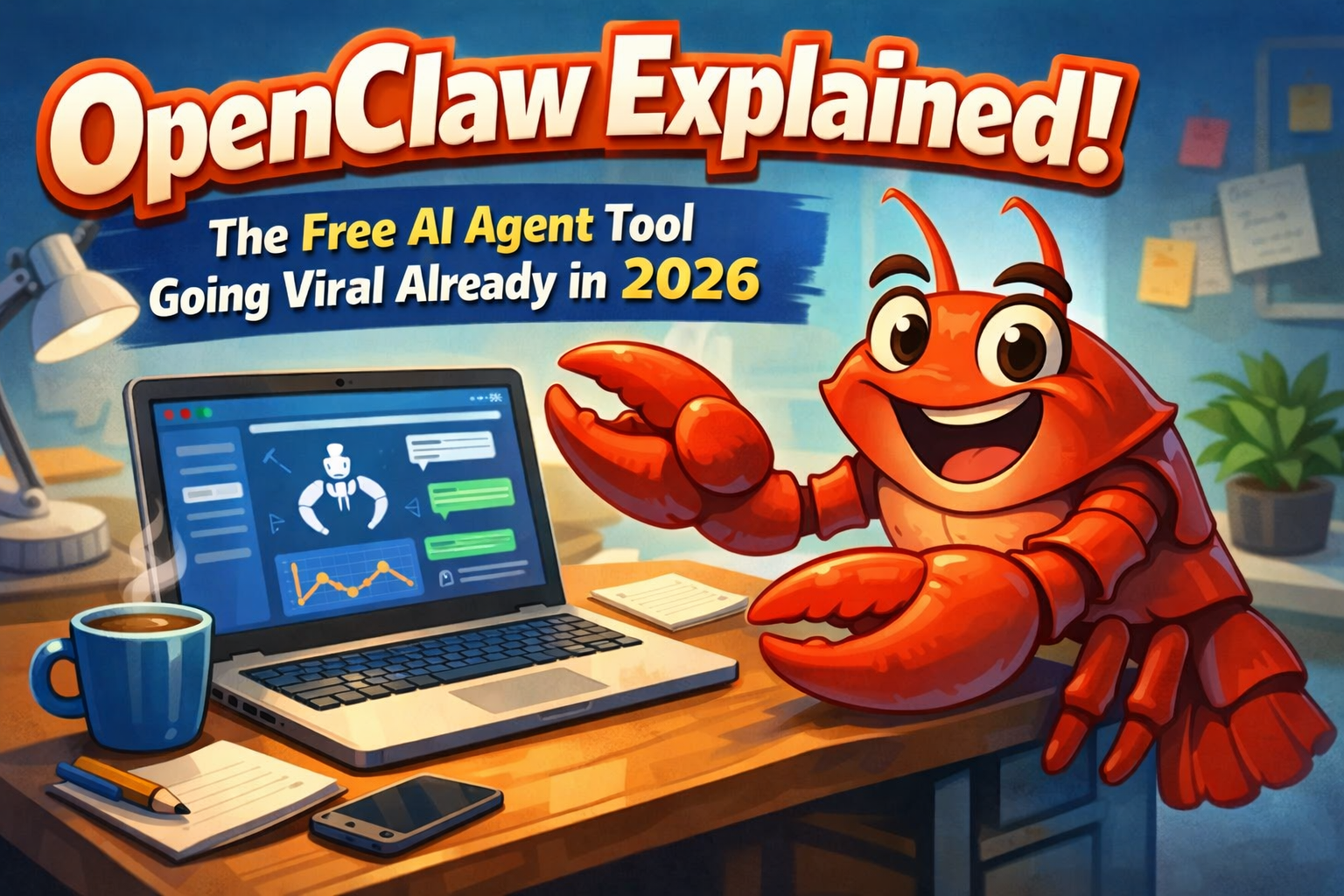
If you’re engaged with artificial intelligence communities on platforms like LinkedIn, Reddit, or X, you’ve likely encountered discussions surrounding OpenClaw. The enthusiasm surrounding this tool is palpable. Unlike conventional chatbots, OpenClaw has the capability to perform tasks directly on your computer. Users are leveraging it to streamline workflows, manage files, send emails, and even interact with application programming interfaces (APIs).
Originally launched as Clawdbot, the project transitioned to Moltbot before finally becoming OpenClaw. This evolution signifies a new frontier in artificial intelligence: tools that execute tasks rather than just facilitate conversation.
In this article, we’ll explore what OpenClaw is, its functionality, its rise in popularity, and practical applications from real users.
Understanding What OpenClaw Can Do
OpenClaw is a free, open-source agent that operates locally, connecting large language models (LLMs) to real software. You can issue straightforward chat commands, and it is capable of:
- Reading and writing files.
- Executing shell commands.
- Browsing the web.
- Sending emails.
- Controlling APIs.
- Automating tasks across different applications.
For instance, you could prompt the agent with:
“Clean my inbox, summarize the important emails, and schedule the meetings.”
OpenClaw would then take the steps necessary to fulfill the request, distinguishing it from typical chatbots where explanations are the norm.
Reviewing the Timeline of OpenClaw
The project’s development has been incredibly rapid:
- 2025: Peter Steinberger launched the initial version, originally named Clawdbot.
- Early 2026: Due to trademark issues, it was renamed Moltbot.
- January 2026: The tool was officially rebranded as OpenClaw.
- February 2026: The repository surpassed 100,000 stars on GitHub, becoming a viral sensation in the developer community.
Shortly after this surge in popularity, Steinberger announced his decision to join OpenAI to advance the development of next-generation agents, while OpenClaw continues as an open-source project.
Analyzing How OpenClaw Functions
OpenClaw serves as an intermediary, connecting LLMs with your computer. The operational workflow is as follows:
- You input a command into the chat interface.
- The model interprets the instruction and determines the necessary actions.
- OpenClaw executes tasks using its various “skills,” such as shell commands, web browsing, or API interactions.
- The results are relayed back to the agent, continuing until the task is complete.
With access to your system, OpenClaw can perform actions on your machine while also interacting with external services.
Distinguishing OpenClaw From ChatGPT
Traditional tools like ChatGPT function as stateless assistants, providing answers without engaging with your environment. OpenClaw introduces a revolutionary model: tool-using agents. Some key differences include:
| Feature | ChatGPT | OpenClaw |
|---|---|---|
| Executes commands | No | Yes |
| Access to files | No | Yes |
| Runs workflows | No | Yes |
| Multi-step reasoning | Limited | Built-in |
| Works across apps | Mostly no | Yes |
Leveraging the Skills System
OpenClaw employs a plugin system termed “skills.” These extensions empower the agent to engage with various tools, including:
- Web browsers.
- Messaging applications.
- File systems.
- Productivity software.
- Automation platforms.
Some installations come with over 100 prebuilt skills. Moreover, developers can introduce their own scripts, enabling rapid growth of the ecosystem.
Observing Real-World Usage of OpenClaw
The excitement around agent-based systems is not merely hype. Developers are creating workflows where:
- One agent plans the tasks.
- Other agents perform specialized jobs.
- The results are automatically compiled.
Some users have established multi-agent configurations to tackle coding, research, or automation tasks, effectively managing a small team of artificial intelligences. Additionally, Moltbook serves as a platform where agents communicate with one another rather than humans. Developers have conducted experiments to observe how these agents collaborate, generate research, and share knowledge.
Evaluating Why OpenClaw Went Viral
The tool’s popularity can be attributed to several practical factors:
- Free and open-source: Users can run the software locally and modify it to suit their needs.
- Task execution: While many models only generate text, OpenClaw facilitates entire workflows.
- Application integration: The tool seamlessly works with apps like WhatsApp, Telegram, Slack, and Discord.
- Fit with current trends: Developers view AI as capable of replacing standalone applications.
Understanding Potential Risks
Granting agents system access does carry inherent risks:
- Security vulnerabilities: Improper use may expose sensitive data and files.
- Malicious extensions: Some third-party skills may contain malware targeting sensitive information.
- Unintended behavior: There are reports of agents accidentally deleting entire email inboxes during automated clean-up procedures.
These concerns underscore the importance of exercising caution when deploying autonomous agents in personal or professional environments.
Visualizing the Future of AI Agents
Despite potential risks, many researchers believe that OpenClaw offers a snapshot of the future of computing. Rather than juggling multiple applications and manually switching between tasks, users might soon depend on autonomous agents to manage their digital responsibilities. Industry experts suggest that this project could herald a shift from research environments to mainstream application.
Sharing Final Thoughts
OpenClaw transcends the capabilities of a typical chatbot. It represents a programmable digital assistant, shifting artificial intelligence from a purely conversational tool to one that takes actionable steps.
While it offers substantial power and practicality, it also presents certain risks. Whether it evolves into the standard for personal agents or inspires a new generation of tools, 2026 may well go down in history as the year these agents gained widespread recognition.
Kanwal Mehreen is a machine learning engineer and technical writer with a strong passion for data science and the intersection of AI and medicine. She co-authored the ebook “Maximizing Productivity with ChatGPT.” As a 2022 Google Generation Scholar for APAC, she advocates for diversity and academic excellence. In addition, she is recognized as a Teradata Diversity in Tech Scholar, Mitacs Globalink Research Scholar, and Harvard WeCode Scholar. Kanwal is a dedicated advocate for change and founded FEMCodes to empower women in STEM fields.