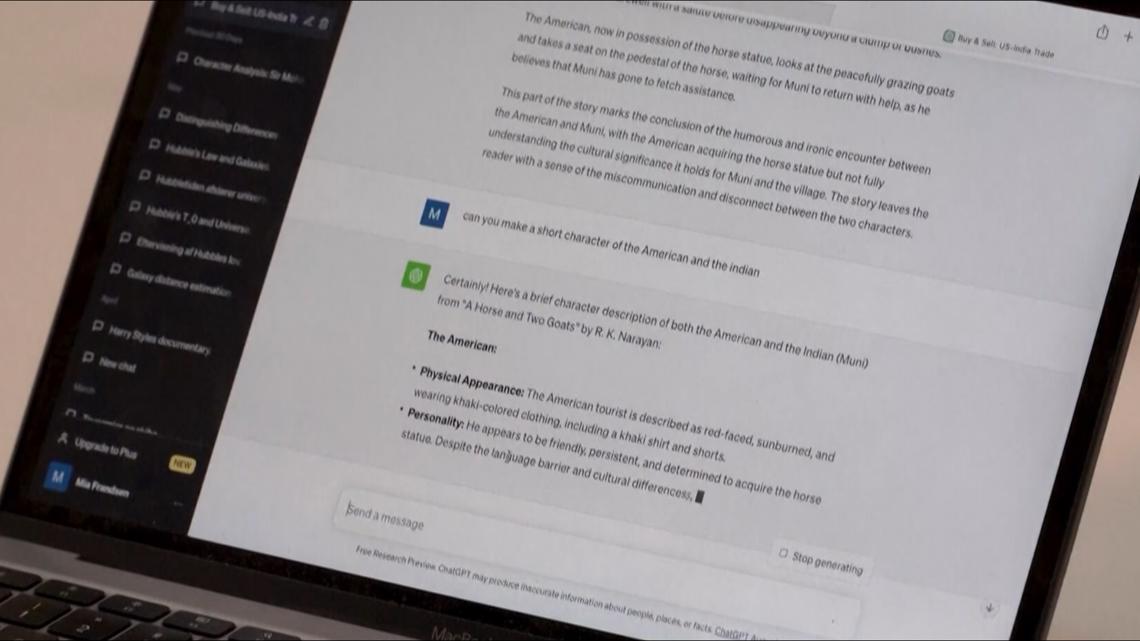
As artificial intelligence continues to evolve, it is increasingly integrated into educational settings. While it offers significant advantages, its overuse could jeopardize essential learning processes. In San Diego, schools are currently investigating ways to integrate AI responsibly into their classrooms.
SAN DIEGO — The burgeoning presence of artificial intelligence tools in classrooms, particularly within San Diego schools, is noteworthy. However, a recent global study raises important questions about the impact of this technology on student learning outcomes.
Researchers from the Brookings Institution’s Center for Universal Education conducted an in-depth review of numerous studies, engaging with students, parents, and educators. Their findings indicate that the risks associated with heavy reliance on generative AI could outweigh the benefits.
AI tools have the potential to provide valuable feedback, offer learning resources, craft essays, and tackle math problems. While these features can be advantageous, researchers caution that an overdependence on technology may compromise crucial skills, such as critical thinking and problem solving.
Nevertheless, the study highlights that if AI is utilized wisely and within defined parameters, it can significantly benefit the learning experience.
In San Diego, the Unified School District is actively working on a policy aimed at maximizing the benefits of AI in teaching, while ensuring its ethical and responsible use.
Jen Roberts, a high school English teacher within the district, has begun incorporating AI tools in her lessons, albeit with strict guidelines.
“For instance, I might provide my 9th-graders with a writing feedback tool that is aligned with their specific assignment and rubric. Once they feel prepared, they can paste their work into it and receive detailed feedback based on that assignment,” Roberts explained.
She acknowledges legitimate concerns regarding potential cheating and overdependence on AI but emphasizes the value of allowing students to learn how to use these tools under adult supervision.
“I do catch students using AI irresponsibly from time to time, and we frequently discuss this issue, given that I have 180 students, with many tempted to try it,” she shared.
In response, Roberts has adjusted some of her assignments to emphasize in-class discussions and collaborative projects. She also argues that AI can significantly aid teachers by enabling quicker feedback for students.
“Thanks to AI assistance, I can provide feedback in two to three days instead of two to three weeks. This means that students receive their papers back while the writing process is still fresh in their minds,” Roberts said.
As educational institutions navigate the complexities of incorporating AI, the study suggests that the primary challenge lies in leveraging this technology as a learning tool without fostering an overreliance on it.
“It’s not an everyday tool, nor something we depend on constantly,” Roberts noted. “However, there are moments when it proves to be invaluable, and I believe its utility will only continue to grow.”