AI Technology Aims to Tackle Fertilizer Overuse in Chesapeake Bay

While artificial intelligence often raises environmental concerns, it also presents solutions for pressing issues like the over-fertilization of crops affecting the Chesapeake Bay. A new AI initiative, PlantMap3D, aims to assist farmers in precisely applying fertilizers based on the nutrients retained by cover crops.
Cover crops, which typically include grasses and legumes, are cultivated during the off-season when fields are not being used for main cash crops. These crops play a crucial role in reducing nutrient pollution by minimizing erosion and absorbing excess nutrients, which they store in both their biomass and the soil for future use by other crops.
The AI technology will assess the cover crops to determine the nutrient contributions they provide to the soil before cash crops are sown. Environmentalists are optimistic that this will help mitigate nutrient pollution in local waterways while illustrating the potential limitations in nutrient availability from cover crops. Farmers in three Chesapeake Bay watershed states will be implementing the program this spring.

Excess nutrients from fertilizers—both chemical and manure—can create oxygen-depleted “dead zones” in the Bay, making it difficult for aquatic life to thrive. According to a model from the Chesapeake Bay Program, conservation strategies such as cover crops have notably lowered nutrient pollution levels. They estimate that from 2009 to 2024, nutrient inputs of nitrogen and phosphorus into the Bay have dropped by 15% and 22%, respectively. However, many remain skeptical about whether this reflects actual practices on the ground.
Mike Twining, vice president of innovation at Willard Agri-Service, an ally in deploying the AI tool on farms, acknowledged that while not all goals for the Bay have been achieved, substantial progress has been made. He believes that innovations like PlantMap3D will further improve farming practices.
The Nature Conservancy, alongside partners like Willard Agri-Service, Growmark FS, North Carolina State University, and the U.S. Department of Agriculture, aims to implement the AI technology over 150,000 acres in Maryland, Delaware, and Pennsylvania. Funded by approximately $16 million from the USDA’s Natural Resources Conservation Service and $11 million in partner contributions, the program will be available at no cost to qualifying farmers. If farmers experience reduced production due to the program’s recommendations, they will receive compensation of up to $50 per acre.

Different cover crops interact with nitrogen in unique ways. Legumes, such as peas, are classified as nitrogen “fixing” crops because they convert nitrogen gas into ammonia, which is readily absorbed by plants. On the other hand, grasses like rye and oats act as nitrogen “scavengers,” absorbing nitrogen from the soil and returning it once they decompose.
Many farmers find that combining different cover crop species enhances overall growth. For example, grasses and legumes can balance each other’s decomposition rates, allowing microbes sufficient time to utilize the nutrients. However, an imbalance can also occur where one type of crop overshadows the other, leading to uneven growth and confusion about nitrogen availability.
“Cover crops are a valuable practice, but they introduce complexity,” explained Chris Reberg-Horton, a professor at North Carolina State University.
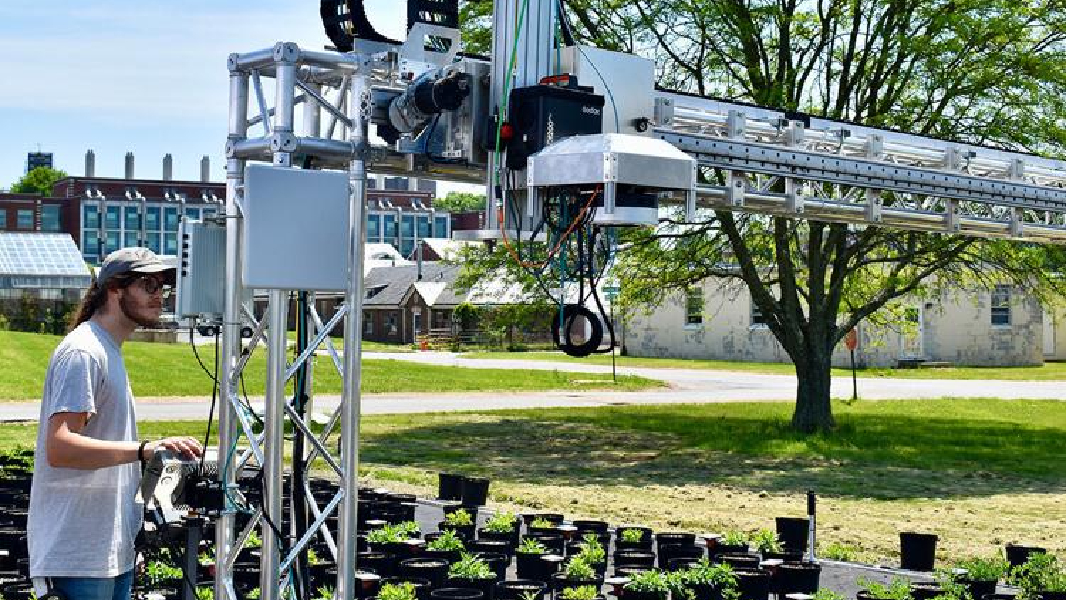
This is where PlantMap3D becomes essential. The process begins with cameras mounted on farming equipment that capture photographs of the cover crops as the machinery moves across the field. The AI software then identifies the various plant species in the images, generating a comprehensive map that details the biomass of each species.
At the same time, Reberg-Horton incorporates data about soil composition, recent weather trends, and the growth stages of the plants into the model. By the end of this analytical process, farmers receive a detailed map indicating areas that require more or less fertilizer.
The Nature Conservancy anticipates that this initiative will prevent three million pounds of nitrogen from being unnecessarily applied to fields, reducing runoff into the Bay’s waterways. According to Reberg-Horton, the fertilizer application rates observed at test farms showed considerable variability following the adoption of this technology.
Twining, of Willard Agri-Service, emphasized that the program aims to provide farmers with deeper insights into the biology of their cover crops. “This enhanced understanding,” he mentioned, “will ultimately lead to improved environmental outcomes and enhanced profitability for Mid-Atlantic farmers.”
Charlie White, a nutrient management expert at Penn State University, cautioned that while PlantMap3D provides valuable data on cover crops, it may not offer a complete picture of a farmer’s nitrogen fertilizer requirements, as it does not account for nitrogen already present in the soil. Farmers will need to estimate their fertilizer needs without cover crop data as a baseline.
Despite this limitation, White believes that the program offers valuable insights into the immediate nutrient impact of cover crops.
“We need various tools in our toolbox,” White stated, adding that the conversations ignited by PlantMap3D regarding the necessity for improved nitrogen fertilizer recommendations are crucial and beneficial.