The ongoing conflict in the Middle East has escalated, particularly affecting the bustling ports of the United Arab Emirates. As tensions rise between Iran and the U.S., authorities are on high alert, especially in key economic areas that are vital for trade and oil exports. Here’s an overview of the latest developments.
Iran urges evacuation of UAE ports
DUBAI, United Arab Emirates (AP) — Iran advised residents on Saturday to evacuate the Middle East’s busiest port, along with two others in the United Arab Emirates. This marked an unprecedented threat to a neighboring country’s non-American assets as the conflict between Tehran, the U.S., and Israel intensified into its third week.
Tehran claimed the U.S. utilized “ports, docks, and hideouts” in the UAE to launch attacks on Kharg Island, which is critical for Iran’s oil exports, although no evidence was provided. The Iranian government called for people to vacate areas where U.S. forces might be stationed.
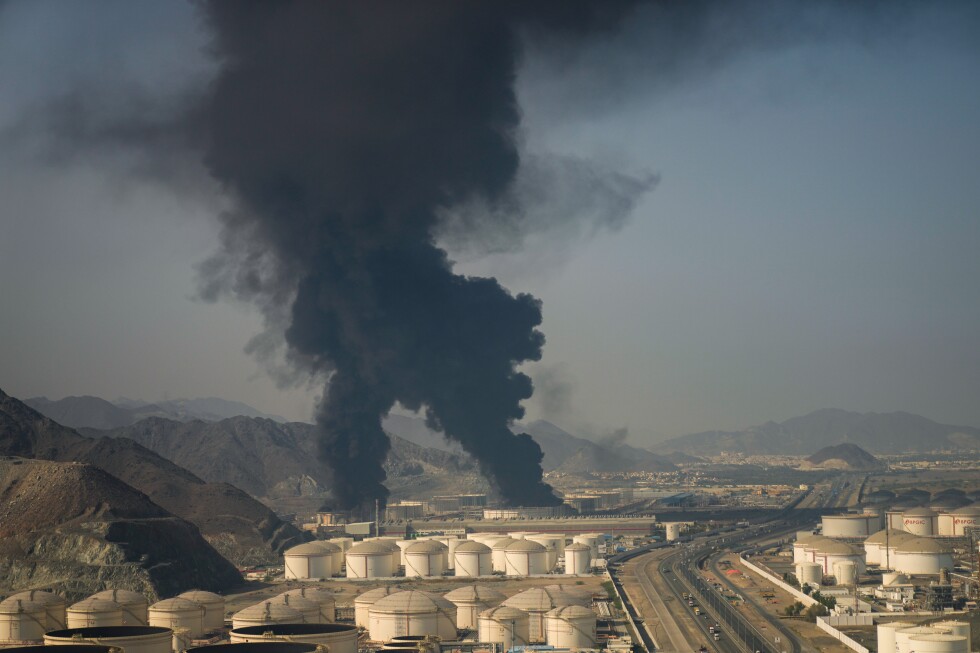
Despite the warnings, no attacks were observed at Dubai’s Jebel Ali port, the busiest in the region, or at the Khalifa port in Abu Dhabi. However, debris from an intercepted Iranian drone targeting an oil facility did ignite a fire at Fujairah port.
Iran claims U.S. launched attacks from UAE
Iran’s Foreign Minister Abbas Araghchi informed MS NOW that the U.S. executed assaults on Kharg Island and Abu Musa Island from two locations in the UAE, specifically Ras Al-Khaimah and an area “very close to Dubai.” He labeled this situation as perilous, emphasizing that Iran “will try to be careful not to attack any populated area” in that vicinity.
AP AUDIO: Iran war enters third week as Tehran threatens non-US assets in the UAE
AP correspondent Rica Ann Garcia reports on the missile that struck the U.S. Embassy in Baghdad after the U.S. bombed an oil-critical Iranian island.
U.S. Central Command declined to respond to Iran’s assertions. Anwar Gargash, a diplomatic adviser to the UAE’s president, stated on social media that the UAE has the right to self-defense but emphasizes “reason and logic” while maintaining restraint.
Throughout the conflict, Iran has directed hundreds of missiles and drones towards neighboring Gulf states, claiming to target U.S. assets, despite instances of striking civilian targets like airports and oil fields.
On Friday, U.S. President Donald Trump announced that the U.S. had “obliterated” military installations on Kharg Island, warning that oil infrastructure could be targeted next if Iran continues to disrupt shipping through the Strait of Hormuz, a critical passage for a significant portion of global oil supplies.
In response, Iran’s parliamentary speaker warned that any attacks on its oil facilities would lead to severe retaliation.
Araghchi reiterated that the strait would only be closed to “those who are attacking us and their allies.”
As fears about oil prices and supplies surge, Trump expressed hopes that countries like China, France, Japan, South Korea, and the U.K. would send warships to ensure the safety of the Strait of Hormuz. In response, Britain indicated they were discussing various options with allies to secure maritime shipping.
In a social media post, Araghchi urged neighboring countries to “expel foreign aggressors” and described Trump’s statement as “begging.”
Iran reiterates threats to U.S.-linked oil assets
On Saturday, Iran’s military command reaffirmed its intention to target U.S.-linked “oil, economic and energy infrastructures” in the region if any strike occurs on its oil facilities.
The semiofficial Fars news agency reported that the strikes on Kharg Island did not damage oil infrastructure but rather targeted an air defense site, a naval base, the airport control tower, and a helicopter hangar of an offshore oil company.
U.S. Central Command stated it had successfully destroyed mine storage facilities, missile storage locations, and other military assets.
Israel announced a new series of airstrikes in Iran, claiming to have attacked over 200 targets in just 24 hours, including missile launchers, defense systems, and arms production facilities.
Missile attacks on U.S. Embassy in Baghdad
A missile struck a helipad within the U.S. Embassy compound in Baghdad on Saturday. No group has immediately claimed responsibility for this strike. The embassy has faced numerous attacks by rockets and drones launched by Iran-aligned militias.
The State Department once again urged American citizens in Iraq to evacuate “now,” doing so by land due to the unavailability of commercial flights. It highlighted the potential threat posed by Iranian and Iran-aligned militia groups towards U.S. citizens, interests, and infrastructure.
Simultaneously, Lebanon is grappling with a deepening humanitarian crisis, with more than 800 fatalities and 850,000 displaced as Israel continues its assaults on Iran-backed Hezbollah militants.
Increase of U.S. military presence in the region
A U.S. official disclosed on Friday that 2,500 additional Marines from the 31st Marine Expeditionary Unit, along with the amphibious assault ship USS Tripoli, are being deployed to the Middle East. This deployment contributes to the largest military build-up in the region in decades of warships and aircraft.
Marine Expeditionary Units are equipped to conduct amphibious landings and are also trained to enhance security at embassies, assist in civilian evacuations, and provide disaster relief. This deployment does not necessarily indicate an upcoming ground operation, as reported earlier by the Wall Street Journal.
The Tripoli was seen by commercial satellites navigating near Taiwan, suggesting it is more than a week away from Iranian waters.
Earlier in the week, the Navy had positioned 12 ships, including the aircraft carrier USS Abraham Lincoln and eight destroyers, in the Arabian Sea. The precise number of U.S. personnel stationed in the Middle East remains unclear.
___
Mednick reported from Tel Aviv, Israel; Magdy from Cairo; and Toropin from Washington. Associated Press writers Melanie Lidman in Jerusalem, Sally Abou AlJoud, Kareem Chehayeb, and Bassem Mroue in Beirut; Qassim Abdul-Zahra in Baghdad; Will Weissert at Joint Base Andrews, Maryland; and Tia Goldenberg in Washington contributed to this report.
Key Takeaways
- Iran has issued evacuation warnings for busy UAE ports amid escalating tensions.
- The U.S. is reportedly launching attacks from locations within the UAE.
- Iran threatens to target U.S. economic assets if its oil facilities are attacked.
- Missiles struck the U.S. Embassy in Baghdad, highlighting ongoing threats.
- The U.S. is increasing its military presence in the region with additional Marines and ships.
- Global concerns about oil prices and security in the Strait of Hormuz are escalating.
FAQ
What triggered the evacuation warnings in the UAE?
Iran’s threats against U.S. assets and claims of U.S. attacks prompted warnings for residents to evacuate key ports.
What actions is the U.S. taking in response to the conflict?
The U.S. is reinforcing its military presence in the region, deploying additional Marines and warships.
Is the conflict affecting oil supplies?
Yes, tensions in the region have raised global concerns over oil supply and prices due to the threat to shipping routes.
What has been the response of the UAE government?
The UAE has emphasized its right to defend itself while also advocating for restraint and diplomacy.