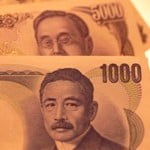
 Imagine discovering a bank that allows you to borrow money with no interest. Naturally, you would take advantage of that opportunity, depositing the funds into a high-yield savings account or the stock market to earn profits, right?
This scenario encapsulates the Yen Carry Trade. For over a decade, Japan’s interest rates remained near zero—or even negative. Investors, ranging from sizable hedge funds to the typical retail trader, Mrs. Watanabe, borrowed trillions of yen at minimal costs, converted them into U.S. dollars, and invested in higher-yielding assets like U.S. Treasuries or burgeoning tech stocks.
This setup operated as an infinite money machine until recently. Now, fluctuations are beginning to disrupt it, as heightened volatility impacts global markets. The carry trade thrives on a substantial yield differential—the gap between Japanese rates and those of other economies. As we move into 2026, this dynamic is shifting.
In early 2024, the Bank of Japan (BoJ) responded to inflation by gradually raising interest rates from below zero. Concurrently, the U.S. Federal Reserve, feeling pressure from President Trump, has been slowly lowering rates.
Recently, the FOMC announced a dovish pause, bringing down the federal funds rate from 5.25 percent in August 2024 to 3.5 percent. This narrowing gap compels traders to unwind positions to manage escalating costs.
It’s important to remember that bond yields move inversely to bond prices. Consequently, rising yields signal declining bond prices. The yield on the Japanese 10-year government bond recently surged past 2.3 percent—its highest level in over twenty years—effectively marking the end of the era of cheap capital and sparking a massive deleveraging phase.
Panic in Tokyo
As the yield gap narrows, potential profits begin to evaporate. If borrowing yen costs 2 percent, but dollar assets yield only 4 percent and you have to factor in exchange rates, the situation quickly deteriorates.
To repay yen loans, those involved in the carry trade must sell their U.S. assets and convert their dollars back into yen. If there is a quick rush to liquidate U.S. assets in favor of yen, it could lead to devastating consequences.
This could create a liquidation feedback loop: speculators sell U.S. stocks to cover increasing debt, driving prices down. This leads to margin calls, necessitating further asset sales and more yen purchases. Given the leverage involved in these trades, a sudden unwinding could unleash chaos in the markets.
Moreover, the quest for a stronger yen has become a political issue. While Japan has historically favored a weak yen to bolster its export-driven economy, this situation now poses a significant political and economic challenge.
Japan heavily relies on imports for energy and food, making a weak yen particularly burdensome. As a result, Japanese households are grappling with a mounting cost-of-living crisis.
Intense public discontent has triggered political panic in Tokyo, even prompting Prime Minister Sanae Takaichi to dissolve the lower house of parliament and call for snap elections on February 8, 2026.
To win over voters, Takaichi is proposing to suspend the sales tax on food and beverages. Yet, with Japan’s debt-to-GDP ratio surpassing 230 percent, the government’s finances are more precarious than those of the U.S. This loss of tax revenue could trigger a sovereign credit crisis, further weakening the yen.
As of early 2026, the BoJ has maintained its key short-term interest rate at 0.75 percent—the highest in three decades. Unfortunately, this measure hasn’t alleviated the challenges, and the costs of importing essentials continue to soar, heavily impacting Japanese citizens.
Gold $5,500, Silver $120
Recently, it was reported that the New York Fed is monitoring the yen’s exchange rate with banks, suggesting potential coordinated intervention. But why would the U.S. assist Japan in propping up the yen? It’s more than just altruism.
This situation links back to the massive U.S. government debt. Japan, holding around $1.1 trillion in U.S. Treasuries, is among the largest U.S. debt holders. A collapse of the yen may compel Japan’s Ministry of Finance to sell its Treasuries to secure cash, which could rapidly elevate U.S. interest rates and increase mortgage and corporate borrowing costs.
As it stands, servicing interest payments absorbs a significant portion of the U.S. federal budget. The Treasury is issuing new debt merely to cover interest on old debt. Higher rates would worsen this unsustainable debt cycle.
President Trump is eager for lower rates and hopes to reduce the U.S. trade deficit. A weaker dollar would make American exports more competitive.
If the U.S. and Japan decide to proceed with coordinated intervention, it would further devalue the dollar. We’ve already observed surges in the prices of gold and silver—gold exceeding $5,500 and silver reaching $120—as investors seek refuge in tangible assets amidst instability in paper currency.
Such intervention would effectively entail the U.S. Treasury selling its currency to purchase yen, exerting downward pressure on the dollar index, which is already below 97. For American consumers, this translates to higher import costs, compounding the effects of Trump’s tariffs.
Additionally, this would contribute to stock market volatility. Companies reliant on stable foreign exchange rates and global supply chains could face challenges as currency fluctuations amplify. Moreover, an intervention to bolster the yen at the dollar’s expense might trigger a sell-off of dollar assets as speculators attempt to sidestep the coordinated measures.
But what happens next?
Ghosts of the Plaza Accord
Historically, coordinated currency interventions haven’t enjoyed much success. The 1980s present a fitting example. In 1985, the U.S. dollar was exceptionally strong, hindering American manufacturers due to high export costs.
The solution was the Plaza Accord, where central planners from the U.S., Japan, Germany, France, and the UK met at New York’s Plaza Hotel. They agreed to collectively sell dollars and buy alternative currencies to devalue the greenback.
On the surface, this strategy succeeded; the dollar fell, and the yen appreciated. However, the unintended consequences were dire, inflating the bubble economy in Japan, which burst in the early 1990s. It took nearly 34 years for the Nikkei index to recover.
As of now, discussions of coordinated intervention appear to be no more than speculation. While reports suggest imminent actions, there are indications Japan may hold off for the time being.
Furthermore, no concrete proposals have emerged. When Treasury Secretary Scott Bessent was asked about U.S. intervention in the currency market or measures to strengthen the yen, he firmly stated, “absolutely not.”
Nevertheless, where there’s smoke, there may be fire. With markets on edge, perhaps the Fed’s recent rate checks have been sufficient to deter bearish sentiments toward the yen—at least temporarily.
Intervention may seem appealing to central planners who crave control, but they would be prudent to exercise restraint.
Efforts to support a weak yen are likely destined to fail, and even short-term success could create numerous additional problems—consequences that may linger for decades to come.
[Editor’s note: Join the Economic Prism mailing list and receive a free report titled, “Cash Machine – Why You Should Own this Mineral Royalty with a 12% Yield.” For a special trial offer for MN Gordon’s Wealth Prism Letter, click here.]
Sincerely,
MN Gordon
for Economic Prism

