Overview of the Report
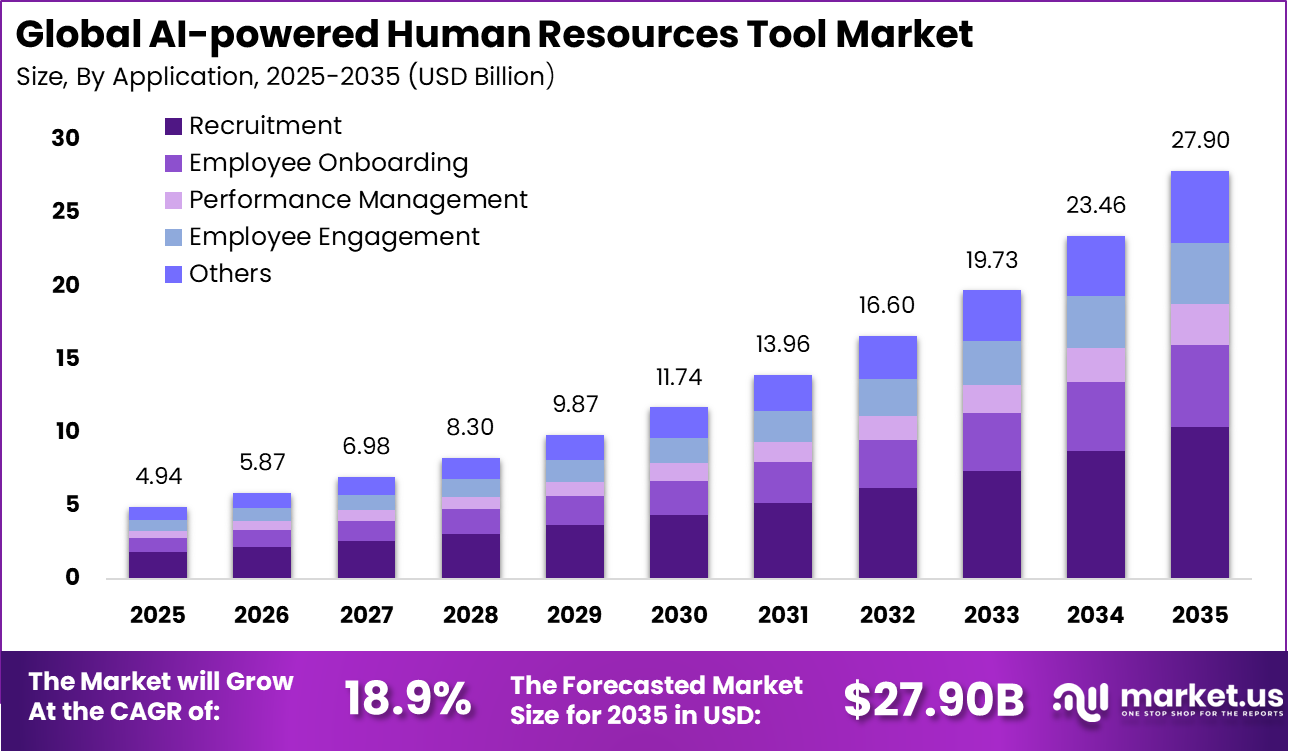
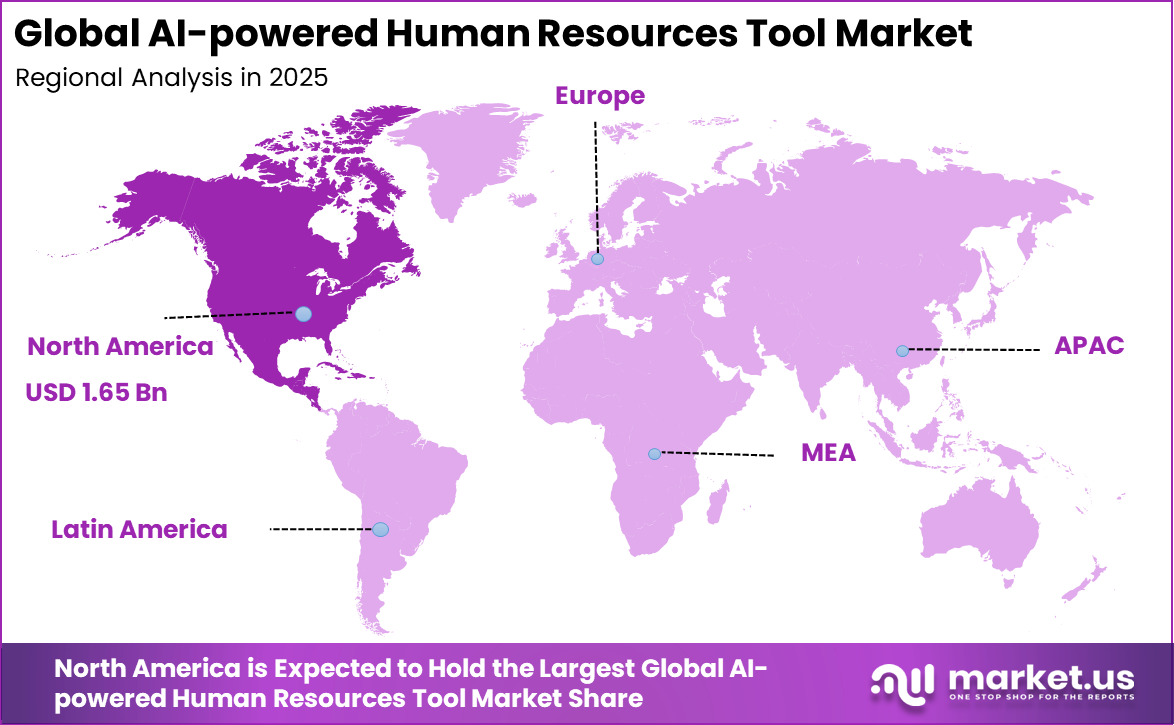
The global AI-powered Human Resources Tool Market is projected to reach approximately USD 27.90 billion by 2035, growing from USD 4.94 billion in 2025, with a compound annual growth rate (CAGR) of 18.9% during the period from 2025 to 2035. North America maintains a leading position in the market, holding more than 33.5% share and generating USD 1.65 billion in revenue.
The growth of the AI-powered Human Resources Tool Market is fueled by organizations increasingly employing artificial intelligence in workforce management and talent development. AI-driven platforms enhance various HR functions, including recruitment, employee engagement, performance assessment, and workforce analytics. These tools enable organizations to analyze extensive employee data, leading to better hiring choices, improved workforce planning, and streamlined HR operations.
The primary catalyst for market growth is the need for companies to manage expanding workforces without proportional increases in HR personnel. With thousands of applications to process, AI technology expedites and enhances candidate filtering. Research indicates that productivity can improve by approximately 50% when AI tools aid in onboarding and training. Regular employee feedback through swift surveys also aids managers in identifying morale issues early, fostering heightened workplace engagement.
Research shows that the integration of AI in HR functions has surged recently, with around 43% of organizations globally utilizing AI for HR or recruiting tasks by 2025, demonstrating a swift increase in adoption across various sectors. Moreover, HR departments have noted tangible productivity gains, as 89% of HR professionals believe that AI tools save time or enhance operational efficiency in recruitment endeavors.
The demand for automation in recruitment and workforce management is one of the strongest driving factors for the AI-powered HR tool market. Recruitment often entails reviewing numerous applications, conducting interviews, and coordinating with candidates. AI tools can automatically screen applications and rank candidates based on their skills, experience, and alignment with job requirements.
A remarkable feature of AI technologies is the ability to automatically screen up to 75% of job applications, considerably alleviating recruiters’ workloads and facilitating quicker hiring decisions. Organizations are increasingly prioritizing data-driven insights over gut feelings. HR teams now rely on AI tools to forecast employee turnover and comprehend workforce behavior, with reports indicating a 20% decrease in staff turnover in companies that utilize predictive analytics.
For example, in February 2026, IBM enhanced Watson HR with generative AI for personalized career coaching, resulting in 5,000 Armonk-led deployments and an 18% reduction in turnover within regulated sectors. This highlights America’s prowess in providing secure, scalable AI solutions for large enterprises.
Key Takeaways
- In 2025, Recruitment emerged as the foremost application segment in the AI-Powered Human Resources Tool Market, accounting for 37.4% of the total share.
- In 2025, On-Premises Deployment dominated with a 60.2% market share.
- In 2025, Large Enterprises represented the primary customer segment, commanding 70.2% of overall demand.
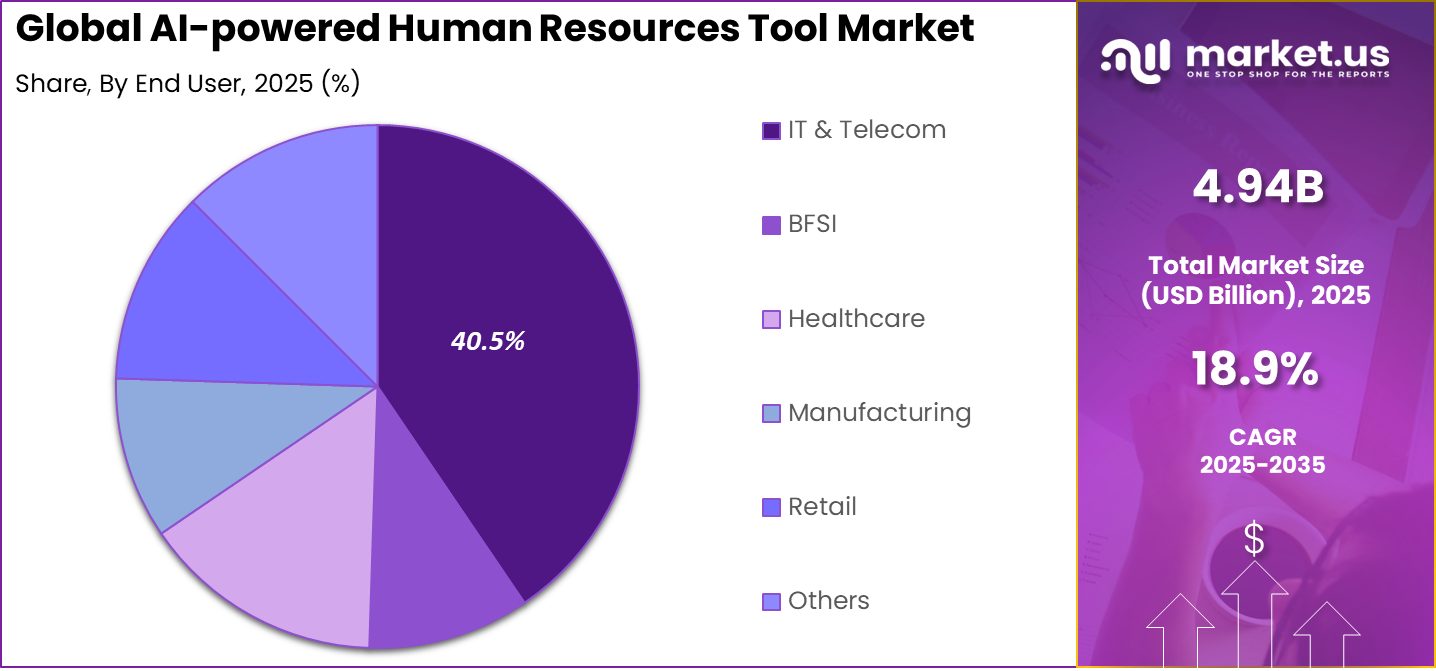
- In 2025, the IT and Telecom Sector held the largest share among end users at 40.5%.
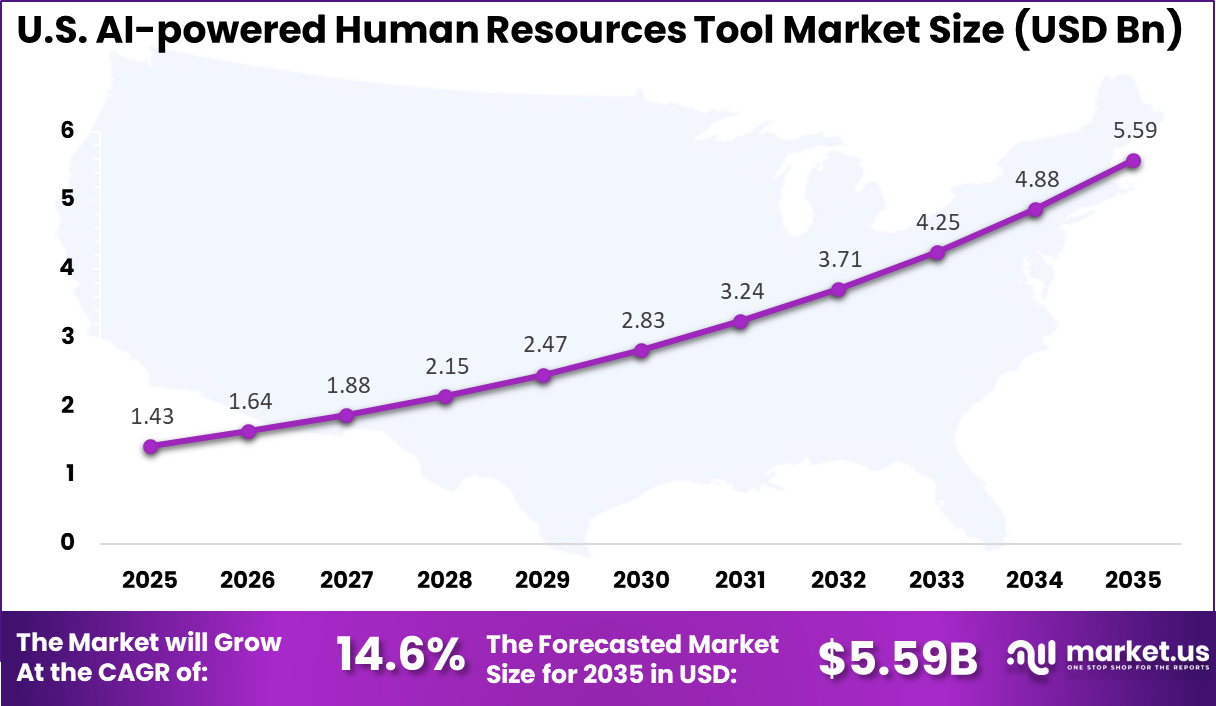
- In 2025, North America secured a 33.5% regional share, with the U.S. market reaching USD 1.43 billion and achieving a growth rate of 14.6%.
Key Statistics on AI in HR
- Between 45% and 74% of organizations are utilizing or planning to adopt AI-powered HR tools to enhance productivity and talent management processes.
- AI reduces the hiring timeline by 51.1% and lowers costs by approximately 25%.
- About 44% of organizations implement AI in their recruitment and talent acquisition efforts.
- Approximately 65% of HR professionals report increased departmental productivity with AI adoption, while 35% witness overall efficiency improvements.
- About 52% of companies utilize AI to boost employee engagement, with 20% noting measurable enhancements in retention rates.
- Top applications of AI in HR include performance management at 58%, employee engagement at 52%, and recruitment at 44%.
- AI systems can predict employee turnover with up to 95% accuracy.
- By 2025, nearly 70% of employees are anticipated to interact with AI tools on a daily basis.
- About 11% of HR leaders have implemented generative AI solutions, while 18% are in the pilot phase.
- AI is projected to enhance workforce productivity in 58% of organizations.
Impact on Key HR Functions
Market Applications
Recruitment accounts for 37.4% of the market application segment, showcasing the increasing dependence on AI-driven hiring solutions. Organizations leverage AI platforms to evaluate candidate resumes, assess job requirements, and efficiently identify qualified applicants. Automated screening functionalities assist HR teams in managing large application volumes and swiftly narrowing down suitable candidates.
AI recruitment tools improve hiring precision by assessing candidate skills, experience, and behavioral tendencies. These platforms deliver predictive insights that bolster hiring decisions and compress recruitment timelines. As companies vie for skilled talent, AI-based recruitment solutions are gaining widespread traction.
For instance, in January 2026, HireVue introduced a new video interview tool that employs AI to analyze candidates’ responses in real time, helping recruiters evaluate soft skills such as communication during preliminary screenings, thus streamlining the process for high-volume hiring. This enables teams to dedicate less time to initial reviews and concentrate on top candidates.
Deployment Types
On-Premises Deployment constitutes 60.2% of the market, reflecting the necessity for direct control over employee data and HR management systems. Many organizations manage sensitive workforce information that must adhere to stringent privacy and security regulations. Hosting HR platforms on internal infrastructures allows enterprises to enforce tailored security and governance policies.
This deployment type also facilitates integration with existing enterprise systems, such as payroll management and employee information databases. Organizations in regulated industries often prefer in-house HR systems to ensure compliance with data protection laws. As workforce data becomes increasingly crucial, on-premises deployment continues to maintain robust adoption.
For example, in January 2026, SAP announced enhancements to its on-premises platform, incorporating AI for workforce planning. This customization allows large teams to tailor analytics to specific needs, ensuring that sensitive information remains confidential. Such initiatives underline the ongoing growth in secured environments.
By Organization Size
Large Enterprises account for 70.2% of market adoption, primarily due to the challenges associated with managing expansive workforces across various locations. These larger organizations oversee intricate recruitment processes, employee development initiatives, and performance monitoring systems. AI-powered HR tools assist in centralizing workforce data and enhancing decision-making across various departments.
Large companies maintain dedicated HR teams that leverage analytics to elevate employee engagement and workforce planning. AI-generated insights allow organizations to pinpoint skill gaps, track employee performance trends, and bolster leadership development initiatives. As workforce management trends toward data-centric approaches, large enterprises are at the forefront of adopting AI-driven HR platforms.
For instance, in March 2026, Workday launched AI-driven insights for performance tracking at an enterprise scale, enabling effective management of global teams by predicting needs and identifying gaps early. These tools support large organizations without overwhelming their IT resources.
By End User
The IT and Telecom Sector contributes 40.5% to market adoption due to the industry’s acute need for highly skilled professionals and continuous workforce growth. Technology companies frequently manage substantial recruitment flows and require efficient systems to identify qualified candidates. AI-powered HR tools facilitate seamless hiring processes and workforce development management.
This sector encounters swift technological transitions, necessitating continual skill enhancement and employee training programs. AI-supported analytics contribute to talent retention strategies by flagging employee engagement trends and career development opportunities. Competition for specialized talent fosters widespread adoption of AI-enabled HR platforms among technology firms.
As an example, in March 2026, Google upgraded its HR platform to optimize tech recruitment in the IT sector, focusing on essential skills such as coding and cloud expertise, effectively matching candidates to rapidly evolving roles. Telecom companies leverage these systems to build agile teams amidst constant technological advancements.
By Region
North America captures 33.5% of market share, driven by the robust adoption of advanced HR technologies and digital workforce management systems. Organizations across sectors like technology, finance, and healthcare depend on AI platforms to enhance talent acquisition and employee management processes. The region’s advanced digital infrastructure supports extensive implementation of AI-based HR tools.
For example, in January 2026, Workday launched an upgraded AI talent marketplace capable of predicting employee career paths with 85% accuracy, assisting U.S. enterprises in retaining their top talent. The platform assesses skills gaps across 10,000+ job profiles, strengthening North America’s HR tech leadership through proactive workforce planning.
Within North America, the United States alone contributes USD 1.43 billion, achieving a growth rate of 14.6%. The nation’s expansive technology sector and strong emphasis on workforce optimization have accelerated the adoption of AI-powered HR platforms. Consistent investments in digital workforce management technologies are likely to support ongoing market growth in the region.
For example, in February 2026, HireVue introduced AI-powered video interviews with real-time bias detection, halving hiring time for Fortune 500 clients. This initiative, based in Utah, reinforces U.S. leadership in scalable, compliant video assessment technology for multi-national enterprises.
Growth Factors
One of the main factors contributing to the expansion of the AI-powered human resources tool market is the rising demand for effective recruitment and talent acquisition processes. Companies often encounter large quantities of job applications, necessitating advanced tools to quickly identify qualified candidates. AI-based recruitment systems analyze resumes, assess candidate profiles, and match applicants more accurately with job roles compared to traditional methods.
Another major growth driver is the increasing significance of workforce analytics in contemporary organizations. Businesses are leaning more on data insights to grasp employee engagement, productivity trends, and overall workforce performance. AI-powered HR platforms delve into employee data, identifying patterns that help organizations enhance retention strategies and workforce development initiatives.
Emerging Trends
A notable trend in the AI-powered human resources tool market is the growing adoption of conversational AI and virtual HR assistants. These systems facilitate interaction between employees and HR functions via chat interfaces, responding to HR-related inquiries, assisting in onboarding, and providing guidance on company policies. Conversational tools help alleviate the workload on HR departments while enhancing employee access to information.
Another noteworthy trend is the integration of predictive analytics within HR platforms. AI systems analyze historical employee data to forecast workforce trends, such as turnover risk, skill gaps, and training requirements. This capability allows organizations to implement proactive strategies for workforce planning and talent development.
Key Market Segments
Applications
- Recruitment
- Employee Onboarding
- Performance Management
- Employee Engagement
- Others
Deployment Types
- On-Premises
- Cloud-Based
- Hybrid
Organization Sizes
- Small Enterprises
- Medium Enterprises
- Large Enterprises
End Users
- IT & Telecom
- BFSI
- Healthcare
- Manufacturing
- Retail
- Others
Key Regions and Countries
North America
Europe
- Germany
- France
- The UK
- Spain
- Italy
- Russia
- Netherlands
- Rest of Europe
Asia Pacific
- China
- Japan
- South Korea
- India
- Australia
- Singapore
- Thailand
- Vietnam
- Rest of APAC
Latin America
- Brazil
- Mexico
- Rest of Latin America
Middle East & Africa
- South Africa
- Saudi Arabia
- UAE
- Rest of MEA
Drivers of Growth
Digital Transformation of HR Operations
A vital driver for the AI-powered human resources tool market is the ongoing digital transformation of HR operations. Organizations are transitioning from traditional administrative HR systems to data-centric workforce management platforms. AI technologies empower HR departments to automate routine tasks more effectively, enhance decision accuracy, and manage workforce data efficiently.
The increasing adoption of remote and hybrid work models also propels demand. As organizations manage distributed teams across various locations, HR platforms need to facilitate digital onboarding, performance tracking, and engagement monitoring. AI-powered HR tools offer analytics and automation capabilities that support efficient management of remote workforces.
For instance, in October 2025, Eightfold.ai introduced an update to its talent platform that nearly instantaneously matches skills from resumes to job openings. Hiring managers appreciate how it reveals hidden talent from internal pools, accelerating the filling of hard-to-staff roles while keeping team sizes lean.
Restraints to Watch
Data Privacy and Ethical Concerns
A significant restraint affecting the AI-powered human resources tool market pertains to data privacy and ethical implications surrounding the use of AI algorithms. HR platforms frequently process sensitive personal information, encompassing employee performance records, behavioral data, and demographic details. Organizations must ensure compliance with data protection regulations and uphold transparency in their decision-making processes.
Moreover, potential biases in AI algorithms used for recruitment and performance assessment can pose challenges. If training data contains historical biases, AI systems may inadvertently generate unjust recommendations. Organizations are urged to implement monitoring and auditing measures to ensure fairness and accuracy in AI-driven HR decisions.
For instance, in February 2026, Workday faced scrutiny after a patch revealed flaws in the flow of employee data through its AI modules. HR leaders delayed further rollouts to refine consent mechanisms, ensuring that personal details are secured during analytics processing. This effort aimed to rebuild trust among workforces skeptical about data privacy.
Opportunities Ahead
Intelligent Workforce Planning
A significant opportunity in the AI-powered human resources tool market lies in developing intelligent workforce planning solutions. AI platforms can analyze labor market data, internal workforce metrics, and organizational goals to recommend effective hiring strategies and talent development initiatives. These insights assist organizations in maintaining a competitive workforce while adapting to evolving business demands.
Additionally, integrating AI HR tools with learning and development platforms represents another promising avenue. By analyzing employee performance and skill gaps, AI systems can suggest personalized training programs that foster career advancement and enhance workforce capabilities.
For instance, in March 2026, IBM unveiled a dashboard in its Watson HR tools that monitors team morale through daily interactions. Managers leverage this data to identify early signs of burnout and make necessary adjustments, transforming raw data into actionable strategies for maintaining workforce engagement.
Challenges to Overcome
Integration with Legacy HR Systems
A crucial challenge within the AI-powered human resources tool market is connecting advanced AI platforms with existing HR management systems. Many organizations still rely on legacy HR software that lacks support for modern analytics and automation features. Transitioning data and integrating new AI technologies can demand considerable technical effort and meticulous organizational planning.
Furthermore, building trust and encouraging the adoption of AI systems in HR processes can be challenging. Employees and managers might initially hesitate to depend on automated recommendations for recruitment or performance evaluations. It is imperative for organizations to promote transparency and provide training to establish acceptance of AI tools as supportive decision-making aids rather than replacements for human input.
For example, in September 2025, Pymetrics refined its assessments to be more inclusive, considering diverse backgrounds following studies about trait predictions. Early users acknowledged improvements but emphasized the continuing need for human review to mitigate potential biases in high-stakes hiring scenarios, pointing to the complex nature of perfecting AI for fair decisions.
Key Players in the Market
The AI-powered Human Resources Tool Market is predominantly led by enterprise technology firms that integrate artificial intelligence into various HR functionalities, such as talent management, workforce analytics, and employee engagement platforms. Companies like SAP, Oracle, Workday, and IBM provide sophisticated HR platforms that facilitate recruitment automation, workforce planning, and predictive talent analytics. These solutions are highly sought after by large enterprises aiming to enhance hiring efficiency and workforce productivity.
Digital recruitment and talent intelligence solutions further enrich the market’s innovation landscape. Organizations like HireVue, Eightfold.ai, SmartRecruiters, and Phenom specialize in AI-driven candidate assessment, video interview analysis, and skills matching tools. Their technologies are instrumental in reducing hiring durations while enhancing the accuracy of candidate evaluations. These platforms are increasingly utilized by large corporations to streamline high-volume recruitment processes.
Cloud-based HR software providers and workforce management solution providers add depth to the competitive landscape. Companies such as Adobe, Google, Zoho, BambooHR, and Cornerstone OnDemand offer platforms that merge HR automation with analytics and employee engagement functionalities. Other providers, including Ultimate Software, Pymetrics, and Ngage, emphasize behavioral analytics, workforce insights, and AI-infused talent development systems.
Leading Players in the Market
- Pymetrics
- HireVue
- Cornerstone OnDemand
- Adobe
- Phenom People
- BambooHR
- Zoho
- Oracle
- Ultimate Software
- SAP
- SmartRecruiters
- Workday
- Ngage
- Eightfold.ai
- IBM
- Others
Recent Developments
- In March 2026, HireVue introduced next-generation video assessments with real-time behavioral scoring, reducing hiring time by 40% for clients such as Walmart. Their AI technology analyzes micro-expressions during interviews to maintain U.S. leadership in scalable and scientifically validated candidate evaluations.
- In March 2026, SmartRecruiters launched AI-driven candidate nurturing that improved conversion rates by 35%. Their Science of Recruiting approach is particularly beneficial for technology giants, reflecting North America’s advantage in data-driven recruitment marketing.